
Battery Equalizer 48V
4.3Editor score
5A compensation current
Smart indicator lights
Low voltage cutoff
This guide compares the top 10V12V 24V 48V Battery Equilizer Balancer models for 2026 to help you choose the right voltage balancer for your battery bank needs.
Choosing the right battery balancer is crucial for maintaining the health and longevity of your multi-voltage battery systems. Whether you are managing a 24V RV setup or a 48V off-grid storage bank, ensuring each cell stays balanced prevents premature degradation and safety hazards.
We have analyzed ten leading battery equilizer balancer models based on their balancing current, voltage compatibility, protection features, and user feedback. Each product was evaluated for its ability to handle lead-acid, lithium, and mixed battery types across various series and parallel configurations.
Each pick below highlights specific strengths such as active balancing technology, intelligent standby modes, and robust safety protections. Please note that availability and pricing can change frequently, so always verify the latest details on the product page before making a purchase decision.
4.3Editor score

4.3Editor score

4.1Editor score
The following table provides a side-by-side comparison of all ten top-rated battery balancer models. It highlights key specifications such as voltage ranges, maximum balancing currents, and unique features to help you quickly identify the model that best fits your specific battery bank configuration and safety requirements.



The LiTime 48V Battery Balancer stands out as a top choice for those needing a versatile active equalizer. With a robust 4.3 rating from users, it offers seamless integration for battery banks up to 48V. Its ability to handle diverse configurations makes it ideal for RVs and off-grid systems.
We may earn a commission when you buy through this link, at no additional cost to you.
This device features four connection ports that enable flexible integration with battery banks configured in various series and parallel setups. It is compatible with LiFePO4, lithium ion, lead acid, GEL, SLA, and FLA batteries. The unit activates automatically when voltage differences exceed 10mV and enters standby mode once balanced.
While the balancing current is high at 10A, proper installation is key to avoiding wiring errors. Reverse polarity and high temperature protections mitigate common risks, but users must ensure correct terminal connections. These trade-offs are acceptable given the longevity and safety benefits provided to the battery bank.
If you are building a large battery system for energy storage or marine use, this balancer is a trusted companion. It optimizes performance and extends cycle times effectively. We recommend verifying your battery configuration before purchase to ensure compatibility with its specific connection ports.
Reverse polarity protection prevents accidental wiring damage while high temperature protection safeguards against overheating risks common in dense battery banks.
By actively equalizing voltage differences, the LiTime balancer ensures all cells charge and discharge evenly, which significantly extends the overall lifespan of the battery bank.
We may earn a commission when you buy through this link, at no additional cost to you.
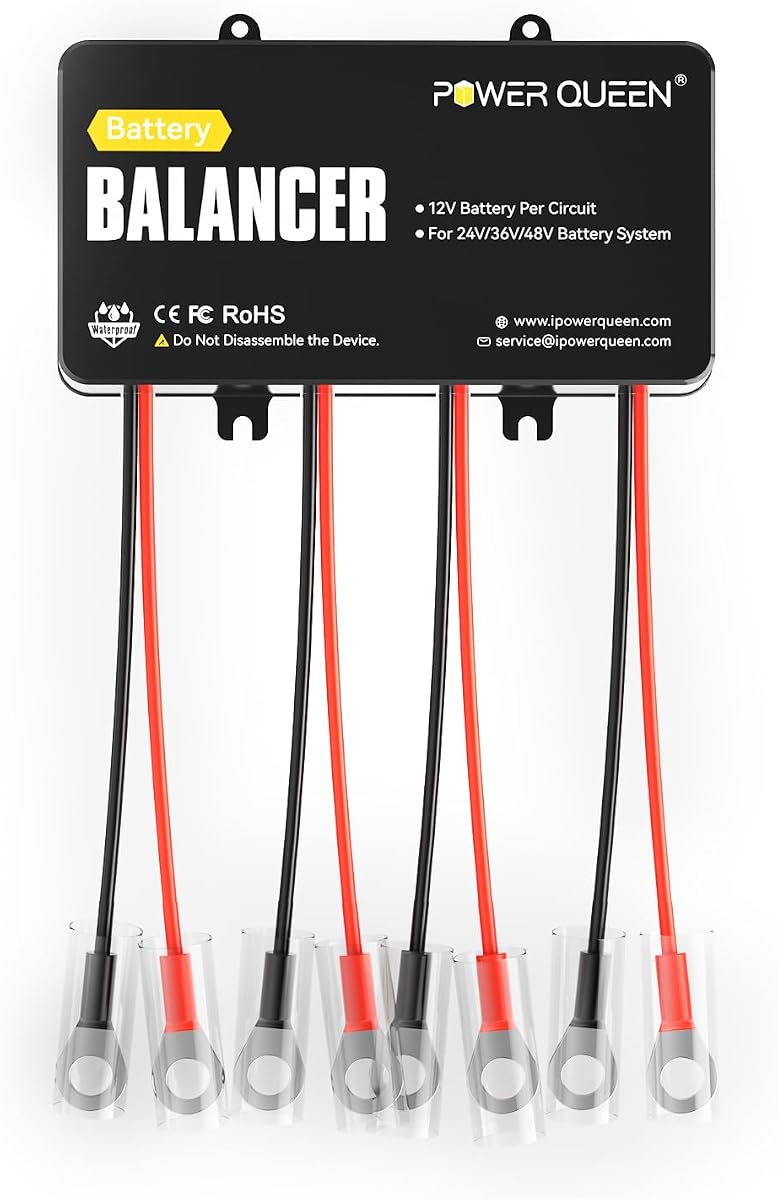
The Power Queen Battery Balancer is a robust solution for maintaining balance in 24V to 48V systems. With four connection ports, it is perfectly suited for building large 48V banks using multiple 12V batteries. It delivers consistent performance for RVs, boats, and off-grid power needs.
We may earn a commission when you buy through this link, at no additional cost to you.
Its intelligent auto-balancing feature activates when voltage differences exceed 10mV and switches to a low-power standby mode once balanced. It supports a wide range of battery types including LiFePO4, lead-acid, GEL, SLA, and FLA. Safety features like reverse polarity and high temperature protection ensure reliable operation.
While effective, users must connect batteries in parallel first then series for optimal function. For higher voltage systems beyond 48V, additional units may be necessary. These minor complexities are outweighed by the device's ability to extend battery cycle life and prevent voltage imbalances.
This balancer is an excellent choice for diverse needs where versatility and safety are paramount. It provides a hassle-free experience for those looking to maximize battery efficiency without expensive management systems. Always consult the manual for correct wiring configurations to ensure peak performance.
The unit automatically detects and corrects voltage discrepancies between batteries, ensuring they remain balanced and efficient without requiring manual intervention from the user.
By maintaining equal charge states across all cells, this equalizer helps prevent premature aging and degradation, significantly prolonging the service life of your investment.
We may earn a commission when you buy through this link, at no additional cost to you.
The Victron Energy Battery Balancer is a classic choice known for its reliability in marine and off-grid applications. It effectively eliminates load imbalance effects by equalizing the state of charge between two series-connected 12-Volt batteries. Its robust design ensures longevity in demanding environments.
We may earn a commission when you buy through this link, at no additional cost to you.
It operates by turning on when the charge voltage of a 24-Volt system exceeds 27-Volts. It then draws current from the battery with the highest voltage to ensure all batteries converge to the same state of charge. Several balancers can be paralleled to support 48V battery banks effectively.
The main trade-off is its lower current capacity of 1A compared to other models offering 10A. This may result in slower balancing for large banks but is generally sufficient for maintaining balance in steady-state conditions. Users seeking simplicity and brand trust will appreciate its straightforward functionality.
Ideal for those already using Victron ecosystems or needing a no-frills reliable solution, this balancer delivers consistent results. It ensures better utilization of your battery capacity and avoids over-stressing individual cells. Check your system voltage to ensure it meets the activation threshold for optimal operation.
This device specifically targets series-connected batteries to equalize their state of charge, which reduces stress on individual cells and improves overall system efficiency.
By allowing multiple units to be paralleled, this system can be scaled up to balance larger battery banks without requiring complex additional wiring or specialized hardware.
We may earn a commission when you buy through this link, at no additional cost to you.
This versatile battery equalizer supports a wide range of voltages from 12V up to 96V, making it suitable for various applications including golf carts, autos, and solar systems. Its rail-type buckle installation simplifies the process of mounting the module in a distribution box.
We may earn a commission when you buy through this link, at no additional cost to you.
It is designed to maintain charge and discharge balance between each battery in a pack connected in series or parallel. Compatible with lead-acid, Li-ion, and LiFePO4 batteries, it handles single batteries in the range of 7V to 18V effectively. Multiple equalizers can be connected in parallel for larger banks.
While versatile, the specific connection requirements mean users should plan their layout carefully. However, the ability to scale across such a wide voltage range is a significant advantage. This makes it a practical choice for custom configurations where standard units might not fit.
If you need a single solution that adapts to changing system requirements or diverse battery types, this equalizer offers strong flexibility. It helps extend battery service life by preventing individual cells from drifting out of balance. Always verify the specific wiring guide for your voltage class before installation.
From 12V up to 96V, this unit adapts to various system configurations, offering a versatile solution for different battery types and applications without needing multiple products.
The rail-type buckle installation allows for easy and secure mounting in distribution boxes, saving time and ensuring the module stays safely in place during operation.
We may earn a commission when you buy through this link, at no additional cost to you.
The 48V Battery Voltage Balancer with LED Display provides a visual way to monitor battery status. By connecting up to four 12V batteries in series or parallel, it ensures balanced voltage levels. The LED display adds a layer of user-friendly feedback about the system health.
We may earn a commission when you buy through this link, at no additional cost to you.
This model includes reverse polarity protection and low voltage disconnect to keep batteries in healthy condition. It is compatible with Gel, AGM, Flood Lead Acid, and Lithium batteries. For higher voltages like 96V, multiple units can be connected in parallel to expand capacity.
While the feature set is strong, the lower rating suggests some users may face setup challenges or inconsistent performance. However, the visual feedback and safety features are valuable. It serves as a good option for those who want direct monitoring without external instruments.
If you value seeing voltage levels at a glance, this balancer offers a practical solution. It extends service life by maintaining consistent balance across the bank. Ensure your installation allows easy viewing of the LED display to make the most of this feature.
The integrated LED display allows users to quickly monitor voltage levels and system status, providing immediate visual feedback on whether balancing is occurring or complete.
Reverse polarity protection and low voltage disconnect features work together to prevent damage from incorrect wiring or deep discharge, ensuring safer operation.
We may earn a commission when you buy through this link, at no additional cost to you.
The Redodo Battery Balancer is designed specifically for 24V systems using two 12V batteries. With a maximum equalization current of 10A, it effectively balances pressure differences automatically. The LED display clearly shows the voltage of the connected battery strings for easy monitoring.
We may earn a commission when you buy through this link, at no additional cost to you.
It is compatible with various battery types including LiFePO4, GEL, SLA, and FLA. The unit comes equipped with M8 OT terminals and two 50CM cables. It features dual automatic protection functions including reverse connection and high temperature protection to ensure reliable operation over time.
While tailored for 24V, it can support other configurations with proper setup. The 1-year warranty and technical support add peace of mind for buyers. Some users may find the cable length limiting for larger battery banks, but the high current capacity compensates for efficient balancing.
Ideal for RVs and marine setups with 24V banks, this equalizer provides a smart and convenient solution. It extends battery life and maintains endurance effectively. We recommend checking terminal compatibility and cable length before installation to ensure a smooth setup process.
An integrated LED display shows the voltage of connected battery strings in real-time, allowing users to quickly verify system health and balancing status without extra tools.
With both reverse connection and high temperature protection, this balancer safeguards your batteries from common electrical errors and thermal risks during operation.
We may earn a commission when you buy through this link, at no additional cost to you.
The Power Queen Battery Equalizer is a reliable solution for building balanced 48V battery banks. Its four connection ports allow seamless integration with 24V, 36V, and 48V systems. It is perfectly suited for applications like RVs, boats, and off-grid power needs.
We may earn a commission when you buy through this link, at no additional cost to you.
It features advanced safety protections including reverse polarity and high temperature safeguards to ensure reliable operation. The unit activates automatically when voltage differences exceed 10mV and switches to low-power standby mode. It supports a vast range of batteries including LiFePO4, Lead-Acid, GEL, and SLA.
While similar to other Power Queen models, its consistent performance makes it a safe choice for large banks. Users must remember to connect in parallel first then series for optimal function. These steps ensure the unit operates efficiently without unnecessary strain on components.
For those needing a dependable universal solution, this equalizer maximizes battery longevity effectively. It provides continuous voltage balancing between batteries without excessive power draw. Always review the wiring diagram to ensure your specific battery configuration matches the unit requirements.
Designed with critical safeguards like high temperature protection, this equalizer ensures reliable operation even during long-term usage or in challenging environmental conditions.
Once batteries are balanced, the unit switches to a low-power standby mode, drawing minimal energy to conserve power while still maintaining system balance.
We may earn a commission when you buy through this link, at no additional cost to you.
This Battery Equalizer 48V offers a flexible and budget-friendly solution for maintaining battery balance. It can connect multiple 24V balancers in parallel to accommodate 48V or higher-voltage systems. It triggers automatically when voltage discrepancy surpasses 10mV with a compensation current of 5A.
We may earn a commission when you buy through this link, at no additional cost to you.
Smart indicator lights provide clear visibility of the working status. It ensures charge and discharge balance between batteries in series connections. Features like reverse polarity protection and low-voltage cutoff functions safeguard battery health and prolong service life effectively across various setups.
While the 5A current is lower than premium models, it is sufficient for many maintenance scenarios. Users building 48V systems need to connect multiple units in parallel which adds cost and complexity. However, its affordability makes it a strong contender for those on a strict budget.
If you are looking for an accessible entry point to battery balancing, this model is highly effective. It ensures balanced batteries without expensive advanced electronics. Always verify that you have the necessary units and connectors to scale it up for higher voltage needs.
Designed to be accessible and affordable, this equalizer provides essential balancing features without a premium price tag, making it ideal for cost-conscious users.
Smart indicator lights allow users to quickly see if the balancer is active, ensuring you are aware of the system's current balancing status at a glance.
We may earn a commission when you buy through this link, at no additional cost to you.
The HA01 Battery Equalizer uses high-precision chips to reduce voltage deviation and maintain battery voltage balance. Its digital LED display makes it convenient for users to check product voltage quickly. It optimizes current between 0 to 5A depending on the system needs.
We may earn a commission when you buy through this link, at no additional cost to you.
The unit is made of durable materials with a flame retardant shell for safer installation. It supports 24V to 48V and any N x 12V system. It protects the battery without damage through reverse polarity protection and low voltage disconnection, making it a practical choice for series setups.
While the current is capped at 5A, the high-precision chips ensure accurate balancing. The digital display adds value for monitoring without extra tools. Users should ensure the two connected batteries are of the same type to avoid compatibility issues during operation.
For users wanting visual confirmation of their battery status, this equalizer is a strong option. It is suitable for cars, boats, and RVs. We recommend double-checking your battery types and voltage ratings before installation to ensure full compatibility and safety.
Incorporating high-precision chips allows this unit to effectively reduce voltage deviation, ensuring that batteries remain closely matched in state of charge for better performance.
An easy-to-read digital LED display provides immediate feedback on voltage levels, helping users track system health without needing additional meters or tools.
We may earn a commission when you buy through this link, at no additional cost to you.
The MAZAVA Battery Equalizer HX02 offers premium features with its LCD Display and monitor. It supports active balancing for 12V to 48V systems with voltage difference detection in thousandths. The aluminum alloy shell ensures better heat dissipation during prolonged operation.
We may earn a commission when you buy through this link, at no additional cost to you.
This unit is designed for multi-module parallel setups which is essential for large banks. It focuses on active balancing and battery health. The precision of the voltage monitoring allows for extremely tight control over battery states which helps extend life and prevent imbalances.
The higher price point reflects its advanced monitoring capabilities and build quality. While it may require specific mounting setups compared to simpler units, the precision offers value. Users investing in high-end systems will appreciate the detailed data and robust construction.
For those seeking top-tier monitoring and balancing, this is an excellent choice. It ensures every battery cell is monitored closely for optimal performance. Always ensure your system can support multi-module configurations to take full advantage of its capabilities.
With voltage difference detection in thousandths, this unit provides extreme precision in monitoring battery states, allowing for highly effective balancing and prevention of minor imbalances.
The aluminum alloy shell not only provides durability but also ensures better heat dissipation, which is crucial for maintaining performance during high-load or prolonged balancing operations.
We may earn a commission when you buy through this link, at no additional cost to you.
Selecting the right battery equilizer balancer involves understanding your system's voltage, battery type, and specific balancing needs. This guide breaks down key factors to consider.
Ensure the balancer supports your bank's total voltage whether it is 24V, 36V, or 48V. Most units handle single 12V modules so larger banks require parallel setups of multiple units. Always check the max voltage limit before purchasing.
Choose a unit that explicitly states support for your system voltage to avoid underperformance or damage.
Balancing current ranges from 5A to 10A in most models. Higher current allows faster balancing of large differences while lower current suffices for maintenance. Consider your bank size and how frequently you need active correction.
Select higher current for large banks with frequent deep cycles and lower current for steady-state maintenance.
Different balancers work with specific chemistries like Lead Acid, LiFePO4, or Li-ion. Some units support multiple types while others are optimized for one. Check the product description to confirm compatibility with your specific batteries.
Always verify that the balancer supports your exact battery chemistry to avoid damage or ineffective balancing.
Look for built-in protections like reverse polarity protection and high temperature protection. These prevent accidents from wiring errors or overheating which can lead to system failure. Safety is crucial for lithium and lead-acid banks alike.
Prioritize models with robust safety features to protect your investment and ensure safe long-term operation.
Active balancers shift energy between batteries while passive ones dissipate excess energy as heat. Active balancing is more efficient for large banks as it preserves charge. Passive units are simpler but waste energy over time.
Choose active balancing for efficiency in large systems and passive balancing for simpler smaller setups.
Low standby power ensures the balancer does not drain your battery bank when not actively balancing. Units drawing less than 5mA are ideal for off-grid systems. High drain in standby can negate the benefits of balancing over time.
Look for models that switch to low-power standby once balanced to minimize parasitic drain.
Some balancers require rail-type mounting while others use standard wiring. Check if the unit includes cables and terminals or if you need to buy them separately. Clear wiring guides help avoid errors.
Choose a unit with clear instructions and included accessories to simplify the installation process.
Some models include LED displays or LCD monitors to show voltage status. These features help you verify balancing without extra tools. Digital displays are particularly useful for large banks where visual confirmation adds peace of mind.
Opt for models with monitoring features if you want direct feedback on your battery bank's health.
Always disconnect power before wiring the balancer to prevent short circuits or reverse polarity issues. Connect positive and negative terminals to the corresponding battery terminals securely. Ensure the unit is placed in a well-ventilated area to prevent overheating.
Check the voltage status periodically using the device's indicator if available. If your system is 48V ensure multiple units are connected correctly in parallel. Replace the device if the housing cracks or the display stops working.
Keep the unit clean from dust and debris to maintain proper heat dissipation. Regularly inspect wires for corrosion or wear to ensure safe operation. Following these steps will help maximize the lifespan of both the balancer and your batteries.
It is a device that maintains equal voltage across batteries connected in series or parallel. It prevents imbalances that can degrade battery life. These balancers are essential for 24V and 48V systems.
If you use two 12V batteries in series a balancer helps keep them at the same charge level. This extends their life and prevents one battery from being overworked. It is highly recommended for long-term use.
Yes many models are compatible with LiFePO4 and other lithium types. Always check the product description to confirm chemistry support. Using the wrong type can damage the battery or the unit.
Standby mode activates once the voltage difference between batteries is minimal. The unit reduces power draw to save energy while staying connected. This ensures efficient operation without draining the battery bank.
This depends on your bank size and how often batteries are discharged deeply. A 10A unit is faster for large banks while 5A is sufficient for maintenance. Choose based on your specific usage patterns.
Yes most units allow parallel connection of multiple balancers for higher voltage systems. This ensures each module is balanced effectively across the whole bank. Follow the manual for correct wiring configurations.
Yes it protects the unit and battery from damage if wires are connected incorrectly. It is a critical safety feature found in most modern balancers. Always verify connections before powering on the system.
Most units stay connected permanently to maintain balance during charging. However some older models might require disconnection for specific charging protocols. Check your specific device manual for charging recommendations.
We have reviewed the top 10 battery equilizer balancer models including the LiTime 48V and Redodo 24V options. Each offers unique strengths in terms of voltage range, balancing current, and safety features to suit different needs.
When choosing prioritize the compatibility with your specific battery type and total system voltage. Safety features like reverse polarity protection are non-negotiable for reliable operation. Ensure your bank configuration matches the unit's requirements.
Always check current availability and verify the latest product details on Amazon before purchasing. Prices and models change frequently so staying updated ensures you get the best deal. Invest in a unit that matches your long-term energy needs.