
Sipeed Tang Nano 20K
4.5Editor score
20K LUT4 logic cells
Open source RISCV Linux support
RGB LCD and microSD ports
This guide compares the top ten FPGA retro consoles for 2026, evaluating performance, compatibility, and features to help you choose the ideal classic gaming
FPGA retro consoles offer unparalleled accuracy for classic gaming by recreating original hardware at the silicon level. These devices provide a premium experience that emulators often cannot match due to timing precision. Choosing the right board requires understanding core count, connectivity, and supported systems.
We have evaluated the leading options available today based on hardware specifications, community support, and user feedback. Our analysis covers versatile development kits and dedicated handhelds designed for nostalgic gameplay. Each entry brings unique strengths for developers and players seeking authentic retro performance.
Every selection highlights key capabilities like HDMI output, expansion ports, and emulator compatibility. While prices vary, focusing on features ensures you find a device that meets your needs. Keep in mind that availability and costs can change frequently across different retailers.
4.5Editor score
4.5Editor score

4.5Editor score
This side-by-side comparison outlines the key specifications and capabilities of the top ten FPGA retro consoles. Whether you need a development board or a handheld system, these details clarify performance differences and feature sets.




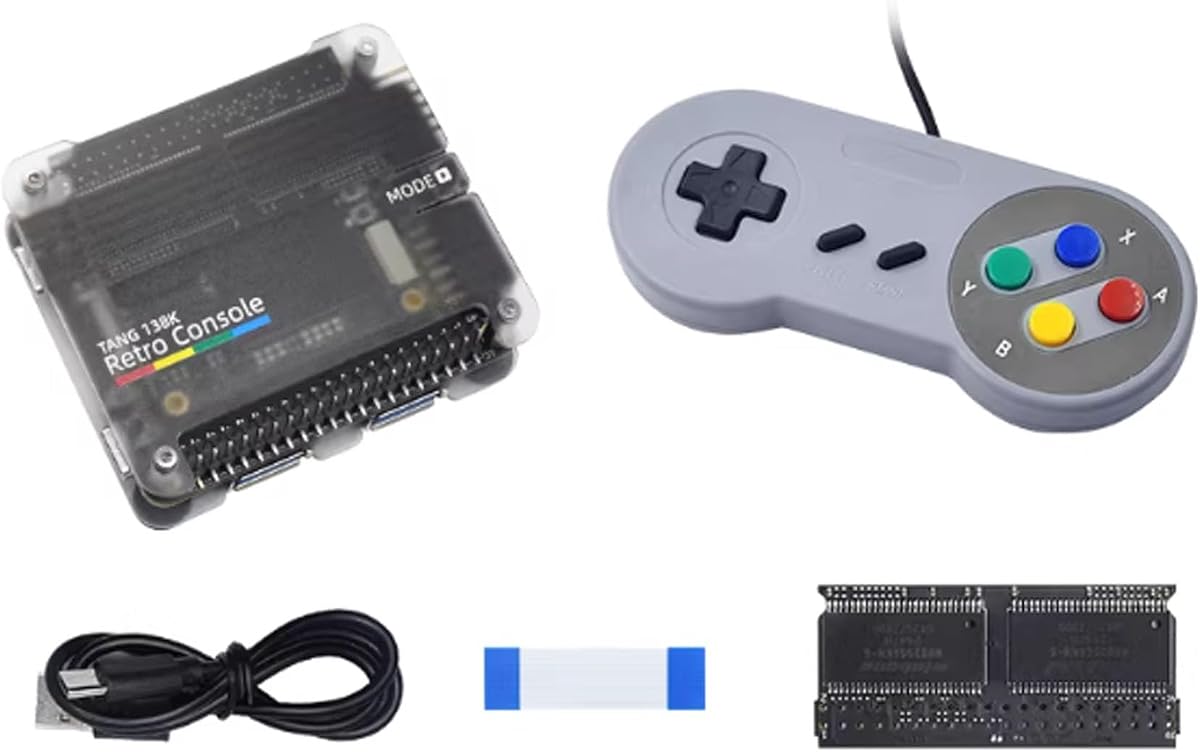
The Sipeed Tang Console 138K stands out as a powerful FPGA development board tailored for retro gaming enthusiasts. It combines substantial logic capacity with a compact design that fits easily on any desk. Users appreciate its versatility for both hobbyist projects and dedicated retro experiences.
We may earn a commission when you buy through this link, at no additional cost to you.
Key strengths include its dual FPGA options allowing users to choose between 60K or 138K LUTs based on project needs. The onboard 800MHz RISC-V AE350 hardcore enables running complex applications alongside emulator cores. HDMI output supports high resolution displays ensuring crisp visuals for classic games.
While highly capable, this board demands some technical familiarity with FPGA workflows to unlock its full potential. It is not a plug and play console without initial configuration efforts. These trade-offs are acceptable for those seeking customization and learning opportunities in hardware programming.
Developers and advanced users looking to build custom retro cores will find this console ideal. Its expandability through PMOD and GPIO ports opens endless possibilities for unique modifications. We recommend it for anyone committed to exploring FPGA technology deeply.
The 138K LUT configuration handles complex emulator cores like NESTang or SNESTang with ease.
Its fanless design ensures quiet usage making it perfect for living rooms or libraries.
We may earn a commission when you buy through this link, at no additional cost to you.
This Sipeed Tang Console variant offers a robust development experience with its Tang Mega SOM integration. It is designed for those who want to dive deep into FPGA IDE programming while enjoying retro gaming capabilities. The inclusion of BL616 MCU adds flexibility for debugging and custom firmware.
We may earn a commission when you buy through this link, at no additional cost to you.
Performance is enhanced by onboard DDR3 RAM and SSRAM which ensures smooth operations for demanding projects. USB3.0 ports provide fast data transfer and HDMI output supports standard resolutions for monitors or TVs. The system supports various emulator cores allowing diverse game library access.
Setup involves configuring the Linux environment and loading the appropriate FPGA bitstream which may challenge novices. However, the detailed SDK documentation helps mitigate this hurdle with clear instructions. Users gain significant freedom to modify hardware behavior compared to closed systems.
Ideal for developers and tinkerers this console bridges the gap between learning and play. Its small form factor allows portable integration into custom handheld projects. We suggest it for users comfortable with Linux and FPGA toolchains.
Onboard DDR3 and SSRAM provide the necessary bandwidth for complex video processing tasks.
USB3.0 and multiple USB2 ports allow connection of various controllers and peripherals easily.
We may earn a commission when you buy through this link, at no additional cost to you.
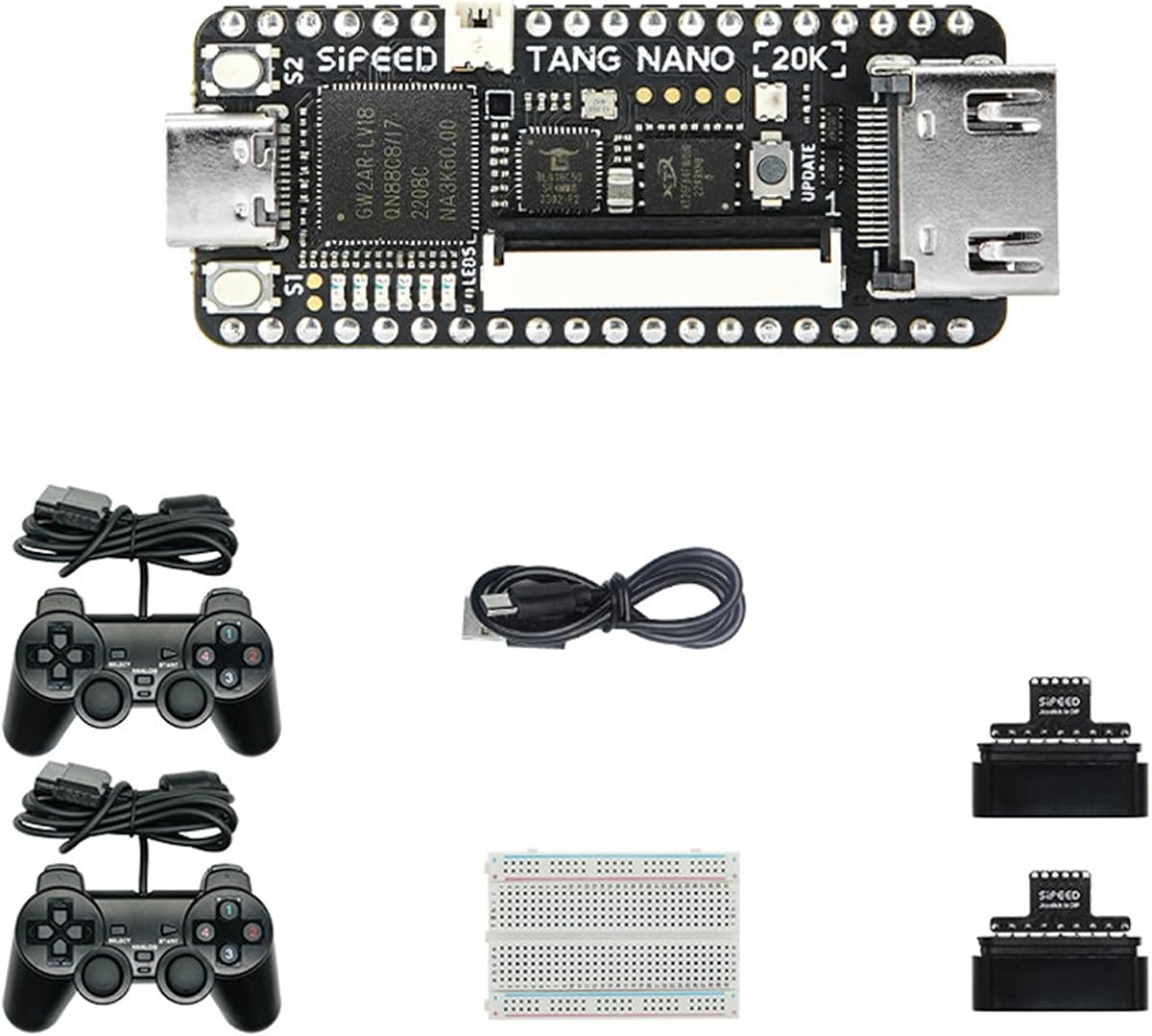
The Sipeed Tang Nano 20K represents an accessible entry point into the world of FPGA retro consoles. It combines essential features like SDRAM and a Linux-ready environment at a budget-friendly price. Users find it ideal for learning FPGA design basics while running classic game emulators.
We may earn a commission when you buy through this link, at no additional cost to you.
Its 20K LUT4 logic cells support a variety of cores including NES and SNES. The onboard debugger facilitates easy programming and debugging via USB interfaces. This board also supports RGB screens which appeals to those building custom handheld devices.
While it lacks the raw power of higher-end models it is sufficient for most standard emulation needs. The learning curve is manageable thanks to extensive community wikis and tutorials. New users should expect to spend time configuring software and connections initially.
Budget-conscious hobbyists and students will find this board an excellent starting point. It balances cost and capability effectively for non-commercial projects. We recommend it for those who want to experiment without heavy financial investment.
Access to open source tools allows full customization of the firmware and core logic.
Its small footprint makes it easy to integrate into portable projects like handheld shells.
We may earn a commission when you buy through this link, at no additional cost to you.
This kit version of the Tang Nano 20K provides a comprehensive package for enthusiasts entering FPGA development. It includes all necessary components to start building retro game consoles quickly. The integration of RISCV Linux enables a flexible environment for running applications.
We may earn a commission when you buy through this link, at no additional cost to you.
Users benefit from the BL616 chip which simplifies debugging processes significantly. The board supports multiple display outputs allowing connections to various screens. Performance remains solid for 8-bit and 16-bit emulation tasks without significant latency.
Some users report variability in kit contents requiring careful verification before beginning projects. Setup can be time consuming without prior experience with FPGA tools. However, the detailed wiki resources help clarify steps and troubleshoot issues effectively.
Students and makers seeking a complete solution will appreciate this kit. It removes the guesswork of sourcing individual components. We suggest it for those looking to dive into hardware hacking with guidance.
The onboard BL616 chip provides convenient USB to UART and SPI communication channels.
Multiple output options allow connection to HDMI or custom RGB LCD panels easily.
We may earn a commission when you buy through this link, at no additional cost to you.
As a single board computer the Sipeed Tang Nano 20K offers reliable performance for retro gaming and prototyping. Its GW2AR-18 chip ensures enough resources for basic emulation tasks. The Linux system provides a familiar interface for users accustomed to PC-based development.
We may earn a commission when you buy through this link, at no additional cost to you.
Key features include support for high speed SPI communication which aids in data transfer with peripherals. DSP units allow accelerated digital computation useful for custom signal processing projects. Multiple display outputs mean you can connect different screens simultaneously if needed.
However, this board may struggle with more demanding 32-bit emulator cores due to logic limitations. Users must rely on SD cards for storage and configuration which adds a layer of complexity. It is best suited for simpler projects or educational use.
We recommend this SBC for those who prioritize affordability and simplicity over raw power. It works well for learning Linux environments and basic FPGA logic. Ideal for students or hobbyists with limited budgets.
Linux provides a stable base for running emulator software and managing system resources.
Multiple DSP units support 18-bit multiplication for complex digital signal processing tasks.
We may earn a commission when you buy through this link, at no additional cost to you.
The Arduboy FX-C is a unique offering that combines retro gaming with coding education in a credit card sized device. It comes preloaded with hundreds of classic games requiring no downloads. This makes it perfect for instant play or introducing kids to hardware programming.
We may earn a commission when you buy through this link, at no additional cost to you.
Its FX chip enhances performance allowing for smoother gameplay compared to original models. The USB-C port enables multiplayer connectivity via a custom link cable adding social fun. Users can easily create their own games using C++ through the Arduino IDE.
The OLED screen is sharp but small which may not suit everyone for extended play sessions. It focuses on 8-bit experiences rather than modern consoles limiting the library scope. However, the strong community ensures a constant stream of new content.
This console is ideal for educators and families looking for STEM toys. It encourages creativity and technical skills while providing entertainment. We suggest it for those interested in game development basics.
Free online tutorials help users learn C++ and game creation step by step.
Built with stamped aluminum and polycarbonate it withstands daily travel and use.
We may earn a commission when you buy through this link, at no additional cost to you.
The Trimui Brick Pro delivers a premium handheld experience with its high resolution fully laminated display. This device is designed for serious gamers who value visual clarity and responsive controls. It runs Linux OS allowing custom ROM loading via TF card.
We may earn a commission when you buy through this link, at no additional cost to you.
Performance is driven by an Allwinner A133P chip that minimizes frame drops during gameplay. Dual Hall Effect joysticks ensure precise input without drift issues over time. The large 5000mAh battery supports long travel sessions without needing frequent charging.
Note that this unit does not include a memory card or preloaded games requiring user setup. While the hardware is robust the initial configuration might deter casual users. However, the benefits of customization outweigh this minor inconvenience for enthusiasts.
We recommend this device for those seeking a high-end portable console for retro games. Its build quality and screen make it stand out in the market. Ideal for dedicated collectors and travelers.
OCA full lamination ensures vivid colors and sharp contrast for all angles.
Hall Effect technology provides smooth analog input with zero mechanical drift over time.
We may earn a commission when you buy through this link, at no additional cost to you.
The RG40XXV offers a straightforward gaming experience with a Linux system and preloaded games. This console is designed for players who want to start playing immediately without technical hassle. It provides a reliable platform for classic titles with good performance.
We may earn a commission when you buy through this link, at no additional cost to you.
Users appreciate the convenience of having a curated game library installed from the start. The device runs a stable Linux OS that ensures smooth operation during sessions. Its handheld form factor makes it easy to carry anywhere for entertainment.
Technical customization is more limited compared to development boards like the Tang series. Users might find the interface less flexible for adding complex mods. However, the simplicity ensures a hassle-free experience for non-technical players.
We suggest this console for casual gamers and those new to retro handhelds. It removes the setup barriers found in other devices. Ideal for gift-givers and beginners.
The preloaded games eliminate the need for external setup or file transfers.
Linux OS ensures consistent frame rates and low latency during gameplay sessions.
We may earn a commission when you buy through this link, at no additional cost to you.
This white variant of the Trimui Brick PRO brings powerful customization options to retro handhelds. It runs a fully open-source Linux system allowing total control over your library. The display features a high resolution and fully laminated screen for crisp visuals.
We may earn a commission when you buy through this link, at no additional cost to you.
Control precision is enhanced by Hall Effect joysticks that eliminate mechanical drift. The device includes a massive battery supporting long play sessions comfortably. Fast charging via USB-C ensures minimal downtime between games.
While setup requires adding your own ROMs this process offers freedom to curate games. Users must provide their own SD card which is an extra cost consideration. Once configured, the system is highly stable and responsive.
We recommend this device for dedicated collectors who want full control. The build quality and screen make it a top-tier choice. Ideal for tech-savvy travelers.
Users can install custom interfaces and tools to personalize their gaming experience.
5000mAh battery capacity supports hours of continuous gaming without recharging needs.
We may earn a commission when you buy through this link, at no additional cost to you.
The Sipeed Tang Console 138K Retro Premium board is a top choice for custom FPGA projects. It offers substantial logic resources for complex emulator cores and hardware designs. The HDMI output ensures high-quality visuals for retro game displays.
We may earn a commission when you buy through this link, at no additional cost to you.
Dual PMOD ports allow easy expansion with custom sensors or additional interfaces. Its design fits as a HAT for Raspberry Pi 5 enabling hybrid projects. The board is compact yet powerful enough for serious development tasks.
It does not come as a ready-to-play console out of the box. Users must handle FPGA programming and configuration which can be challenging for beginners. However, experienced developers will appreciate the flexibility and performance.
We suggest this board for hobbyists building custom retro systems. It provides a solid foundation for advanced projects. Ideal for FPGA enthusiasts.
The 138K LUTs enable processing of multiple complex cores simultaneously.
Dual PMOD ports allow connecting custom hardware extensions easily.
We may earn a commission when you buy through this link, at no additional cost to you.
Selecting the right FPGA retro console requires evaluating several technical factors to ensure it meets your gaming and development needs.
Logic capacity measured in LUTs determines how complex the emulator cores can be. Boards with 138K LUTs handle modern retro cores better than 20K versions. Higher capacity allows for more accurate reproduction of original hardware timing.
For beginners a 20K board is sufficient for 8-bit and 16-bit systems. Advanced users should look for 60K or 138K options for expanded capabilities.
Check if the board supports HDMI or RGB LCD output. HDMI is ideal for connecting to modern TVs easily. RGB LCD is necessary for building custom handheld devices.
Ensure the chosen console supports the resolution you prefer. Most models support 720P or 1080P for crisp visuals.
Expansion ports like PMOD or GPIO allow adding custom features such as controllers or sensors. A versatile console lets you modify hardware without soldering new parts.
Look for multiple USB ports and SD card slots for peripheral support. These features enhance the utility of your setup significantly.
Some boards run Linux which provides a flexible environment for software development. Others require custom firmware loading which demands technical expertise. Choose based on your comfort with system administration.
Linux support simplifies game management and emulator updates. It is a valuable feature for long-term usability.
Handheld models need efficient battery management for portability. Desktop boards typically rely on USB power which is convenient but limited. Consider how long you plan to use the device away from outlets.
Look for fast charging support in handhelds to minimize downtime. Desktop boards should have stable power input options for consistent performance.
Active communities provide documentation, tutorials, and custom cores essential for success. Without support, troubleshooting issues becomes difficult and time-consuming. Check forums and wikis for available resources.
Strong community backing ensures long-term viability of the console. It allows for continuous updates and improvements to the software.
Durable materials ensure the device withstands regular use and travel. Handhelds should have robust screens and buttons to prevent wear. Desktop boards must have stable connectors and heat dissipation.
Premium models often use aluminum or polycarbonate for added strength. Investing in quality builds prevents premature failures and repairs.
User-friendly interfaces reduce the time spent on configuration. Some consoles offer plug-and-play experiences while others require coding. Assess your willingness to manage technical setup.
Preloaded game options simplify initial enjoyment. Choose models that balance flexibility with accessibility for your needs.
Start by installing the necessary software or FPGA bitstreams from official wikis. Ensure you use compatible controllers and peripherals for best results. Follow step-by-step guides for initial setup and testing.
Keep your device in a dry and cool environment to avoid hardware damage. Clean ports and screens regularly with soft cloths to maintain performance. Use protective cases when traveling to prevent accidental drops.
Regularly update firmware or cores to benefit from performance improvements. Back up your configurations and saved games to prevent data loss. Engage with online communities to share tips and custom mods.
FPGA retro consoles recreate original hardware at the circuit level ensuring exact timing and behavior. This eliminates input lag and graphic glitches common in software emulation. Users experience games exactly as they were intended by original developers.
Some models include preloaded games while others require manual loading via SD card. Check product details to confirm availability before purchasing. Most allow customization to fit your personal library preferences.
Basic consoles are plug-and-play but FPGA development boards need configuration skills. New users should be prepared to learn software tools and file management. Communities offer tutorials to help beginners manage the process.
These consoles are optimized for classic systems up to 16-bit or 32-bit generations. They do not support modern AAA titles or high-resolution 3D games. Focus is on accurate replication of vintage gaming experiences only.
Most devices support standard USB controllers via ports or adapters. Some include Bluetooth capabilities for wireless gaming. Ensure the controller inputs match the console's supported protocols.
Software updates are usually downloaded from official websites and installed via SD card. Some devices support online firmware updates for convenience. Always back up data before performing any updates to avoid loss.
Yes, boards like the Tang Nano 20K are designed for learners with extensive guides. They provide hands-on experience with hardware design and logic programming. Many users start with these to explore electronics deeply.
We have explored ten distinct options ranging from development boards to premium handhelds in this guide. Each product offers unique strengths for specific needs like custom builds or portable gaming. The Sipeed Tang Console 138K leads in raw power while the Trimui Brick Pro excels in portability.
Prioritize features like logic capacity and display outputs based on your intended use. If you are a developer focus on expandability and documentation. For gamers, screen quality and battery life should take precedence.
Keep in mind that pricing and availability can fluctuate so always verify current details before buying. Investing in a well-supported board ensures a smoother and more enjoyable experience. We hope this guide helps you find the perfect retro solution.