T-H Marine 2-Way Boat Alarm System
2.9Editor score
128 dB horn alert
Two-way remote feedback
Adjustable shock sensor
This guide compares the best Alarm System for Boats including monitoring hubs and security alarms to help you protect your vessel from theft and flooding
Securing your vessel requires reliable technology that warns you of theft or flooding. A good alarm system for boats monitors critical areas and sends alerts instantly to your phone or remote device.
We compared ten top products based on sensor accuracy, connectivity range, and marine durability. Our analysis covers monitoring hubs, vibration alarms, and tracking devices suitable for various vessel types and budgets.
Each pick shows key features, pros, cons, and ideal use cases for different boaters. Please note that prices and availability change frequently so verify current details before purchasing any item today.
2.9Editor score

4.8Editor score

4.7Editor score
The table below provides a side-by-side comparison of all ten products including their primary functions, connectivity options, and key specifications to help you choose the right security solution.
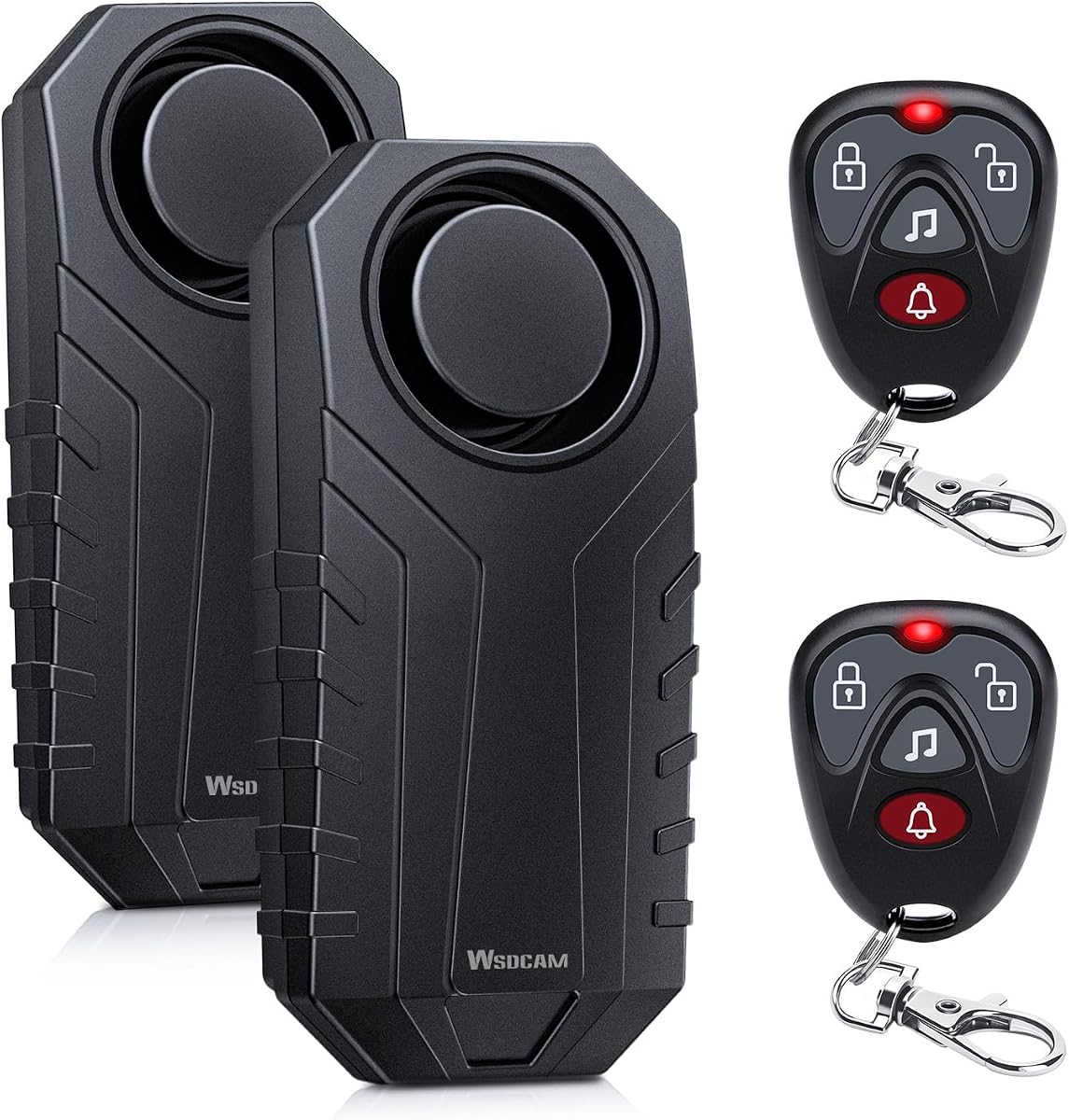


This WSDCAM system provides a loud vibration alarm suitable for securing gear on your boat or trailer. With a 4.6 rating it offers strong performance at an accessible price point for boaters needing extra protection.
We may earn a commission when you buy through this link, at no additional cost to you.
The 113dB alarm effectively scares off intruders while the IP65 rating ensures it withstands wet marine conditions. You can adjust sensitivity and volume to avoid false alarms from normal boat movement while still detecting real threats.
Installation is straightforward with adhesive backing and straps so you can attach it to lockers or storage areas. The main trade-off is that it relies on batteries rather than continuous ship power which requires periodic monitoring.
If you need a portable and affordable deterrent for temporary storage or small items this alarm delivers solid value. It is best used as a supplementary layer rather than a full onboard security system.
Use this alarm on luggage or gear bags kept in lockers to alert you if they are moved unexpectedly.
Fine tune the sensor to avoid false triggers from engine vibrations while maintaining detection of unauthorized tampering.
We may earn a commission when you buy through this link, at no additional cost to you.
The LocMarine hub stands out as a complete security and health monitoring solution for boats. Its 4.8 rating reflects strong satisfaction from users who need detailed alerts without complex wiring or network setups.
We may earn a commission when you buy through this link, at no additional cost to you.
This device tracks bilge water, battery levels, GPS location, and entry points instantly via LTE. All necessary sensors come included so you get immediate visibility into critical conditions while your vessel is docked or stored.
While the price is higher than standalone alarms the peace of mind from continuous monitoring is valuable for expensive assets. You may need stable cellular coverage in your marina area for full functionality but connectivity is generally widespread.
Boaters who want an insurance-ready comprehensive system should consider this hub highly. It simplifies security management and provides the data needed to protect your vessel effectively from theft and environmental damage.
Setup is easy because it does not require integration with existing NMEA networks making it accessible for all boat types.
Detailed logs and alerts help satisfy insurance requirements for monitored vessels and support claims processing if incidents occur.
We may earn a commission when you buy through this link, at no additional cost to you.
Skyhawk Oversea offers a wireless gateway that simplifies adding smart monitoring to any vessel. With a 4.5 rating users appreciate the ease of installation and reliable alerting without draining the boat's main battery.
We may earn a commission when you buy through this link, at no additional cost to you.
This hub runs on AA batteries for up to three years and links wirelessly to various sensors including bilge and entry detectors. The IP67 rating ensures it survives harsh marine environments while delivering alerts within seconds of an event.
The main consideration is that you must buy additional sensors to unlock full monitoring capabilities. However the drop-in install process saves time and technical effort compared to hardwired systems which often need professional setup.
If you prioritize flexibility and easy upgrades this gateway provides a solid foundation for a smart boat system. It is ideal for boaters who want to start small and expand security without major electrical work.
Install in minutes without cutting wires or connecting to shore power which preserves your vessel's electrical integrity and avoids clutter.
Replaceable AA batteries power the hub for years ensuring zero draw on your boat's battery even during long storage periods.
We may earn a commission when you buy through this link, at no additional cost to you.
The Murphy ST10AS-LM is a professional-grade annunciator designed to alert crews about critical vessel problems. It earns a 4.1 rating for reliability in marine environments where clear notification is vital for safety and operational continuity.
We may earn a commission when you buy through this link, at no additional cost to you.
It supports ten distinct alarm points so you can monitor engine temperature, bilge levels, and auxiliary power status simultaneously. The remote design allows you to place the display where it is most visible for quick response during emergencies.
Installation may require additional mounting hardware since no bracket is packaged with the unit. This trade-off keeps costs lower but means you must plan for secure placement in your cockpit or cabin ahead of time.
For boat owners who want a dependable system to notify crew of mechanical or flooding issues this annunciator is a strong choice. It prioritizes functionality and clarity over user-friendly consumer features to deliver essential warnings.
Track multiple systems like gear and power plants with one panel to keep your crew informed of developing issues quickly.
Mount the remote display where you need most visibility since it is designed to work outside of engine compartments or central hubs.
We may earn a commission when you buy through this link, at no additional cost to you.
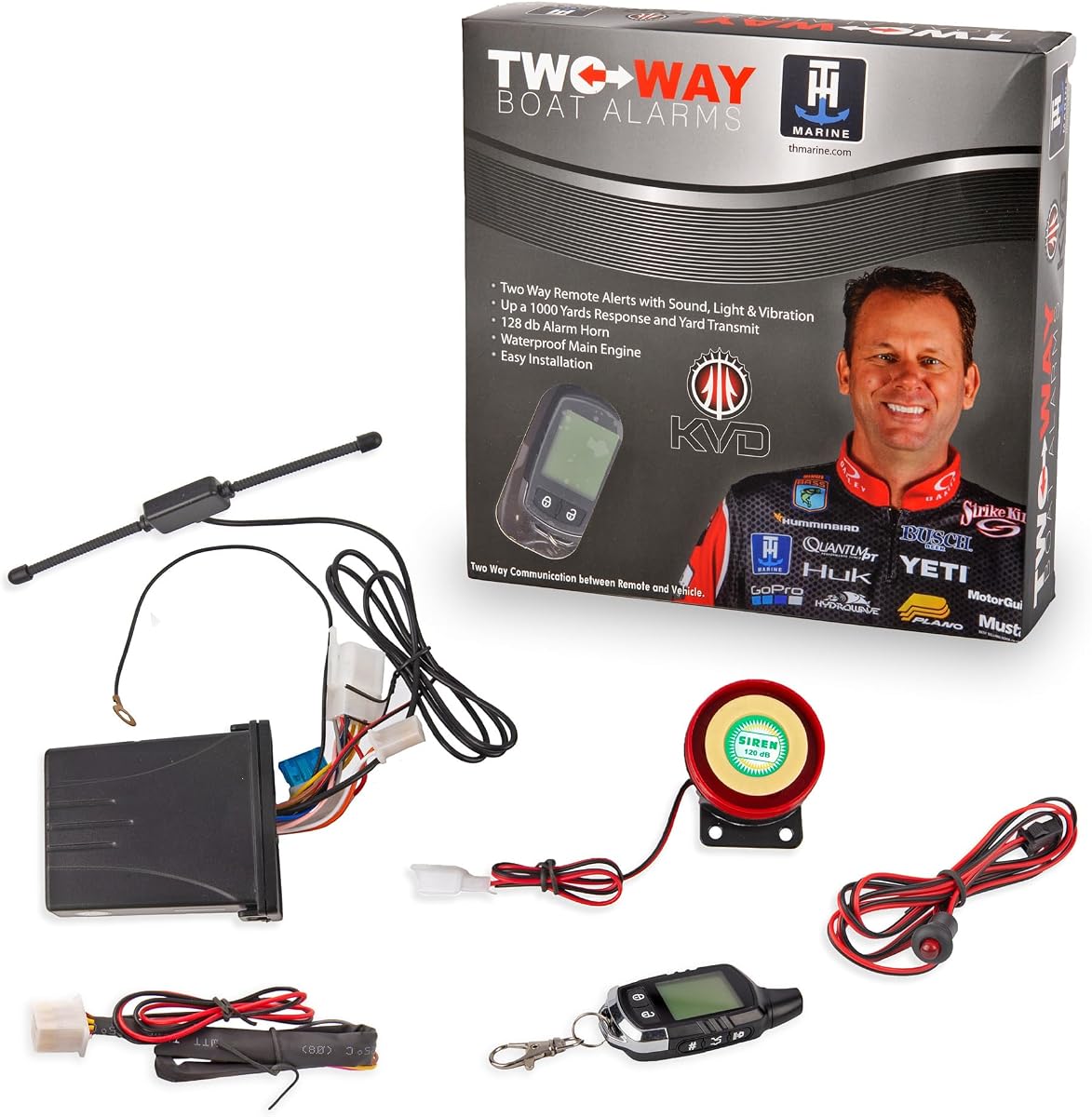
The T-H Marine 2-Way system offers an extensive alert range and robust horn for deterring theft. While it holds a 2.9 rating it provides features like a 128 dB alarm and shock sensor at a competitive price for security.
We may earn a commission when you buy through this link, at no additional cost to you.
Its remote communicates up to 3000 yards which is useful for large marinas or open storage areas. The feedback on the remote vibrates and beeps so you stay aware even when away from the vessel in noisy environments.
Installation is designed for do-it-yourself setup with simple sensitivity controls to reduce false alarms. However some users report mixed experiences with reliability and connection stability which may affect overall satisfaction over time.
If you prioritize range and audible alerts on a budget this system offers good value despite mixed reviews. It is best suited for temporary security needs or as part of a larger layered protection plan.
Control and receive alerts from far away with a range that exceeds many competitors for flexible security monitoring across large areas.
The remote provides vibration and sound feedback to confirm triggers so you know the alarm is active without looking at the boat.
We may earn a commission when you buy through this link, at no additional cost to you.
BoatSense delivers advanced smart monitoring with remote pump control and detailed health checks. With a 4.7 rating it satisfies boaters who want proactive alerts and hands-on management of bilge systems from anywhere.
We may earn a commission when you buy through this link, at no additional cost to you.
The system integrates GPS tracking and voltage monitoring to prevent theft and battery failure. You can trigger the bilge pump via your phone which is crucial if a leak occurs while you are away from the vessel.
Setup is easy with no extra accessories needed for basic functions and it handles most 12V systems seamlessly. The main requirement is keeping the app connected and ensuring your phone receives push notifications reliably to maintain safety.
Boaters who want control over their vessel's health should invest in this premium solution. It provides a comprehensive layer of protection that goes beyond simple alarms to actively manage and report on critical systems.
Remotely activate your bilge pump during storms or emergencies to clear water without needing to be physically present on the boat.
Automated tests verify pump and float switch readiness so you know components work correctly before issues develop in the bilge.
We may earn a commission when you buy through this link, at no additional cost to you.
The Loc-R-Bar combines a physical security bar with an alarm padlock to protect deck compartments. Its 4.3 rating reflects trust from anglers who need reliable gear protection while leaving boats unattended at ramps or hotels.
We may earn a commission when you buy through this link, at no additional cost to you.
The stainless steel bar ties multiple lockers together preventing thieves from popping a single hatch to access tackle. The integrated alarm padlock triggers a loud noise if tampered with which serves as a strong deterrent without wiring.
Installation is straightforward using the included brackets to secure the bar across your deck. While this method protects gear well it does not send mobile alerts so you should combine it with monitoring devices for theft prevention.
For boaters leaving equipment in public areas this bar offers peace of mind through physical resistance and sound alerts. It is an excellent complement to electronic systems by addressing the physical access points of your vessel.
Lock multiple compartments at once to ensure thieves cannot easily access valuables even if one latch is compromised during an attack.
The integrated alarm on the padlock activates when movement is detected adding an auditory warning to physical resistance against unauthorized access.
We may earn a commission when you buy through this link, at no additional cost to you.
This PIR sensor adds motion detection to your smart boat system by alerting when people enter cabins or decks. It has no rating yet but features like self-power and waterproofing make it suitable for marine environments.
We may earn a commission when you buy through this link, at no additional cost to you.
Powered by AA batteries it can last up to five years without draining your vessel's power. The 16 ft range covers most interior spaces while the compact design allows discreet placement in salons or walkways.
To receive notifications you need an Oversea Hub and a subscription so plan accordingly for full functionality. This dependency limits standalone use but integrates well if you are building a complete smart security ecosystem on your boat.
If you are using Oversea products this sensor is an excellent way to expand coverage without wiring new devices. It is best used alongside hubs that relay alerts to ensure you are informed of any onboard activity.
Receive alerts within seconds of movement to catch unauthorized access immediately and respond before any theft or damage occurs.
Use screws, velcro, or magnets to mount the sensor anywhere on your boat for optimal coverage without cutting or drilling holes.
We may earn a commission when you buy through this link, at no additional cost to you.
The Murphy ST10AS-F holds a perfect 5.0 rating indicating high satisfaction among users who need reliable alarm annunciation. It is designed for marine pilot houses to alert crews of developing problems in engines or auxiliary systems.
We may earn a commission when you buy through this link, at no additional cost to you.
With a flange mount included installation is more straightforward than other models in this line. The remote annunciator ensures critical alerts are visible even when the engine room or bilge is not in direct view of the crew.
This unit is best used for dedicated monitoring roles where clarity and reliability are paramount over consumer features. It is a strong choice for professional setups or owners who want a robust warning system for their vessel.
If you need a guaranteed alert system for critical mechanical issues this annunciator delivers high trust. It complements security setups by ensuring safety-related alarms get immediate attention from anyone on board.
The included bracket simplifies mounting and ensures the unit stays secure even in rough marine conditions requiring less extra hardware.
Monitor engine and gear problems with clear remote alerts that help prevent catastrophic failures while you are away from the engine room.
We may earn a commission when you buy through this link, at no additional cost to you.
The SPY SPOT GV57 merges GPS tracking with bilge detection for a complete safety package. It earns a 5.0 rating for its reliability in monitoring vessel location and water levels during storage or unattended periods.
We may earn a commission when you buy through this link, at no additional cost to you.
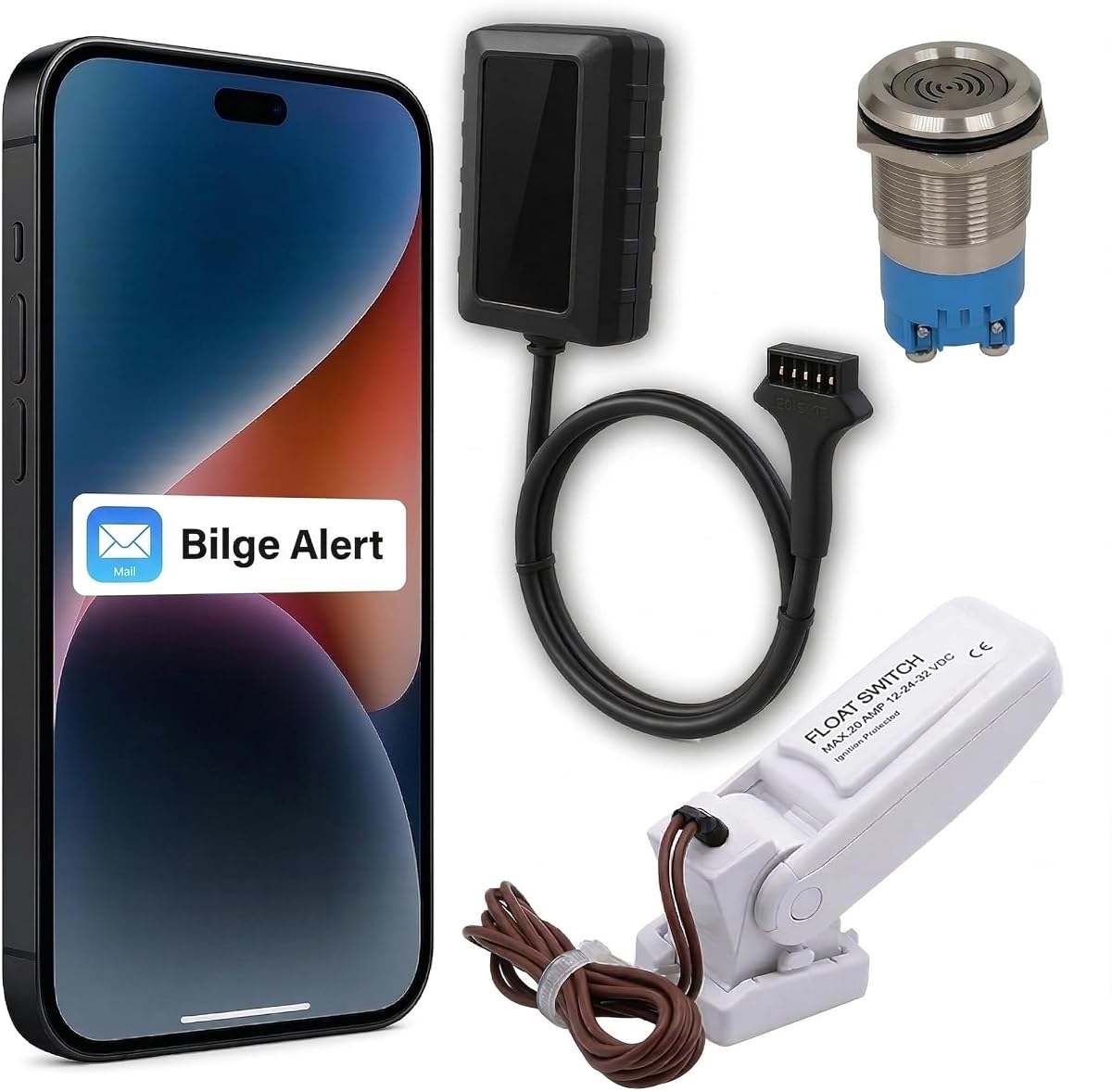
It includes a float switch that triggers an audible alarm when water rises and sends alerts for movement or geo-fence breaches. The low power design ensures it does not drain your boat's battery during long storage seasons.
Professional installation is recommended to ensure waterproof sealing and proper wiring which protects the device from damage. This requirement adds initial effort but guarantees the system performs correctly in harsh marine environments.
For boat owners seeking a reliable tracker and flood detector in one bundle this system is highly recommended. It provides peace of mind with instant alerts and strong construction to handle daily marine challenges.
Track movement and water levels simultaneously to prevent theft and flooding without buying separate devices for each security need.
Engineered to minimize battery drain so your vessel remains ready to start even after months of storage with the tracker active.
We may earn a commission when you buy through this link, at no additional cost to you.
Choosing the right security solution requires evaluating your vessel type, storage conditions, and desired alert methods. This guide breaks down the key factors that ensure you select a system that meets your needs.
Connectivity determines how alerts reach you. Cellular hubs use LTE for global access while radio systems rely on range and line of sight. Ensure your marina or storage area has coverage if you choose cellular.
Prioritize systems with reliable signal coverage in your specific area to guarantee alerts are received when you need them most.
Adjustable sensors prevent false alarms from wind, waves, or engine vibrations. Look for models with sensitivity settings you can tune to your environment to reduce noise and maintain alert accuracy.
Test or read reviews about vibration detection to ensure the system does not trigger unnecessarily during normal boat movement.
Power options range from onboard wiring to battery independence. Battery-powered hubs prevent strain on your boat's electrical system which is vital for storage. Wired systems offer continuous operation but require complex installation.
Choose a power source that balances convenience with battery life to avoid unexpected shutdowns or drain during long periods of inactivity.
Marine conditions demand durable construction. Look for IP65 or higher ratings to protect against rain and splash. Stainless steel or ruggedized plastic ensures longevity despite exposure to salt and humidity.
Verify the IP rating matches your exposure level to ensure the device survives wet environments without failing.
Alert range determines how far away you can be when notified. Some systems send text or app alerts while others require physical proximity for remote control feedback. Decide what notification method fits your routine.
Select a notification type that fits your daily habits whether it is SMS, app push, or direct sound alerts from a remote.
DIY friendly systems save time and money. Wireless hubs require less technical skill than wired annunciators. Consider your comfort level with electrical work or budget for professional help if wiring is complex.
Evaluate installation complexity early to avoid unnecessary expenses or safety risks during setup.
If you already have a bilge pump or smart network check compatibility. Some sensors integrate with existing apps while others require separate hubs. Matching systems prevents fragmented monitoring.
Ensure the alarm system supports any existing sensors you own to maximize value and reduce redundant hardware.
Consider both the upfront price and any ongoing fees. Cellular hubs often require subscriptions for data. Compare total cost of ownership to find the most economical solution for your long-term use.
Factor in recurring fees to avoid unexpected costs after the initial purchase.
Install sensors in protected yet accessible locations to avoid physical damage while ensuring they detect movement or water accurately. Secure wiring and connections with marine sealant to prevent corrosion and ensure durability.
Regularly test alarms to confirm batteries are charged and alerts reach your device. Adjust sensitivity settings seasonally as weather and boat usage change to reduce false triggers.
Clean sensors and housing with fresh water after exposure to salt spray. Inspect for wear or debris that might block detection and replace batteries promptly to maintain continuous protection.
A cellular monitoring hub with real-time alerts is ideal because it works over LTE networks. This ensures you are notified of movement or bilge water even if you are miles away. Choose a hub with strong marine durability to handle constant dock conditions.
Some systems like standalone vibration alarms or wireless hubs are DIY friendly. However, wired annunciators or trackers may require a marine technician to ensure proper sealing and electrical safety. Always check the installation requirements before purchase.
While a vibration alarm can be mounted on a boat it may lack marine-specific ratings. Ensure any unit you use is waterproof and adjustable to handle boat vibrations. A dedicated marine alarm is generally more reliable for extended use.
Adjust the sensitivity settings of your alarm to filter out minor movements. Position the sensor away from direct wind impact. Regular testing helps you find the right balance between security and noise reduction.
Wireless hubs typically last one to three years on batteries depending on usage. Cellular hubs may have shorter life if transmitting data frequently. Check the manufacturer's specs to plan for battery replacement.
Most marine security systems feature IP65 or higher waterproof ratings. This protects them from rain and splash. Always verify the specific IP rating before installing in exposed or wet areas.
Smart hubs send push notifications, SMS, or emails via cellular data. Remote systems may require a paired device. Ensure your phone settings allow alerts from the app or service.
Some models include built-in GPS tracking while others are standalone alarms. Choose a system with integrated GPS if location monitoring is a priority for theft prevention.
We reviewed ten top options ranging from standalone alarms to comprehensive monitoring hubs. The LocMarine Hub and BoatSense offer strong all-in-one solutions while budget alarms like WSDCAM provide portable protection.
Consider your storage needs and connectivity when choosing. A system that offers both GPS tracking and bilge alerts ensures you are informed about safety and theft risks without relying on multiple devices.
Check current prices and availability before buying since market conditions change. Invest in a system that fits your vessel's size and your personal security habits to keep your boat safe year-round.