
Low Noise RF Amplifier 0.1-2000MHz 32dB Gain
4.2Editor score
0.1 to 2000MHz coverage
32dB gain for weak signals
Battery friendly power consumption
This guide compares the top ham radio amplifier for boosting signal options including linear amps and LNAs to help you choose the right gear for your station.
Finding the right ham radio amplifier for boosting signal can transform your communication range and clarity. Whether you need a low noise amplifier for weak reception or a linear amplifier for strong transmissions, understanding the options is crucial.
We have evaluated ten distinct products based on frequency coverage, gain, power output, and build quality. Our analysis focuses on how each device performs in real-world ham radio scenarios from portable field operations to fixed station setups.
Each pick highlights key strengths and potential limitations to help you decide. Prices and availability can change frequently so check current listings before purchasing to ensure you get the best value for your specific radio needs.
4.2Editor score

4.2Editor score

5.0Editor score
This table provides a quick side-by-side overview of all ten amplifiers. Compare their frequency ranges, power outputs, and key features to find the best fit for your specific amateur radio application.



The Low Noise RF Amplifier stands out as an accessible entry point for ham radio enthusiasts seeking signal improvement. With a rating of 4.2 stars it delivers reliable performance across a massive frequency range that covers almost everything from shortwave to modern mobile signals.
We may earn a commission when you buy through this link, at no additional cost to you.
Its 32dB gain is significant for a device in this price range making it excellent for boosting weak signals at the front end of your receiver. The low noise figure ensures that you are not adding much static when you amplify the desired signal which is critical for clear audio.
While it lacks the raw power of linear amplifiers this unit is purely designed for reception enhancement. It is not intended to boost your transmit power significantly but rather to make distant stations audible. This distinction is important for users expecting transmission range extension.
This amplifier is ideal for hobbyists on a budget who need a versatile preamp for SDR, CB, or ham radio setups. Its small size and low power draw make it perfect for portable field operations or permanent bench setups where signal quality is the priority over output wattage.
Operating from 0.1MHz to 2000MHz it handles everything from aviation bands to 2G/3G/4G signals making it useful for various radio monitoring tasks beyond just ham radio.
Running on only 27mA current it works well with 9V or 12V batteries allowing for easy integration into portable kits without draining power supplies quickly.
We may earn a commission when you buy through this link, at no additional cost to you.
The Xiegu GPA100 represents a significant step up for operators looking to expand their station capabilities with robust power. Rated at 4.2 stars it provides a clean stable 100W output on HF bands which can dramatically extend your communication range compared to QRP setups.
We may earn a commission when you buy through this link, at no additional cost to you.
One of its most impressive features is the intelligent protection system that monitors SWR, current, and temperature to prevent damage during operation. The Bluetooth wireless band control adds a layer of modern convenience allowing seamless transitions between bands without additional cabling.
While it offers high performance it is designed as a linear amplifier which means it preserves signal integrity unlike cheaper nonlinear options. This is essential for SSB and digital modes where distortion can ruin communication quality. The auto mode ensures you stay on the correct band effortlessly.
This amp is best suited for fixed stations or serious field operators who need reliable high power and are willing to invest in quality gear. If you use compatible radios like the Xiegu G90 or IC-705 the integration is seamless making it a top choice for serious amateurs.
Advanced cooling detects overheating risks early allowing extended transmissions without thermal shutdowns which is vital during contests or emergency communications.
Designed to work with low power transceivers it expands QRP rigs into full power stations with automatic band synchronization for smooth operation.
We may earn a commission when you buy through this link, at no additional cost to you.
This RF Wideband LNA has achieved a perfect 5.0 rating reflecting exceptional build quality and performance among users. It is specifically engineered for wideband signal reception across a range that includes everything from 10MHz up to 6GHz covering ham bands and much more.
We may earn a commission when you buy through this link, at no additional cost to you.
The 30dB gain is coupled with a low noise figure ensuring that weak signals are boosted without introducing significant background noise. This makes it a practical front end choice for Software Defined Radio applications where signal clarity is paramount for decoding difficult transmissions.
Its compact aluminum alloy case provides excellent shielding against interference which is often a problem with smaller amplifiers. The use of Type C power at 5V makes it incredibly easy to integrate into modern setups without needing specialized voltage adapters or DC blocks.
If you run a sophisticated SDR or need a reliable preamp for ham radio listening this module is a top tier choice. It is not designed to boost transmit power but rather to enhance reception so users should install it correctly on the receive chain for best results.
Featuring SMA female connectors with 50 ohm impedance it integrates easily with standard RF cables and devices for a convenient setup process without adapters.
Rated at 10dBm P1dB at 2GHz it handles typical receiving setups reliably across a broad working frequency span without distortion or signal blocking.
We may earn a commission when you buy through this link, at no additional cost to you.
The AURSINC ZK09-BM is tailored for operators who need a portable solution for field testing and tuning without being tethered to a wall outlet. With a rating of 3.8 it offers a practical design that includes a 300mAh battery for up to five hours of continuous operation.
We may earn a commission when you buy through this link, at no additional cost to you.
Its ultra-broadband range of 100k to 10GHz makes it versatile for detecting faint distant signals on receivers like the TinySA Ultra or standard SDRs. The compact metal housing is rugged enough to survive outdoor use while providing solid shielding against interference.
While it is a powerful tool it comes with a note to avoid using it in overly noisy urban environments to prevent AGC compression and distortion. Users should also be cautious not to pair it with the TinySA built-in LNA simultaneously for optimal spectral purity.
This kit is a trustworthy addition for any ham radio operator or professional engineer needing a field-ready signal booster. The inclusion of the USB charging cable makes it ready to use out of the box for antenna tuning or weak-signal DXing adventures.
The integrated battery removes the need for external power banks making it perfect for remote antenna tuning and field testing sessions.
It comes with all necessary accessories including the USB cable so you can start using it immediately without buying extra parts.
We may earn a commission when you buy through this link, at no additional cost to you.
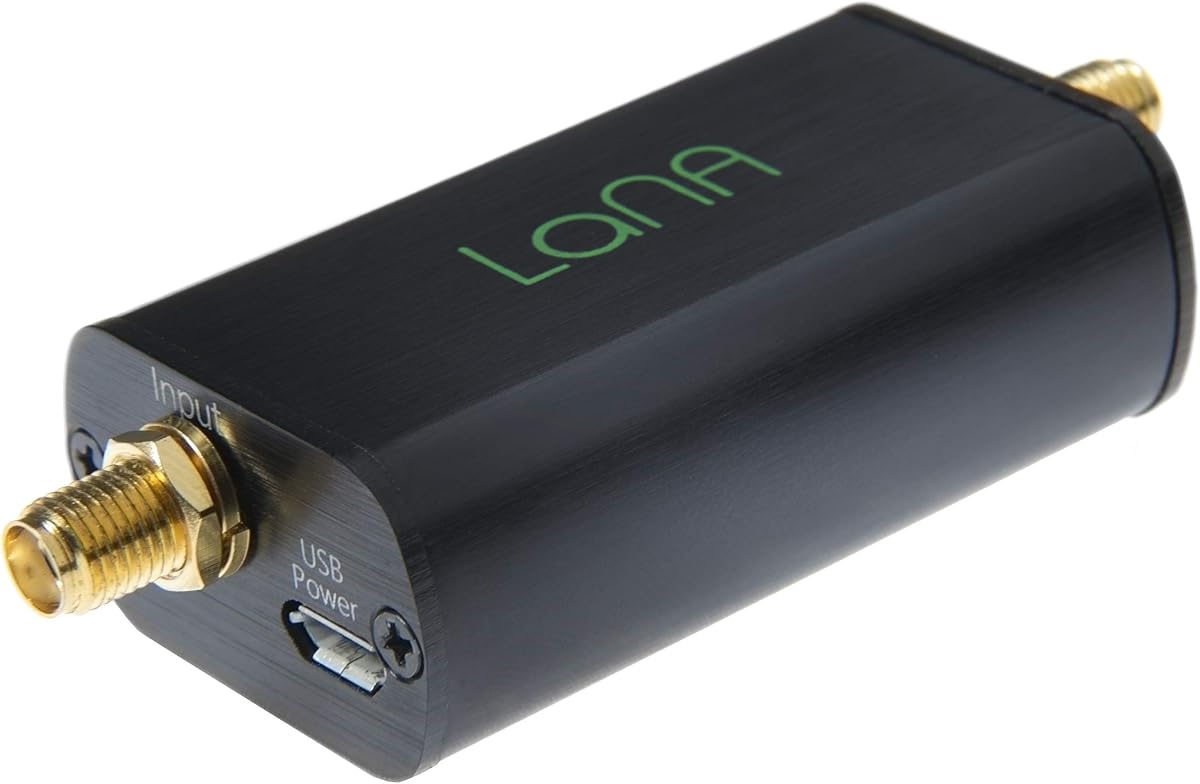
The Nooelec Lana is a widely recognized module designed specifically to improve the Signal to Noise Ratio of RTL-SDR and other radio setups. It holds a 4.2 rating for its performance in boosting weak signals while maintaining a low noise figure essential for clear reception.
We may earn a commission when you buy through this link, at no additional cost to you.
Its wideband capability spans from 20MHz to 4GHz covering most ham radio and broadcast bands effectively. The aluminum enclosure ensures durability and thermal management while the included accessories like the SMA connector make setup straightforward for new users.
Powering the unit is flexible as it can use a bias tee, USB, or a dedicated DC adapter. However users should note that some SDRs may require a DC block between the LNA and the radio to prevent issues when using external power options.
This module is an excellent upgrade for anyone serious about SDR performance who wants lower noise and higher gain than stock receivers provide. It is a reliable choice for home stations looking to pull in distant stations that were previously buried in noise.
It offers better linearity and gain compared to modules based on older MMICs ensuring clearer audio without distortion during strong signal conditions.
Multiple powering options including USB or bias tee allow you to adapt the LNA to your existing radio equipment without needing new power supplies.
We may earn a commission when you buy through this link, at no additional cost to you.
The Generic Taurus MK2 is designed primarily as a pre-amplifier for scanner receivers but is versatile enough for some ham radio scanning tasks. With a 4.1 rating it provides a straightforward solution for boosting signals without complex installation requirements.
We may earn a commission when you buy through this link, at no additional cost to you.
It operates on a 25 to 2000MHz range which covers many public safety and amateur bands. The gain ranges from 6 to 20dB providing enough boost to improve signal clarity in areas with weak reception without overloading sensitive receivers.
Using a PP3 battery makes it highly portable and easy to place near an antenna without worrying about long power cables. It comes with a BNC patch lead making it ready to use immediately for any scanner receiver needing a bit of extra range.
This unit is a budget-friendly option for users who need a simple reliable booster for their scanner or basic ham monitoring setup. It is not as powerful as dedicated ham amplifiers but it serves its purpose well for general purpose radio listening.
The package includes everything you need including a patch lead so you can start scanning immediately without ordering extra accessories.
Battery power allows you to use it in field conditions where access to wall power is not available for your scanning activities.
We may earn a commission when you buy through this link, at no additional cost to you.
The BJ-300 Plus is a high-power amplifier that supports multiple modulation modes including AM, FM, SSB, and CW for versatile use across bands. With a rating of 3.1 it delivers up to 150W on SSB making it a solid choice for extending communication range significantly.
We may earn a commission when you buy through this link, at no additional cost to you.
Its thermal management system includes a high-efficiency cooling fan to prevent overheating during extended use. This is crucial for high power units that generate significant heat which could damage internal components if not properly dissipated over time.
Safety features such as electronic polarity reversal protection and fuses protect the amplifier from incorrect power connections and surges. The simple controls make it user-friendly for both new and experienced users who want quick setup without complex programming.
While it has a lower rating than some other options it remains a viable choice for CB and ham operators needing affordable power boost. It is best suited for fixed stations where reliable high output is needed for long distance communication without complex tuning.
Supporting AM FM SSB and CW modes allows you to use this amplifier with various types of radios and communication styles easily.
Dual 15A fuses and polarity protection safeguard your equipment from electrical surges and reverse connections ensuring worry-free operation.
We may earn a commission when you buy through this link, at no additional cost to you.
The AURSINC ZK09-UM has earned a remarkable 4.9 rating for its performance as an external preamplifier for TinySA Ultra and similar devices. It improves high-band receiving performance where the native onboard LNA might not perform optimally above 3.5GHz.
We may earn a commission when you buy through this link, at no additional cost to you.
Its low noise design provides obvious noise-floor improvement compared with regular USB powered modules on the market. This is critical for high-frequency test applications where signal clarity determines the accuracy of your measurements and observations.
The shielded metal housing ensures robust construction while the USB interface simplifies power needs. However users should apply care to avoid excessive input power which could cause saturation and permanent damage to the sensitive internal components.
This module is ideal for engineers and radio operators using TinySA tools for signal analysis who need reliable preamplification. It is best kept in dry environments to prevent rust on the metal shell and used within its power limits for long-term reliability.
Improving performance beyond 3.5GHz where native LNA weakens it extends the usable range of your test equipment effectively.
With a supply current of 52mA it is efficient enough for portable USB powered setups without draining power banks quickly.
We may earn a commission when you buy through this link, at no additional cost to you.
This version of the BJ-300 Plus offers a strong 150W SSB output capability making it ideal for operators who need to extend their range on single sideband. It maintains a 3.1 rating reflecting a balance of power and basic build quality.
We may earn a commission when you buy through this link, at no additional cost to you.
The design features a large aluminum heat sink and a cooling fan to ensure stable operation during extended use. This thermal management is vital for high power amplifiers to prevent overheating and protect internal components from heat stress over time.
It supports AM, FM, SSB, and CW modes which allows versatility across different amateur radio communication styles. The simple controls and standard connectors make installation quick and straightforward for both new and experienced users.
While it shares similar specs with other models it remains a dependable option for those focusing on SSB communication needs. Its safety features like polarity protection add peace of mind for operators running higher power stations at home or in field conditions.
The cooling fan and heat sink work together to prevent overheating ensuring stable operation during long transmission sessions.
Simple power switches and mode selectors make setup quick without complicated menus or technical adjustments needed for operation.
We may earn a commission when you buy through this link, at no additional cost to you.
The BJ-300 delivers up to 150W max output supporting various modes including AM, FM, SSB, and CW for robust HF transceiver applications. While no rating data is currently available it is a functional unit for those needing power boost on HF bands.
We may earn a commission when you buy through this link, at no additional cost to you.
It features dual power control switches that allow you to adjust output strength based on operating needs. This flexibility is useful for conserving power or adapting to different propagation conditions without changing the physical setup of the radio.
Built with a durable aluminum alloy heat sink it ensures efficient heat dissipation during operation. Enhanced protection features like overvoltage and polarity inversion safeguard the amp from incorrect power connections ensuring stable operation.
This unit is a practical choice for operators who need a straightforward power amplifier for HF transceivers. It is best installed with proper ventilation to maximize the heat sink efficiency and connected to stable 13.8V power sources for optimal performance.
HI/LO power switches let you tailor output strength to current needs providing flexibility for different operating scenarios.
Aluminum alloy heat sink construction helps dissipate heat efficiently allowing reliable operation even during longer transmission sessions.
We may earn a commission when you buy through this link, at no additional cost to you.
Choosing the right amplifier requires understanding your specific needs regarding frequency, power, and environment. Below are key factors to consider when selecting a device for your setup.
Ensure the amplifier covers the bands you need. Some are designed for HF while others support wideband VHF/UHF or up to 6GHz. Mismatched frequency ranges can result in poor performance or damage.
Match the amplifier range to your primary operating frequency for best results.
Gain determines how much signal is boosted while output power affects how strong your transmission is. High gain is critical for reception while high output is needed for long distance transmission.
Prioritize high gain for receiving and high power for transmitting based on your main goal.
Some amplifiers need external 12V supplies while others run on USB or internal batteries. Consider your portability needs and available power sources when choosing a device.
Select a power source that matches your operational environment for convenience.
A low noise figure means the amplifier adds less static to your signal. This is critical for weak signal reception where background noise can drown out distant stations.
Look for low noise specifications to improve clarity in weak signal conditions.
High power amplifiers generate heat so cooling fans or heat sinks are necessary. Good build quality ensures durability especially for field use or permanent installations.
Choose a device with effective thermal management to ensure longevity and reliability.
Features like SWR protection and reverse polarity safeguards prevent damage from incorrect connections or standing waves. These are vital for preventing costly repairs and ensuring safe operation.
Always check for built-in protection mechanisms before finalizing your purchase.
Verify that the amplifier works with your current transceiver and connectors. Some units are designed for specific radios while others are universal with SMA or BNC interfaces.
Confirm connector types and input requirements to avoid compatibility issues.
Field operations require compact lightweight designs that can fit in a backpack. Fixed stations can tolerate larger units with heavier heat sinks and power supplies.
Decide if you need a stationary rig or a portable solution for your needs.
First connect the amplifier between your antenna and radio using proper coaxial cables. Ensure all connectors are tight to prevent signal loss or moisture ingress.
Power the device using the correct voltage and polarity. For high power units ensure you have adequate cooling and ventilation during operation.
Regularly inspect cables and connectors for wear. Keep the device in a dry environment to prevent corrosion and maintain optimal performance over time.
An LNA is designed for boosting weak receiving signals with low noise while a linear amplifier increases transmit power. LNAs are small and efficient while linear amps are larger and require more cooling.
Some small amplifiers are compatible with handhelds but you must check input power limits. Always use adapters or attenuators if needed to prevent damage to the transceiver.
Many require external 12V supplies but some run on USB or batteries. Check the product specs to confirm if it includes a power source or needs one purchased separately.
A low noise figure ensures the amplifier adds minimal static to your signal. This is crucial for hearing distant stations that might otherwise be lost in background noise.
Most units have cooling fans that activate when hot. If the case is too hot to touch or output drops the device may be overheating and needs better ventilation.
Most are designed for licensed use. Ensure your license permits power levels. Some regions require authorization for high-power transmission equipment.
Some units are dual function but many are optimized for one or the other. Check if the device is listed as a preamp for receive or an amp for transmit before buying.
Common types include SMA for modern devices and BNC or PL-259 for older radios. Ensure your adapter kit matches your radio and antenna cable connectors.
The Xiegu GPA100, Low Noise RF Amplifier, and RF Wideband LNA represent the top choices for performance budget and reception respectively. Each offers unique strengths tailored to different operating needs.
Prioritize frequency coverage and power requirements when selecting a device. Ensure you choose a model that matches your current radio setup to avoid compatibility issues.
Prices and availability fluctuate so always check current listings before purchasing. Verify that the unit meets your specific needs and regulatory requirements before buying.