
Acxico 3Pcs Mini Micro N20 Gear Motor
4.6Editor score
Full metal gearbox included
3V to 6V operation
Slow speed full design
This guide compares the top DC motors for robots, evaluating torque, voltage, and gear ratios to help you build reliable DIY smart cars and automation projects.
Choosing the right DC motors for robots is essential for building reliable and efficient automated systems. Whether you are creating a simple smart car or an advanced robotic arm, the motor selection dictates performance and durability. This guide helps you navigate the options available.
We compared ten highly rated products based on torque, voltage range, gear ratios, and user feedback. Each entry includes detailed specifications and real-world application insights. Our goal is to provide clear, factual data to support your project planning and component selection process.
Each pick highlights specific strengths and ideal use cases for different robotic applications. Note that prices and availability can change frequently on online marketplaces. Always verify current listings before purchasing to ensure compatibility with your existing electronics and mechanical designs.
4.6Editor score

4.7Editor score

4.6Editor score
The following table provides a side-by-side comparison of all ten selected DC motors. It highlights key specifications like voltage, torque, and gear ratios to help you quickly identify the right component for your specific robotics project requirements.



This motor set delivers reliable performance for budget friendly DIY robot car projects. With a 4.6 star rating users appreciate the full metal gearbox construction that ensures longevity even with regular use. It operates on 3V to 6V making it compatible with standard hobby batteries.
We may earn a commission when you buy through this link, at no additional cost to you.
The slow speed design and full metal gearbox provide smooth and controlled movement essential for beginner robotics. Each pack includes three motors which is excellent for multi wheel configurations. The 3mm D-type shaft allows secure attachment of wheels without slipping during operation.
While the torque is lower than larger units the motor excels in lightweight educational and toy builds. The slow speed ensures stability on flat surfaces without excessive power consumption. This trade-off makes it ideal for learning robotics concepts without complex controllers.
Ideal for hobbyists building their first smart car or simple automation tasks this motor offers value and simplicity. It is a practical choice for those prioritizing cost and ease of use over high performance capabilities.
Affordable pricing allows students to experiment with multiple motor configurations without exceeding project budgets.
Full metal gears resist wear better than plastic alternatives ensuring consistent performance over time.
We may earn a commission when you buy through this link, at no additional cost to you.
This planet gear motor stands out with an impressive 90kg.cm torque rating suitable for demanding robotic tasks. It supports a wide voltage range from 6V to 22V offering flexibility for various power systems. The 8mm D-shaft ensures stable connection for heavy loads and mechanical arms.
We may earn a commission when you buy through this link, at no additional cost to you.
Users value its adaptability for diverse applications ranging from rotating tables to industrial curtain machines. The metal geared construction provides durability and resistance to wear under high stress. This motor is engineered for reliability in environments where consistent torque is critical.
While more expensive than standard hobby motors the performance justifies the cost for serious automation projects. The wide voltage range reduces the need for additional voltage regulation components. Proper power supply selection is essential to maintain stability under load.
Recommended for advanced robotics enthusiasts or professionals needing high torque in compact form factors this motor excels in challenging conditions. Its robust design supports long term use in professional or industrial automation setups.
The 90kg.cm torque rating enables lifting heavy objects or powering large mechanical linkages effortlessly.
Operating across 6V to 22V allows integration with multiple battery types and power adapters without extra hardware.
We may earn a commission when you buy through this link, at no additional cost to you.
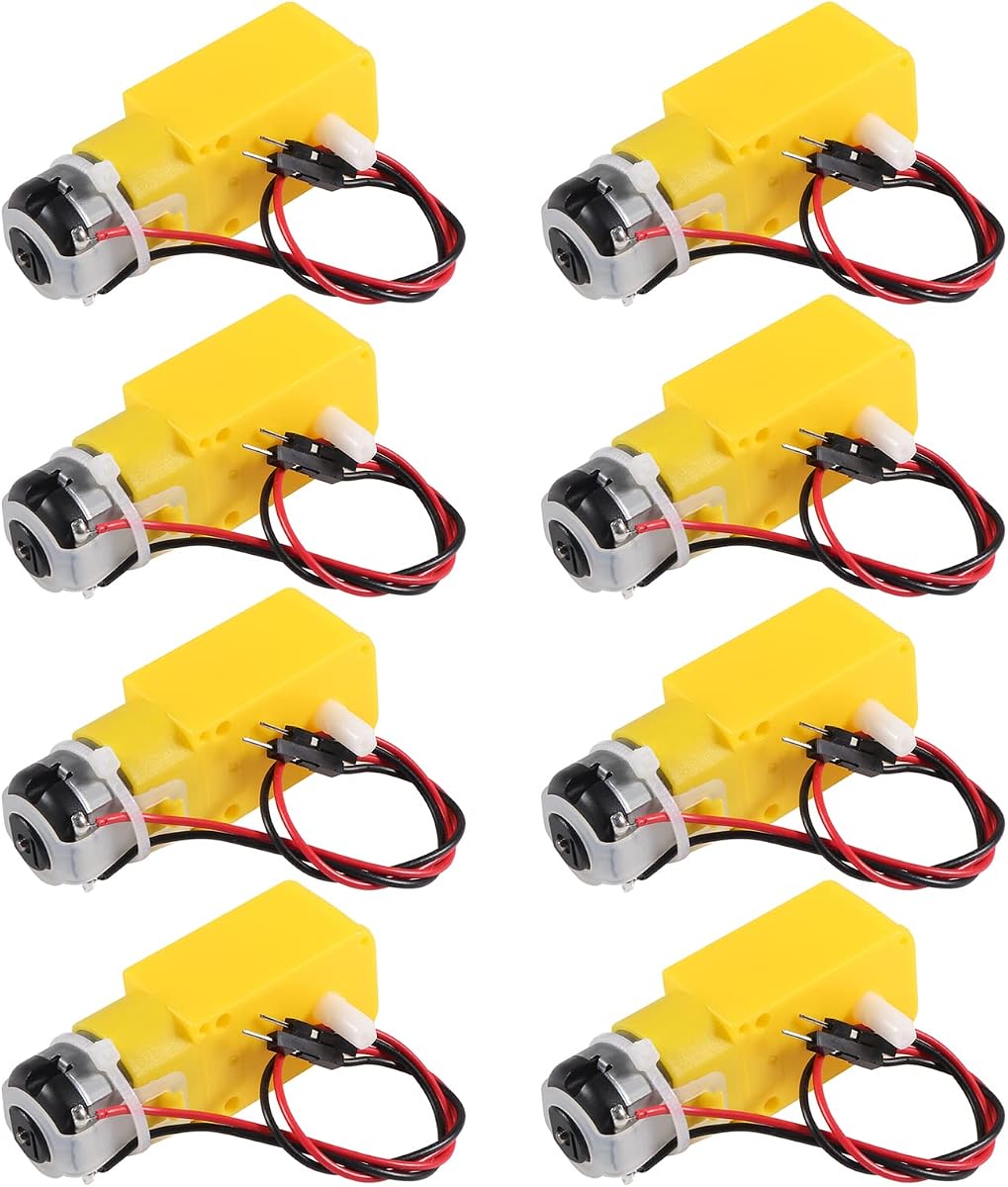
This motor kit includes eight units with wheels making it ideal for large scale robotics competitions or classrooms. The 1:48 gear ratio provides balanced speed and torque for standard DIY smart cars. It operates at 200RPM which offers stable movement without excessive speed.
We may earn a commission when you buy through this link, at no additional cost to you.
Each motor comes with 200mm wires featuring 2.54mm male connectors for simple breadboard integration. The durable materials ensure longer service life even with frequent assembly changes. This set supports educational learning and smart robot car competitions effectively.
While the RPM is lower than high speed motors the torque is sufficient for small to medium robot chassis. The included wheels reduce setup time and ensure compatibility with standard axle sizes. This trade-off prioritizes convenience and value over raw speed.
Educators and hobbyists needing multiple motors for group projects or backup units will find this pack highly practical. It offers a complete solution for building multiple robots simultaneously without sourcing separate components.
Packaging includes wheels and wires saving time on sourcing compatible parts for initial robot builds.
Ideal for classroom environments where multiple units are needed for student teams and robotics competitions.
We may earn a commission when you buy through this link, at no additional cost to you.
This encoder geared motor offers precise motion control essential for advanced smart car and robotics applications. It runs at 500 RPM with a fully enclosed magnetic gear structure reducing weight while maintaining strength. The 12V rating ensures consistent power for standard robotic batteries.
We may earn a commission when you buy through this link, at no additional cost to you.
High precision materials like one-piece molded rotors and pure copper coils improve efficiency and durability. The included mounting bracket and rubber tire wheels simplify integration into existing designs. This setup is perfect for models needing reliable torque and noise reduction.
While limited to 12V the motor delivers excellent commutation performance with lower heat generation. The pure copper coils and metal gears ensure longevity even during extended operation. The trade-off is a fixed voltage requirement which may limit some power system options.
For builders prioritizing precise speed control and robust construction this motor is an excellent choice. It balances performance and convenience with the included mounting hardware and tires for immediate deployment.
Built-in encoder feedback allows for accurate speed and position tracking in closed loop control systems.
Includes mounting bracket and rubber tires reducing assembly steps and ensuring wheel compatibility.
We may earn a commission when you buy through this link, at no additional cost to you.
This motor delivers exceptional performance with an integrated AB-Phase Hall Encoder for precise real-time measurement. The 1:90 reduction ratio provides high torque ideal for heavy duty robotic applications and smart cars. It supports a wide voltage range from 3V to 12V ensuring compatibility.
We may earn a commission when you buy through this link, at no additional cost to you.
All-metal gears and shafts offer superior strength and durability compared to plastic alternatives. The dedicated PH2.0 anti-reverse connection interface simplifies integration into smart vehicles. LED indicators provide visual feedback on working status for easier troubleshooting.
Encoder operation requires a separate 3.3 to 5V supply which adds slight complexity to wiring. The high no-load speed before reduction enables versatile performance across different gear configurations. This trade-off is acceptable for the control precision gained in complex projects.
Recommended for builders seeking precise speed and position control without custom encoder integration this motor is top tier. It combines durability with advanced feedback capabilities making it ideal for robotics competitions and automation.
Hall encoder outputs enable accurate angular position and speed tracking essential for advanced robot navigation.
Fully metallic construction ensures the gearbox withstands high torque loads and prolonged use without failure.
We may earn a commission when you buy through this link, at no additional cost to you.
This gearmotor offers high torque with a 70:1 ratio suitable for robots needing significant rotational force. It supports 6V or 12V operation providing flexibility for common battery configurations. The compact size fits well in tight spaces while maintaining strength.
We may earn a commission when you buy through this link, at no additional cost to you.
Maximum power reaches 10W at 12V with a stall torque of 27 kg.cm. The metal mounting bracket kit ensures secure installation without additional hardware. The 6mm D-shaped output shaft allows reliable wheel attachment and transmission coupling.
While torque is impressive the design requires specific voltage inputs for optimal performance. Users must select appropriate batteries to match either 6V or 12V ratings. This specificity ensures efficiency but may limit use in variable voltage systems.
Ideal for projects like smart balance cars or medical equipment this motor delivers reliable mechanical power. Its compact design and high torque make it a strong choice for constrained robotics builds.
The 70:1 ratio translates to high torque at low RPM perfect for climbing or lifting heavy robot components.
Included metal bracket simplifies mounting and protects the motor body during high stress operations.
We may earn a commission when you buy through this link, at no additional cost to you.
These motors deliver powerful and quiet performance with a rated 350 RPM at 6 to 12V. They are built with durable all-metal gears that withstand heavy duty use in robotics and crafts. Pure copper windings increase torque by 30 percent for reliable power.
We may earn a commission when you buy through this link, at no additional cost to you.
The secure D-shaped shaft prevents slipping ensuring stable connection to wheels or gears. Double-shaft design provides flexibility for connecting mechanical components on both ends. Compact dimensions allow mounting in tight RC car or toy chassis spaces.
While the 350 RPM is lower than hobby grade speed motors the torque is high enough for demanding tasks. The quiet operation makes it suitable for interactive robots or indoor projects. This trade-off favors torque and quietness over raw speed.
For RC cars or DIY toys needing robust and reliable drive units this motor excels. It is recommended for builders prioritizing torque and quiet operation in small motorized projects.
Low noise performance ensures robots run silently making them suitable for indoor or close proximity use.
Pure copper rotor windings boost torque output ensuring strong performance even under heavy load conditions.
We may earn a commission when you buy through this link, at no additional cost to you.
These Type 130 motors offer extremely high speed at 16000 RPM ideal for brushes and fans. They operate between 1.5V to 6V with 3V recommended for optimal performance. The compact size and wire leads make them easy to integrate into Arduino projects.
We may earn a commission when you buy through this link, at no additional cost to you.
Packaged in sets of six they provide value for projects needing multiple motors like solar powered cars. The 2mm shaft diameter allows compatibility with small gears and pulleys. Reference current remains low which suits battery powered applications.
Torque is minimal compared to geared units so external gears are needed for most robotic wheels. The high RPM suits applications where speed and low inertia matter more than force. This trade-off makes them less suitable for heavy load tasks.
Recommended for solar or battery powered cars and brush bots this motor offers speed and convenience. It is ideal for hobby projects where compact design and multiple units are prioritized.
16000 RPM operation enables rapid motion for fans, brushes, and high-speed mechanical components.
Low current consumption extends battery life making these motors suitable for portable and remote builds.
We may earn a commission when you buy through this link, at no additional cost to you.
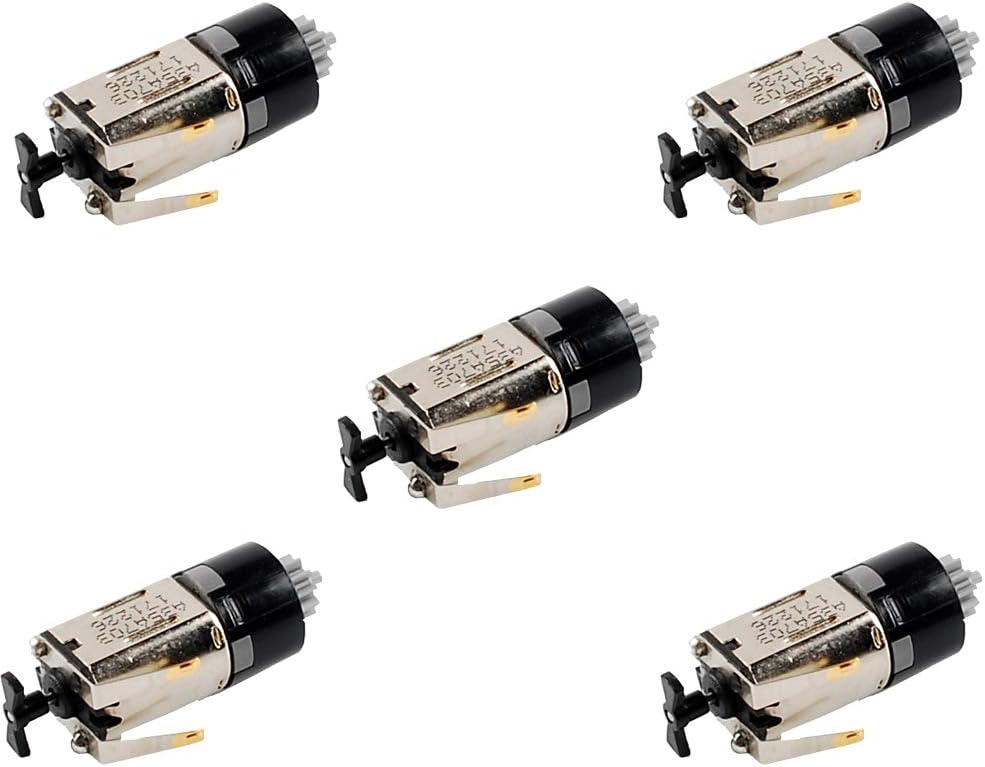
This micro motor features a planetary reducer providing high torque in a small package. It operates at 3V with a rated speed of 110 RPM ensuring slow and controlled movement. The five piece pack is practical for multi-motor robot configurations.
We may earn a commission when you buy through this link, at no additional cost to you.
Current consumption remains low at 42mA making it suitable for battery powered projects. Speed increases slightly with higher voltages but 3V remains the stable recommendation. The planetary design ensures durability and consistent torque delivery over time.
The fixed voltage requirement limits flexibility compared to multi-voltage options but simplifies design. Low speed is ideal for precise tasks like servos or lightweight mechanical arms. This trade-off suits applications where control outweighs speed.
For small scale robotics or compact DIY builds this motor offers reliable torque and efficiency. It is recommended for users needing small motors with gear reduction in limited spaces.
Planetary gearing maximizes torque within a minimal footprint suitable for tight and compact build areas.
Low current draw extends battery life making these motors ideal for portable and remote controlled projects.
We may earn a commission when you buy through this link, at no additional cost to you.
This compact brushed motor supports 6V to 12V applications making it versatile for hobby electronics. It delivers high speed up to 12000 RPM with low noise for smooth operation. The 2.3mm shaft fits many standard gears and pulleys for DIY assemblies.
We may earn a commission when you buy through this link, at no additional cost to you.
Ideal for RC cars or small drills the motor balances speed and reliability. It is often used for replacement in Traxxas or Power Wheels builds when original parts fail. Wide application range covers projects from science experiments to custom motorized builds.
Without a gearbox torque is lower requiring external gears for significant load handling. The shaft size must be verified before ordering to ensure compatibility with existing components. This trade-off favors speed and adaptability over built-in reduction.
For hobbyists needing a quick replacement or high-speed motor for tools this option works well. It is recommended for small electric tools or projects where external gearing is planned.
Compatible with RC cars, power wheels, and custom builds providing flexibility for diverse DIY electronics.
12000 RPM max speed enables rapid motion for tools, fans, or lightweight transmission tasks.
We may earn a commission when you buy through this link, at no additional cost to you.
Selecting the right motor depends on understanding your project's torque, speed, and power needs. This section outlines the key factors to evaluate before purchase.
Ensure the motor voltage matches your battery or power supply. Mismatched voltages can reduce efficiency or damage components. Common ranges include 3V, 6V, and 12V for hobby robotics.
Check both minimum and maximum voltage ratings to confirm compatibility with your existing system.
Torque determines how much weight a robot can move. Higher torque is needed for lifting or climbing tasks. Gear motors typically provide more torque than standard DC motors.
Select a motor with at least 20% more torque than your expected load for safe operation.
RPM defines how fast the motor spins without load. Higher RPM is suitable for fast robots, while lower RPM offers control. Gearboxes reduce RPM but increase torque for stable movement.
Balance speed and torque based on whether your robot needs quick movement or precise lifting.
Metal gearboxes last longer than plastic ones under heavy load. Planetary gears offer high torque in compact sizes. Consider the gear ratio when evaluating torque and speed output.
Choose metal or planetary options for durability in demanding robotics applications.
Some motors include brackets or mounting kits for easier assembly. Check the shaft type like D-shaft for secure wheel attachment. Ensure dimensions fit your chassis or frame.
Prioritize units with included brackets or compatible dimensions to reduce additional hardware costs.
Encoders provide feedback for precise speed and position control. They are essential for advanced navigation and robotics projects. Verify encoder voltage if separate from the main motor supply.
Include encoder models when building robots requiring accurate closed-loop motion tracking.
Lower current draw extends battery life for portable robots. Check reference current or power ratings before selecting a motor. High torque units may consume more power under load.
Evaluate power needs to ensure battery capacity supports runtime requirements.
Some options come in packs of multiple units for multi-wheel robots. Buying in sets can reduce per-unit costs and ensure consistency. Verify each motor works correctly upon arrival.
Choose multi-packs for projects needing multiple identical motors like four-wheel drives.
Always match the motor voltage to your battery to prevent overheating or damage. Use gearboxes when high torque is required. Secure shafts with collars to prevent slipping during operation.
Clean motors regularly to remove dust that can affect gear performance. Avoid overloading beyond rated torque to prolong lifespan. Monitor heat during extended use to ensure safe operating conditions.
Store motors in dry environments to prevent rust on metal parts. Lubricate gears occasionally if they show friction. Keep spare units on hand for critical projects requiring reliability.
Most hobby motors run on 3V, 6V, or 12V. Match the motor rating to your battery voltage. Using higher voltages than rated can damage the motor while lower voltages reduce performance.
Yes, gearboxes increase torque significantly which is essential for moving weight. Standard DC motors spin fast but lack force. Gear motors provide slower speed with more power.
A D-shaft motor has a flat side on the shaft preventing wheels from slipping. It is more secure than round shafts. Most gear motors include D-shafts for reliable wheel attachment.
Metal gears are more durable and withstand higher torque. Plastic gears may strip under heavy load. For serious projects, metal gearboxes are preferred for longevity and strength.
Encoders measure motor rotation for precise speed and position. They allow robots to control movement accurately. This is critical for navigation and balancing systems.
It is not recommended. Exceeding rated voltage overheats the motor and shortens life. Always use the specified range to ensure safe and reliable operation.
Small robots often need 0.5 to 2 kg.cm of torque. Light cars may use 0.5 kg.cm while heavier models require more. Always check wheel size and robot weight before choosing.
Most motors have two wires for power. Connect positive to positive and negative to negative. Use solder or connectors for secure joints. Some include pre-terminated wires.
This guide covers ten top motors ranging from budget-friendly packs to high-torque premium options. The Acxico and TT Motor sets suit simple builds while the planet motor handles heavy tasks.
Prioritize torque and voltage compatibility to match your project goals. Encoders are vital for precision while metal gears ensure durability over time.
Always check current prices and availability on Amazon before purchasing. Verify specifications to confirm alignment with your battery and chassis designs.