
Handheld Fish Finder Portable Fishing Kayak Fishfinder
4.2Editor score
Shows water depth and fish location
Portable with neck strap included
Works in fresh and salt water
Finding the right tool to locate fish and measure water depth is essential for any angler. A cheap depth finder offers an affordable entry point into sonar technology. It helps you navigate safely and locate structure without spending a fortune on high end marine electronics.
We evaluated ten leading models based on clarity accuracy portability and ease of use. Each unit was selected for its ability to deliver reliable readings in freshwater and saltwater environments. Our goal is to help you choose a device that fits your specific fishing style and boat setup.
Each pick highlights key strengths like screen size sonar type and battery life. You will see pros and cons to make an informed decision. Prices fluctuate regularly so check current listings before purchasing to ensure you get the best value available today.
4.2Editor score
4.6Editor score

4.5Editor score
As an Amazon Associate we earn from qualifying purchases.
This table provides a side by side look at the core specifications and capabilities of each model to help you quickly identify the right fit for your needs.


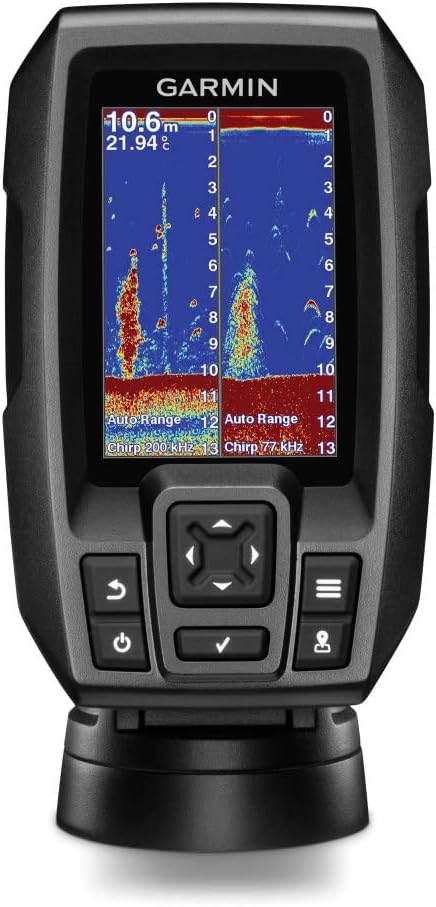
The Garmin 010-01550-00 Striker 4 stands out as a top choice for anglers seeking high quality imaging without complex setup. Its Clear Vu scanning sonar delivers near photographic images of objects and fish underwater. With a rating of 4.6 stars it is highly regarded for performance and reliability.
We may earn a commission when you buy through this link, at no additional cost to you.
Key strengths include the Chirp sonar which provides better target separation and crisper fish arches. The device features a keyed interface with dedicated buttons making it simple to operate even while in motion. Additionally the built in waypoint map helps you mark and navigate to productive fishing spots efficiently.
Trade-offs involve the smaller 3.5 inch screen which may be less comfortable for extended viewing compared to larger units. Also the transducer cable is not modular requiring careful installation. However these are acceptable given the clear image quality and robust water rating.
Buy this if you want reliable sonar with GPS mapping in a compact package. It is ideal for small boats or kayaks where space is limited but clarity matters most. The Striker 4 balances performance and simplicity effectively.
The Clear Vu technology creates detailed views of structure and fish making identification easier for all skill levels.
Dedicated buttons allow quick access to essential functions without navigating through complex menus.
We may earn a commission when you buy through this link, at no additional cost to you.
This portable unit is an excellent entry level option for budget conscious anglers. It shows water depth and fish location using standard sonar technology. With a rating of 4.2 stars it offers solid value for casual fishing trips.
We may earn a commission when you buy through this link, at no additional cost to you.
Its main strength is portability thanks to the included neck strap and compact design. You can easily store it in a tackle box and use it from kayaks or docks. The device runs on standard batteries which are easy to replace during long outings.
The display is basic compared to high end models which may limit viewing in bright sunlight. Also it does not support fast boat speeds so it is best for slow moving or stationary use. These trade-offs are minor given the low cost.
Choose this if you need a simple portable tool for kayaking or shore fishing. It provides accurate depth readings without the need for complex installation or expensive equipment.
The neck strap lets you keep the device secure while handling gear on a kayak or boat.
This model works effectively in both freshwater and saltwater environments for versatile use.
We may earn a commission when you buy through this link, at no additional cost to you.
The LUCKY MT-202 offers impressive wireless technology for anglers who want freedom from cables. It provides real time depth and fish data over a massive range. With a 4.5 star rating it is well liked for its advanced features and castable design.
We may earn a commission when you buy through this link, at no additional cost to you.
Features like the 853ft wireless range and 90-degree beam allow you to scout water far beyond your boat or kayak. The horizontal LCD displays fish icons clearly with exact depth next to them. The rechargeable battery supports long use without carrying extra disposable cells.
The sensor floats which is great for casting but may require a tether to avoid drifting into weeds. It is also more expensive than basic handhelds. However the wireless convenience and data depth justify the cost for serious anglers.
Buy this if you need to cover large areas from shore or kayak without wiring. It is perfect for scouting spots and targeting structure with precision and ease.
Cast the sensor over weed beds or deep channels to find fish without physical lines or cables.
Fish icons show exact depth numbers so you know how deep targets are holding below.
We may earn a commission when you buy through this link, at no additional cost to you.
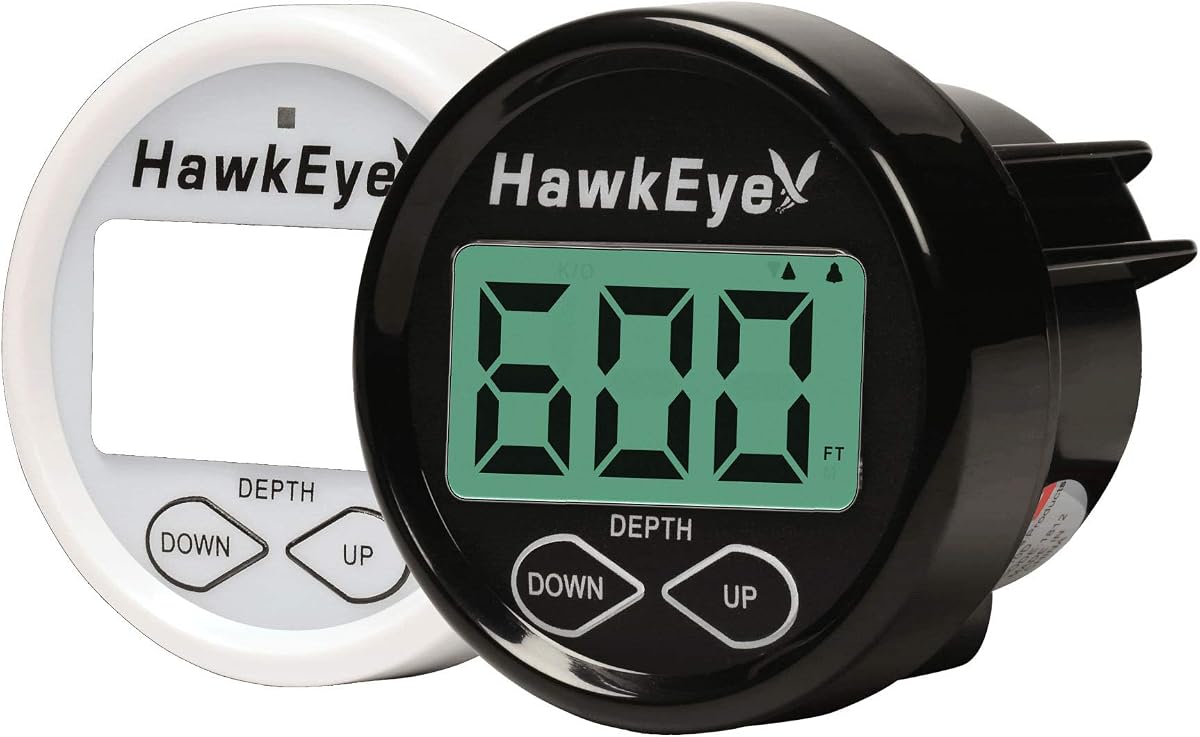
This unit is designed for boaters who move at high speeds and need reliable depth data. It reads depth continuously from 2.5 to 600 feet even at 60 mph. With a 4.2 star rating it is trusted for stability and clarity on the water.
We may earn a commission when you buy through this link, at no additional cost to you.
The polarized LCD display ensures visibility in bright sunlight without sunglasses interference. An advanced warning system uses audible and visual alerts for shallow water hazards. Transducer mounting offers flexibility for fiberglass or aluminum hulls.
It lacks advanced fish finding features like large displays or detailed imaging. Installation requires drilling a 2 inch hole which may be permanent. These factors limit appeal to recreational boat owners focused on safety and depth.
Select this if you prioritize accurate depth readings and alarms at speed. It is a solid choice for small powerboats where glare and speed are primary concerns.
Maintains uninterrupted depth readings at speeds up to 60 miles per hour.
Polarized display allows for spot free viewing without glare or need for sunglasses.
We may earn a commission when you buy through this link, at no additional cost to you.
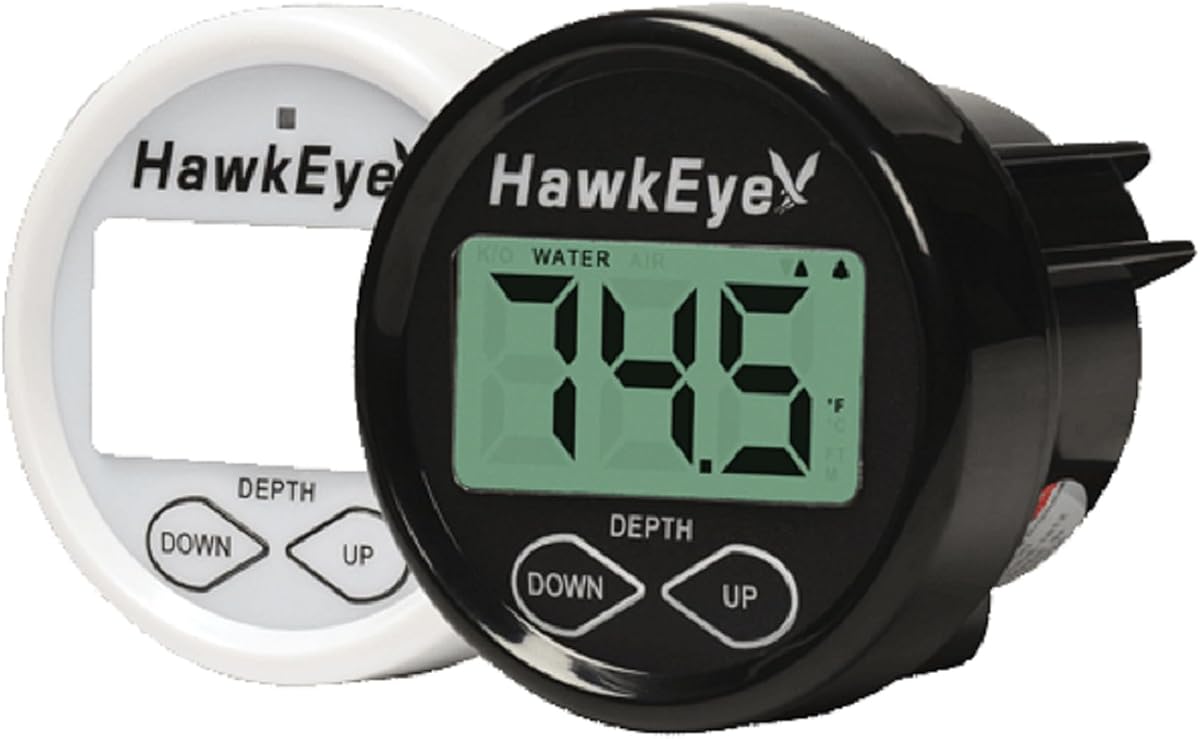
The HawkEye DT2BX-TM combines depth measurement with air and water temperature readings in one unit. It supports up to 600 feet depth range and fits in standard 2 inch dash holes. With a 4.2 star rating it serves well for boaters needing environmental data.
We may earn a commission when you buy through this link, at no additional cost to you.
Its polarized LCD screen with sun cover ensures easy viewing in bright conditions. The warning system includes audible and visual indicators with a convenient mute button. Transducer includes 30 feet of cable for versatile mounting.
Installation involves drilling which may not be suitable for all vessels. It does not offer GPS mapping or fish arches so it is strictly a depth and temp tool. These limitations make it best for simple dash setups.
Choose this if you want temperature insights alongside depth for a small dash unit. It works well for boats requiring a straightforward depth sounder without extra features.
Display air and water temperatures in Fahrenheit or Celsius on one clear LCD screen.
Sun cover and polarized display provide spot free viewing even with sunglasses on.
We may earn a commission when you buy through this link, at no additional cost to you.
This model offers excellent visibility thanks to its IPS portrait screen that remains clear in direct sunlight. It includes Auto-Tuning Sonar to optimize settings automatically so you can focus on fishing. With a 4.3 star rating it is praised for ease of use and display quality.
We may earn a commission when you buy through this link, at no additional cost to you.
The 44-degree beam covers a wide area below the boat for structure detection. Installation is simplified with a twist-lock connector that makes removing the display easy. Fish icons help identify targets without audible alarms.
The transom transducer is fixed so it may not suit all hull types. Also the price point is higher than handheld models. However the screen quality and automation justify the investment for serious users.
Buy this if you value clear displays and automatic sonar optimization. It is ideal for small boats needing a reliable display without complicated settings.
The IPS portrait screen stays clear in bright sunlight from wide viewing angles.
Twist-lock connectors make connecting and removing the display simple.
We may earn a commission when you buy through this link, at no additional cost to you.
The PiranhaMAX 4 delivers a balance of detail and coverage with dual beam sonar technology. It includes a tilt and swivel mount to adjust the viewing angle. With a 4.6 star rating it is highly rated for performance in small boats.
We may earn a commission when you buy through this link, at no additional cost to you.
Dual beam sonar lets you choose between narrow detail or wide coverage. The mount allows quick adjustment of the viewing area. Its compact design fits easily in limited spaces on small vessels.
The screen is small which may limit reading distance. Menus are basic compared to modern models but effective. These are minor issues given the reliable sonar performance and warranty.
Select this if you want proven sonar tech in a compact package. It works well for small boats where mounting flexibility is key.
Choose narrow or wide beam to identify fish detail or structure coverage.
Tilt and swivel mount allows quick viewing angle adjustments for comfort.
We may earn a commission when you buy through this link, at no additional cost to you.
This unit is a versatile handheld option for kayak and shore fishing with castable transducer. It alerts you with alarms when fish schools pass by. With a 4.1 star rating it is appreciated for ease of use and portability.
We may earn a commission when you buy through this link, at no additional cost to you.
The castable design allows you to toss the transducer into water to find depth and fish. Sensitivity levels let you adapt to water conditions. The backlight ensures visibility in darkness.
The screen is basic which may limit detail. Battery life is around 4 to 5 hours so bring spares. These trade-offs are acceptable given the convenience.
Buy this if you need a portable alarm equipped unit. It suits kayakers and shore anglers needing quick readings.
Attach transducer to hull or cast to check depth without drilling holes.
Audible alarms alert you when fish or schools pass by the transducer.
We may earn a commission when you buy through this link, at no additional cost to you.
The Hawkeye DT1H is a simple compact device for quick depth and temperature checks. It displays readings up to 300 feet in a handheld format. With a 4.2 star rating it is popular for casual anglers.
We may earn a commission when you buy through this link, at no additional cost to you.
Its small size makes it easy to carry in a pocket or tackle box. Temperature readouts help you track changing conditions. It is straightforward to operate without menus.
The screen is small and lacks advanced features like GPS or fish arches. It is best for basic depth monitoring. These limits are acceptable for the low cost.
Choose this if you want a pocket sized temperature depth check. It suits small boats or shore fishing.
Check water temperature directly on display for better bait selection.
Lightweight compact design fits easily in any gear bag.
We may earn a commission when you buy through this link, at no additional cost to you.
This portable unit is designed for varied conditions including ice fishing. It offers contour readout and temperature detection. With a 4.2 star rating it is useful for anglers needing quick data.
We may earn a commission when you buy through this link, at no additional cost to you.
Water resistance up to 100 feet makes it durable for splash and immersion. The lure lamp can attract fish in low light. Contour readout shows bottom shapes clearly.
The LCD is basic and battery life is short. These are minor issues given the rugged build. It is a good value for ice anglers.
Buy this if you need an affordable ice fishing depth check. It is suitable for lake and river use.
Rugged design handles ice fishing conditions effectively.
Shows underwater contours for better structure identification.
We may earn a commission when you buy through this link, at no additional cost to you.
Selecting the right depth finder requires understanding your specific fishing environment and needs. We outline key factors to consider before purchasing a unit.
Sonar technology determines how detailed your readings will be. Standard sonar provides basic depth while Chirp or Vu scanning offers better fish separation and structure detail. Choose advanced tech if you want clear target identification.
Display size affects readability especially in bright sunlight. Larger screens make it easier to read data while in motion. Consider the smallest display that still meets your visibility needs for your boat size.
Water resistance ensures your unit survives splashes or accidental submersion. Look for ratings like IPX7 which protect against temporary immersion. This is critical for kayaks or small boats prone to water exposure.
Installation type determines how you mount the device on your vessel. In-Dash models require drilling while handhelds offer plug and play. Choose based on your willingness to modify your boat structure permanently.
Transducer compatibility affects where and how you mount the sensor. Hull material determines whether you use transom mount or glue in units. Verify your boat type before purchasing to ensure proper sensor installation.
Power source dictates how long you can use the device. Battery powered units offer portability while hardwired models require vessel wiring. Consider your typical fishing duration when choosing between disposable or rechargeable power.
Frequency and beam width control the detail and coverage area. Higher frequencies give better detail but less range. Choose a balance based on whether you prioritize structure detail or broad coverage.
Additional features like GPS or temperature readings add value. GPS helps you mark and return to productive spots. Temperature sensors aid in tracking fish behavior. Decide if these extras justify the cost.
Proper installation is key to accurate readings. Mount the transducer flat to the hull and ensure it is clean of debris. Avoid air bubbles which can block signals and cause blank readings.
Yes many models are built to operate in both freshwater and saltwater. Check the product specs for saltwater compatibility. Rinsing the transducer with fresh water after use helps prevent corrosion.
A depth finder primarily measures water depth while a fish finder shows fish targets along with depth. Many modern units combine both functions. Basic models offer depth only while advanced ones include fish arches.
Most budget models measure between 300 to 600 feet depth. High end units go deeper but are more expensive. Ensure the depth range matches the water you fish regularly.
Yes handheld finders work on boats especially for scouting or small crafts. They are easy to mount temporarily or use manually. Check the mounting kit included for compatibility.
Most portable units use standard AAA or AA batteries. Some offer rechargeable options. Check battery life specs to plan your power needs for longer trips.
Handheld models are very easy to use with no installation. Boat mounted units require transom mounting or drilling. Choose handhelds for simple plug and play setups.
Many brands offer limited warranties ranging from 1 to 2 years. Check manufacturer details for coverage on parts. Register your product to activate the warranty fully.
We highlighted ten top models offering value and performance. The Garmin Striker 4 leads with imaging while budget handhelds provide portability. Pick based on your primary fishing environment and budget limits.