
Caydo P3 Art Projector
4.0Editor score
Native 1080P Resolution
400 ANSI Lumens Brightness
Exclusive Drawing Assistant Tools
Explore our expert guide to the best art tracing projector models for artists, educators, and designers. Compare features like brightness, connectivity, and
Art tracing projectors have revolutionized the way creators transfer digital or physical designs onto various surfaces. These tools allow artists to scale images accurately, saving time on manual grid methods and ensuring precise proportions for large-scale projects like murals or detailed illustrations.
We evaluated ten top-rated models based on brightness, resolution, connectivity options, and ease of use. Our analysis covers optical-only devices, Wi-Fi enabled projectors, and hybrid models to help you choose the right tool for your specific artistic workflow and budget requirements.
Each pick highlights key strengths and potential trade-offs so you can make an informed decision. While we provide detailed insights based on manufacturer data and user feedback, remember that product availability and specifications may change, so verify current details before purchasing.
4.0Editor score

4.5Editor score

5.0Editor score
The following comparison table breaks down the core specifications of each model to help you quickly identify which device matches your needs regarding resolution, brightness, and connectivity options.
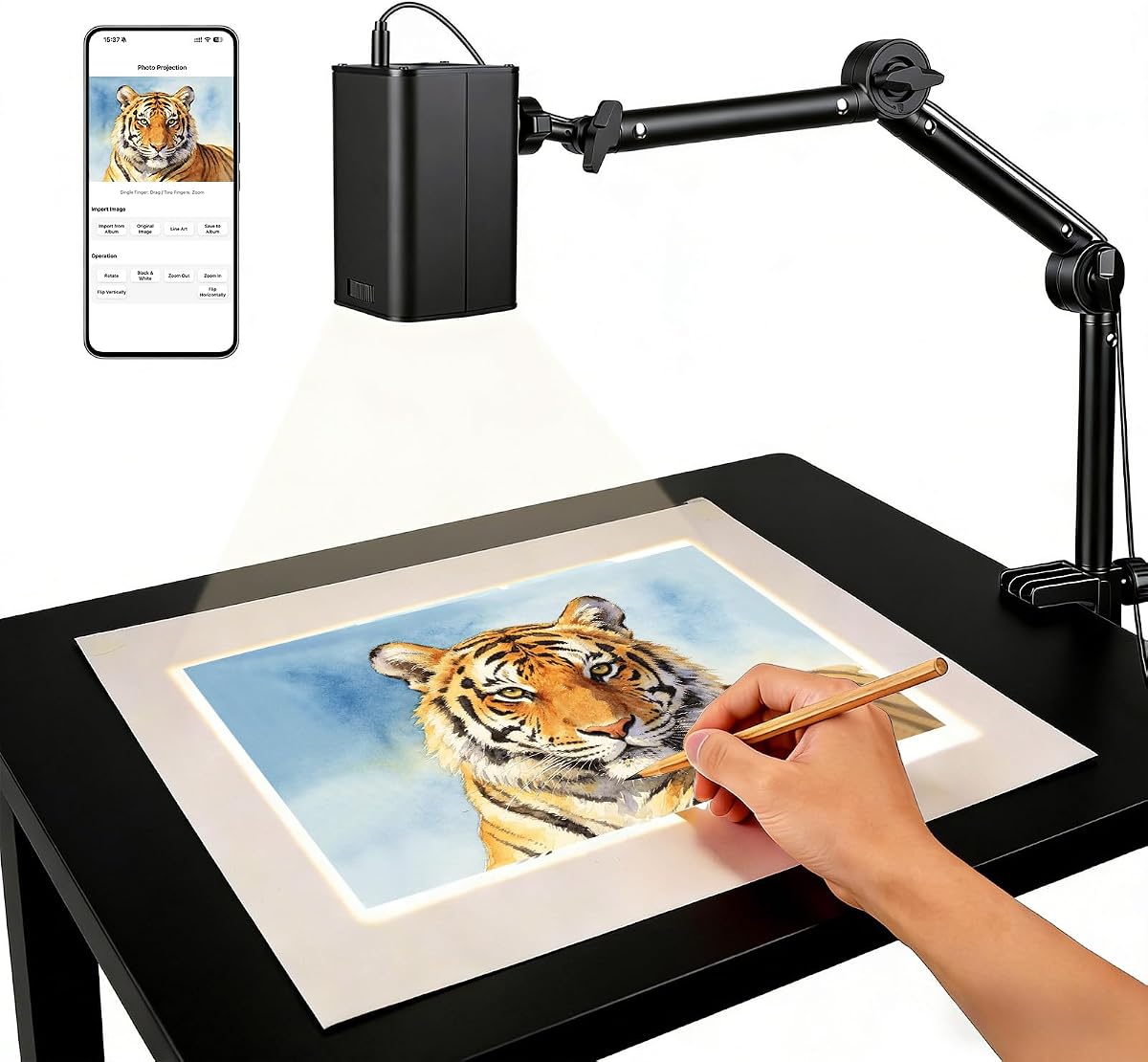


This Art Projector for Tracing and Drawing stands out for its seamless connectivity and user-friendly control system. With a 4.5 rating, it appeals to creators who value speed and accuracy when transferring digital sketches onto physical canvases.
We may earn a commission when you buy through this link, at no additional cost to you.
Its dual-band WiFi ensures low-latency mirroring from phones or tablets, allowing for real-time tracing of complex designs. The app-free web control means you can manage settings like rotation and scaling directly through a browser, simplifying the workflow significantly.
While the reliance on a phone for control might be a slight inconvenience for some, the flexibility to switch between online and offline modes makes it highly versatile. This balance of technology and practicality ensures you are not tethered to a single workflow method.
It is ideal for digital artists who frequently switch between physical and digital mediums. The precise alignment and easy setup make it a top recommendation for anyone looking to modernize their tracing process without losing touch with traditional techniques.
Access settings via any browser without installing software, ensuring compatibility across all devices.
The device functions in areas without internet, ensuring your creative session remains uninterrupted.
We may earn a commission when you buy through this link, at no additional cost to you.
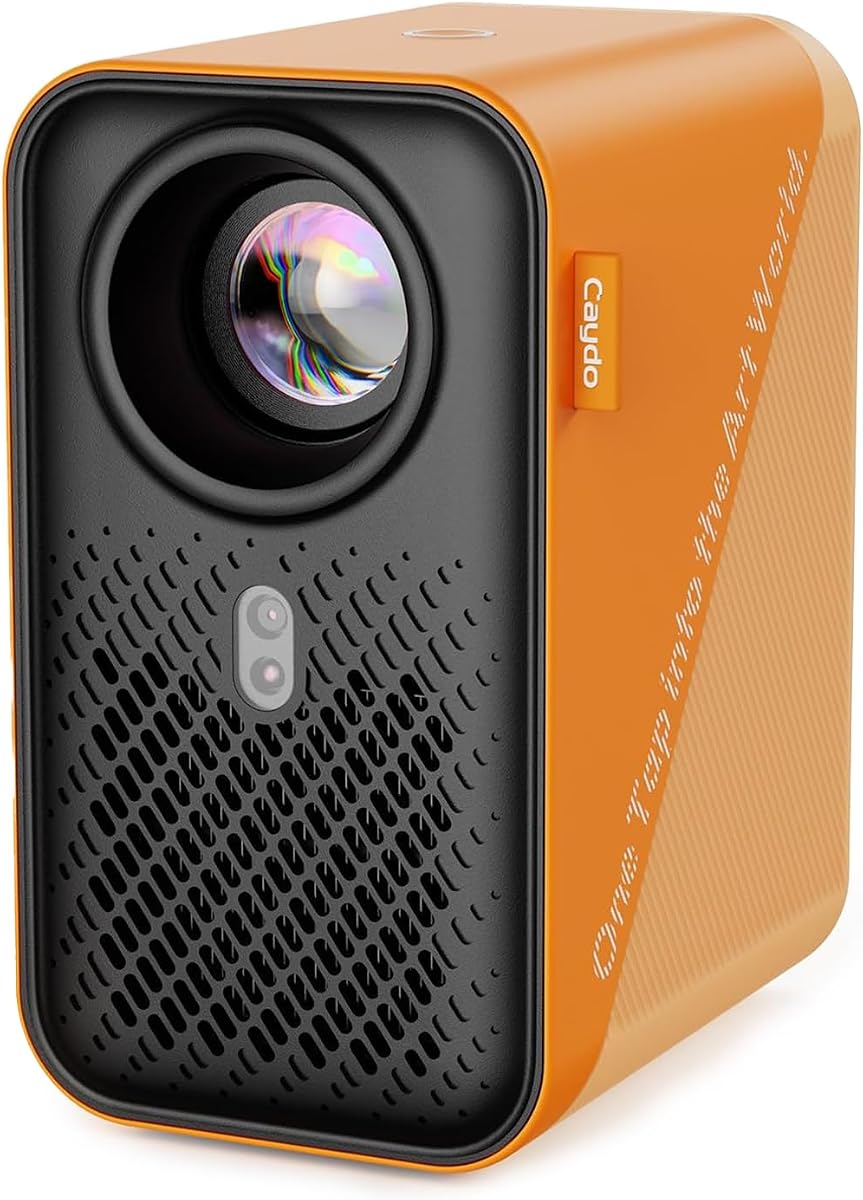
The Caydo P3 Art Projector is a powerhouse for professional artists demanding high-definition output. With its native 1080P resolution and 400 ANSI lumens, it delivers crisp images even in well-lit environments, a significant advantage over standard models.
We may earn a commission when you buy through this link, at no additional cost to you.
Its exclusive drawing assistant provides tools like zoom, rotation, and grid overlays, which are essential for accurate scaling. The built-in 360-degree swivel base eliminates the need for extra stands, allowing you to project on ceilings or easels effortlessly.
The primary trade-off is the cost, which reflects its premium features. While it offers robust connectivity and long lamp life, users needing a simple, low-maintenance device might find it more complex than necessary for basic tracing tasks.
Choose this if you prioritize image quality and advanced features. It is perfect for studio environments where lighting control is difficult and high-resolution detail is critical for professional artwork.
400 ANSI lumens ensure visibility without darkening the room, saving time on setup.
The integrated assistant app offers grids and modes tailored for artistic workflows.
We may earn a commission when you buy through this link, at no additional cost to you.
The Caydo S1 Art Projector offers a pure optical experience that digital projectors cannot match. It is designed strictly for projecting physical prints or drawings, ensuring high fidelity without digital compression or lag issues common in smart projectors.
We may earn a commission when you buy through this link, at no additional cost to you.
Its simple setup means you can start tracing immediately by placing an image under the copy area. The LED light lasts 20,000 hours, meaning you will not need to replace bulbs, saving long-term maintenance costs.
While it lacks wireless connectivity, this limitation ensures reliability. You do not have to worry about Bluetooth pairing or network glitches. The trade-off is the need for a physical print and a dark room to achieve the best contrast.
This is the ideal choice for traditional artists who prefer working from hard copies. If you value simplicity and optical accuracy over modern smart features, the S1 provides exceptional value and performance.
Plug it in and place your image to begin tracing in seconds.
The built-in LED lasts up to 20,000 hours without replacement.
We may earn a commission when you buy through this link, at no additional cost to you.
The Caydo P1 Art Projector integrates a dedicated drawing app directly into the hardware, simplifying the process of manipulating images. It offers tools like zoom and grid overlays that help artists align their work with precision.
We may earn a commission when you buy through this link, at no additional cost to you.
Its auto-focus and keystone correction features ensure the projected image remains sharp and rectangular even if the projector is tilted. This is particularly useful for quick setups where perfect alignment is difficult to achieve manually.
While the features are robust, the system relies on WiFi for the best experience. Users with unstable internet connections might find the transfer of large files slower compared to wired or optical options.
It is a strong middle-ground option for artists who want digital flexibility without the complexity of external software. The combination of tools and hardware makes it a versatile choice for mixed-media projects.
Built-in modes like Gridify and Sketchify adapt the display to your workflow.
Automatic keystone correction ensures straight lines even at an angle.
We may earn a commission when you buy through this link, at no additional cost to you.
This model focuses on speed and stability with its upgraded 5G dual-band WiFi. It is designed for artists who trace dynamic content from tablets and need instant updates to avoid lag during the creative process.
We may earn a commission when you buy through this link, at no additional cost to you.
The app-free web control interface allows for quick adjustments of size and rotation using your phone's browser. This reduces the friction of installing dedicated apps and ensures broad compatibility across devices.
The main limitation is the manual focus button, which means you need to manually tweak sharpness when moving the projector. While this is a standard feature, it adds a step to the workflow compared to auto-focus models.
It is recommended for users who value connectivity speed above all else. The precise mirroring capabilities make it suitable for real-time tracing of complex designs that require immediate adjustments.
5G dual-band chip reduces latency for seamless real-time drawing.
Manage settings via any web browser without app downloads.
We may earn a commission when you buy through this link, at no additional cost to you.
The HI-REEKE Art Projector distinguishes itself with a robust three-section metal stand that offers significant flexibility. It allows for overhead or angled projections, making it ideal for murals or large compositions on walls.
We may earn a commission when you buy through this link, at no additional cost to you.
Supporting up to 150 inches of projection, it covers a wide range of sizes suitable for both small crafts and large installations. The inclusion of HDMI and USB alongside WiFi ensures you can use almost any media source.
However, the resolution is limited to 720P, which may not be sharp enough for intricate details. The manual focus also means you have to be patient when setting up to ensure the edges are clear.
This is a practical choice for DIY crafters and educators who need a large, adjustable projection area without breaking the bank. Its sturdy build ensures it can handle frequent use in varied environments.
A three-section metal stand rotates for overhead or angled placement.
Connect via HDMI, USB, or WiFi to use various devices easily.
We may earn a commission when you buy through this link, at no additional cost to you.
The Caydo P2 Art Projector offers a balanced mix of brightness and software features. It delivers 250 ANSI lumens, which provides clear images on various surfaces, and includes a rotating base for flexibility without extra hardware.
We may earn a commission when you buy through this link, at no additional cost to you.
A standout feature is the offline capability of its drawing tools. Once an image is loaded via USB or QR code, you can use zoom and grid tools without needing an internet connection, ensuring reliability in remote studios.
While it supports Bluetooth, it is for audio only, meaning it cannot stream video with sound effectively. This limits its utility as a general entertainment projector, but it excels as a dedicated art tool.
It is a reliable option for artists who need moderate brightness and offline functionality. The ability to work without WiFi makes it a practical choice for locations with weak internet signals.
Drawing app features remain fully functional without an internet connection.
250 ANSI lumens ensure clear visibility even in non-dark rooms.
We may earn a commission when you buy through this link, at no additional cost to you.
This projector stands out for its smart image processing tool which supports features like line art extraction and right-angle marking. These advanced functions help artists prepare images for tracing with minimal manual editing beforehand.
We may earn a commission when you buy through this link, at no additional cost to you.
The adjustable telescopic stand reaches up to 40 inches, making it one of the tallest options available. This allows for comfortable working positions whether you are projecting on a desktop or a wall.
Connectivity is strong with four options including phone upload, HDMI, USB, and mirroring. This ensures you can connect almost any device to start your project quickly without compatibility issues.
It is highly recommended for artists who need specialized tools for image preparation. The smart features save time on setup, making it a valuable asset for efficient creative workflows.
Features like line art extraction simplify complex drawings for tracing.
The telescopic stand adjusts from 15 to 40 inches for flexibility.
We may earn a commission when you buy through this link, at no additional cost to you.
The KODAK Luma 150 is designed for portability and convenience. It includes a battery, allowing you to work without a power outlet for up to 2.5 hours. This makes it perfect for workshops or outdoor creative sessions.
We may earn a commission when you buy through this link, at no additional cost to you.
It comes with precision mounting tools like an articulating arm clamp, ensuring the projector stays stable. The DLP engine offers vivid visuals, though its 60 ANSI lumens are best suited for dimmer environments.
The compact size is its main advantage, but it limits the maximum projection size compared to larger models. If you need a large mural projection, this may not be sufficient, but it is excellent for small projects.
This is the ideal choice for travelers or students who need a lightweight solution. The high rating reflects its ease of use and the quality of the included accessories.
Work without power cords for up to 2.5 hours using the battery.
Includes tripod and arm clamp for precise and stable positioning.
We may earn a commission when you buy through this link, at no additional cost to you.
This Art Projector is designed with simplicity in mind, particularly for users with Apple devices. It supports Airplay and screen mirroring, allowing you to project directly from your phone or tablet with minimal setup steps.
We may earn a commission when you buy through this link, at no additional cost to you.
The adjustable height stand and 360-degree holder allow you to position the device easily on a desk or wall. Its lightweight design makes it easy to move and store, which is great for casual hobbyists.
However, the resolution is limited to 480P and it does not support Android devices. This restricts its usability for users with non-Apple phones and limits the sharpness of the projected image for detailed work.
It is a budget-friendly entry point for beginners or children. The ease of use with iPhones makes it a practical gift for those starting their artistic journey without needing complex technical setup.
Designed specifically for iPhone and iPad Airplay for easy connection.
Lightweight and foldable for easy storage and transportation.
We may earn a commission when you buy through this link, at no additional cost to you.
Choosing the right art tracing projector involves evaluating several technical factors. This guide breaks down the key aspects you should consider to ensure you select a device that matches your specific artistic needs.
Brightness is measured in ANSI lumens and determines how clear the image will be in different lighting conditions. Higher lumens allow you to work in daylight or standard studio lighting without needing to darken the room completely.
Look for models with at least 250 ANSI lumens if you want flexibility in lighting. Lower brightness units require dark environments for optimal tracing accuracy.
Resolution affects the sharpness of the projected lines and details. Native 1080P projectors provide the crispest images, while 720P or 480P models may look slightly grainy for fine details.
For professional work where line precision is critical, prioritize higher resolution. For simple sketches, lower resolution may still be adequate.
Decide whether you need to project from a physical print or a digital device. Optical projectors only work with physical papers, while digital models support phones, tablets, and computers via WiFi or HDMI.
Check if the device supports both online and offline modes to ensure you can work without internet interruptions in remote areas.
The projector's stand determines how you can position the device. Some models come with adjustable stands for walls or easels, while others rely on a fixed base.
Look for a stand that allows for multiple angles if you plan to project on different surfaces. A swivel base adds convenience by removing the need for external tripods.
Modern projectors often include features like keystone correction and zoom. Keystone correction ensures the image is rectangular even if the projector is tilted.
Zoom and rotation tools help you fit the image to your canvas accurately. Built-in grids and artistic modes further assist in scaling and composition.
User interface matters for a smooth workflow. Some models require an app, while others use web-based controls that work directly in a browser.
Consider if you prefer touch controls on the device or remote control. Simple setup steps save time and keep you focused on creating rather than configuring.
LED projectors typically have longer lifespans than traditional bulbs. Look for units with high-hour LED ratings to avoid frequent bulb replacements.
Check the device's build quality and warranty options. A sturdy metal stand or housing will withstand frequent travel and use in various environments.
Prices vary significantly between basic optical projectors and advanced smart models. Determine your must-have features to avoid overpaying for capabilities you will not use.
Balance cost with performance. A slightly more expensive unit with better brightness or resolution may offer better value over time than a cheaper alternative.
Start by setting up the projector on a stable surface and connecting it to your device. If using a digital model, ensure the screen mirroring or connection protocol like AirPlay is active on your phone or tablet.
Adjust the stand and focus to get a clear image on your work surface. Use the zoom and rotation tools to align the projected image perfectly with your canvas or wall.
Regularly clean the lens and vents with a soft cloth to prevent dust accumulation. Keep the device in a dry place and avoid touching the lens with bare fingers to maintain optical quality.
Not necessarily. Many modern models offer app-free web control that works directly through a browser. However, some devices provide dedicated apps for advanced features like grids or artistic modes.
It depends on the brightness. Models with higher ANSI lumens like 400 or 250 can be used in daylight, but lower brightness units typically require a darkened room for clear visibility.
Optical projectors project physical images placed under them, while digital projectors display images from electronic devices like phones or computers. Optical units offer high fidelity without digital lag.
The distance varies by model and desired size. Most devices offer a range from 3 to 10 feet for standard sizes, but check the throw distance specification for accurate placement.
Most support both via Wi-Fi, but some specific models may restrict wireless features to Apple devices only. Always verify connectivity options in the product details before purchasing.
LED projectors typically last between 20,000 and 30,000 hours. This means you can use them for years without needing to replace the light source.
Yes, many models support offline modes once images are loaded via USB or SD card. This ensures you can work in areas with poor or no internet access.
Yes, if the projector has a rotatable base or 360-degree swivel function. Models without this feature may require an additional adjustable stand to project upwards.
We have reviewed ten top-rated models ranging from simple optical units to advanced digital projectors. Whether you prioritize brightness, connectivity, or simplicity, there is a choice that fits your creative workflow.
Consider your specific needs before buying. If you work mostly with digital files, a Wi-Fi enabled model is ideal. For traditional artists, a pure optical projector ensures high fidelity without digital compression.
Always check the latest prices and availability as product offers change frequently. Investing in the right tool can significantly enhance your efficiency and precision in any art project.