
Mcbazel 3 in 1 Handheld Digital Anemometer
4.5Editor score
Measures wind level
Double-line LCD display
Auto power off
This guide compares the top 10 anemometers for measuring wind speed, covering accuracy, features, and use cases for professionals and outdoor enthusiasts.
Finding the right tool to measure air movement is crucial for HVAC technicians, pilots, and outdoor sports enthusiasts. A reliable anemometer provides accurate data to ensure safety and efficiency in various environments.
We evaluated ten top-rated devices based on accuracy, ease of use, and versatility. Our analysis covers handheld models suitable for everything from indoor duct testing to outdoor sailing conditions.
Each pick highlights specific strengths like backlight displays, temperature sensors, or CFM calculations. Prices and availability may change, so verify details on the product pages before purchasing.
4.5Editor score

4.5Editor score

4.6Editor score
The following table provides a side-by-side comparison of the top ten anemometers. This overview helps you quickly identify which device meets your specific measurement needs and budget.



The BTMETER BT-100 stands out as a versatile tool for both professionals and hobbyists. It holds a solid rating and offers essential features like wind chill and multiple speed units.
We may earn a commission when you buy through this link, at no additional cost to you.
Its dual temperature sensors and eight vanes ensure sensitive measurement of low air flows. This makes it particularly useful for HVAC technicians checking duct vents. The tripod hole allows hands-free use during drone flights or photography.
While the body is lightweight, it feels durable enough for occasional drops. The backlight ensures visibility in darker conditions, though the battery compartment requires some force to open. These are minor trade-offs for the price point.
Buy this if you need a reliable all-rounder for outdoor activities or indoor testing. It balances cost and functionality well, making it a top choice for most general users.
The eight vanes and dual sensors allow the device to detect even slight changes in air movement. This precision is critical for accurate CFM calculations in HVAC systems.
The threaded tripod hole on the bottom enables secure mounting. This feature frees up your hands for other tasks while still capturing continuous wind data accurately.
We may earn a commission when you buy through this link, at no additional cost to you.
The Mcbazel 3 in 1 offers exceptional value for users needing basic wind data. It measures speed, temperature, and wind level simultaneously. The display is clear and easy to interpret.
We may earn a commission when you buy through this link, at no additional cost to you.
It supports multiple units like mph, knots, and km/h. This flexibility is great for travelers or those working in different regions. The backlight helps in low-light scenarios like dawn sailing.
The lack of a tripod mount limits hands-free usage compared to premium models. However, for handheld checks, it performs well. The auto power off helps save battery life when forgotten.
This device is ideal for casual users or those on a tight budget. It provides reliable data without breaking the bank. Consider this if you do not need industrial-grade features.
Measuring the Beaufort scale helps users understand wind conditions better. This is useful for fishing or sailing where knowing the force of the wind matters.
The double-line LCD shows speed and temperature at once. This reduces the need to toggle screens and keeps important information visible during quick checks.
We may earn a commission when you buy through this link, at no additional cost to you.
The TopTes TS-301 features a notably large LCD screen that makes reading data effortless. It also adds humidity sensors, expanding its utility beyond just wind speed. This makes it a great weather station tool.
We may earn a commission when you buy through this link, at no additional cost to you.
Its six measuring units cover various needs. The rotatable blades allow for precise orientation when measuring airflow in vents. The carry pouch and included batteries make it ready to use out of the box.
One limitation is the sensor warm-up time of thirty minutes for full accuracy in humidity. This may affect rapid field checks. The unit is slightly heavier due to the larger display and additional sensors.
Choose this if you value visibility and comprehensive environmental data. It suits outdoor enthusiasts who want a more complete picture of conditions. The extra features justify the slightly higher cost.
Adding humidity to the measurement set provides a better understanding of air quality. This is beneficial for indoor environments or comfort assessments during outdoor activities.
The 2.26-inch screen is significantly larger than standard models. This ensures you can see readings clearly even from a distance or in bright sunlight.
We may earn a commission when you buy through this link, at no additional cost to you.
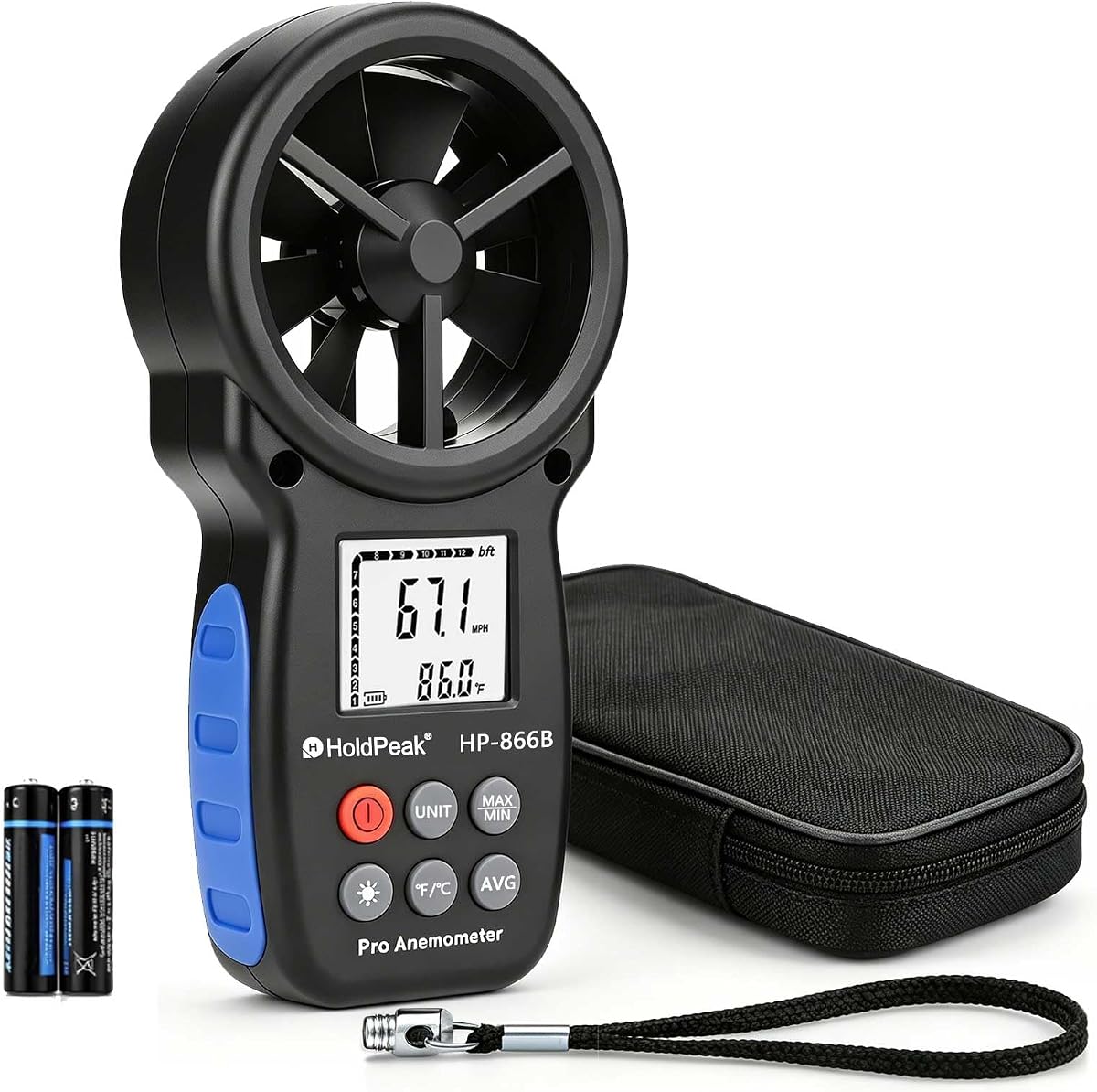
The HoldPeak 866B is designed with professionals in mind who need precise CFM data. It uses dual temperature sensors and eight vanes for high accuracy. The included tripod hole is a key feature for stability.
We may earn a commission when you buy through this link, at no additional cost to you.
It comes with a waterproof carrying pouch and a hand strap to prevent drops. The screwdriver helps secure mounts if needed. The interface supports unit switching and MAX/MIN/Average tracking effectively.
The screen is functional but less colorful than some newer models. Battery life is average, so keep spares handy. However, for HVAC tasks, its reliability outweighs minor aesthetic drawbacks.
This meter is a strong choice for technicians. The included accessories make it a complete kit. If you work with duct systems regularly, this tool will serve you well.
The sensitivity of the vanes ensures accurate low-airflow detection. This is essential for balancing systems and ensuring efficient energy use in buildings.
The hand strap and carrying pouch protect the device from loss or damage. These additions show attention to user safety and convenience during transport.
We may earn a commission when you buy through this link, at no additional cost to you.
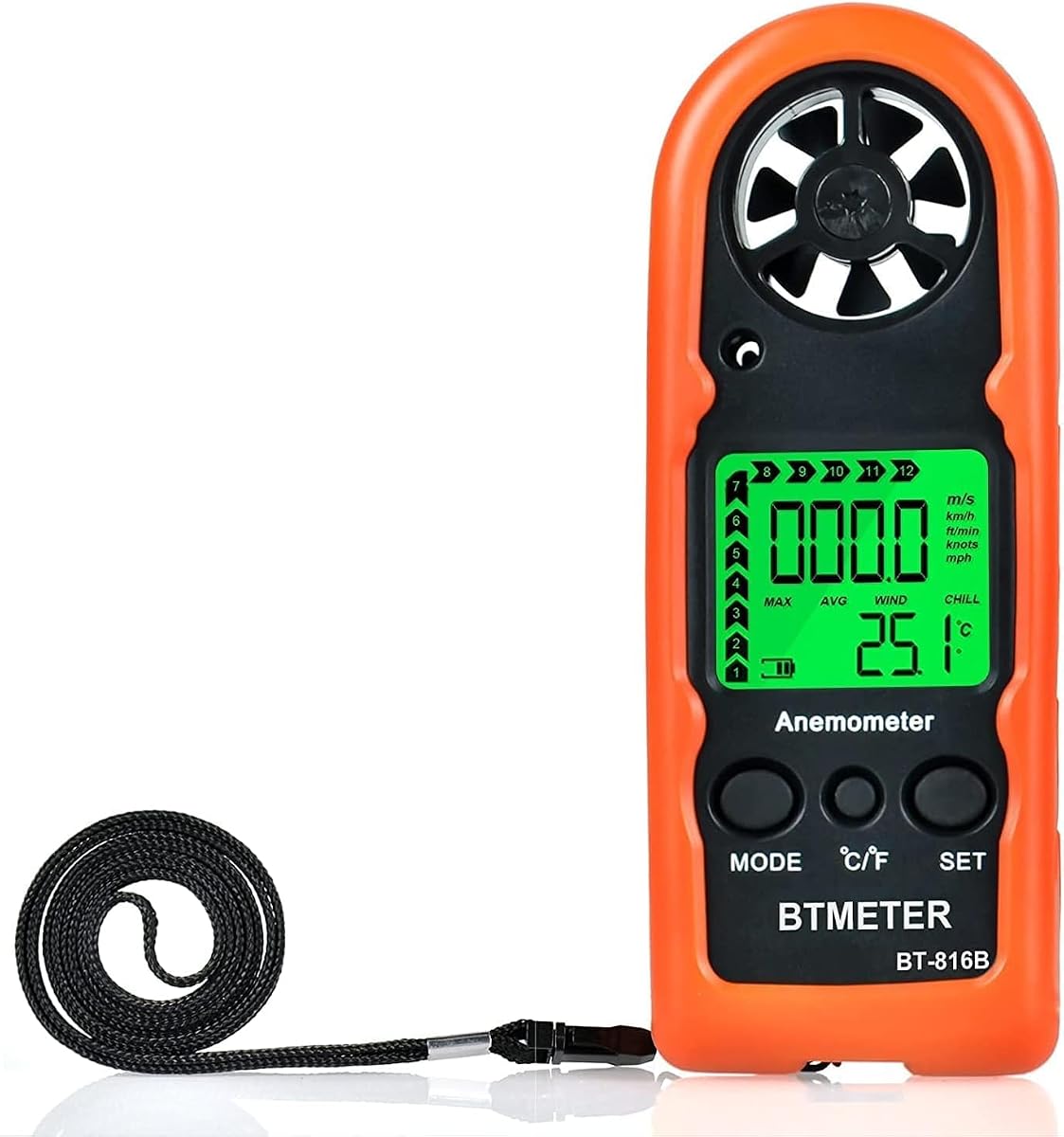
The BTMETER BT-816B prioritizes portability without sacrificing core functionality. It weighs only 53g, making it easy to carry in a pocket. The wind chill feature is particularly useful for outdoor safety.
We may earn a commission when you buy through this link, at no additional cost to you.
Its one-handed design allows for comfortable use during hiking or climbing. The backlight ensures you can read data in the dark. The range covers most common wind conditions encountered outdoors.
The smaller screen might be harder to read for those with poor vision. It also lacks humidity sensors found in more expensive models. However, its size makes it a great backup or travel tool.
Buy this if you need something you can carry everywhere. It is perfect for hikers or drone pilots who value weight. The price is reasonable for the convenience it offers.
The compact size means it fits easily in a backpack. This ensures you never miss measuring sudden wind changes while on the move in remote areas.
Combining wind speed and temperature gives a true comfort index. This helps in planning activities and avoiding exposure to harsh weather conditions.
We may earn a commission when you buy through this link, at no additional cost to you.
The Soonkoda 3 in 1 is a budget-friendly option that covers all basic wind measurement needs. It includes a wind level display which is helpful for general weather awareness. The dual line display shows speed and temp together.
We may earn a commission when you buy through this link, at no additional cost to you.
It is suitable for various industries like aviation and ventilation systems. The automatic power-off feature ensures you do not drain the batteries accidentally. It is lightweight and easy to handle.
The build quality is simpler than premium models, which may feel less robust. It does not come with a carrying case, so you will need to store it carefully. This is a trade-off for the low price.
This device is best for occasional use or strict budgets. It works well for simple checks at home or school. If you need robust durability, consider spending a bit more.
This tool is useful for more than just hobbies. It supports industrial tasks like checking ventilation and petrochemical facilities with reliable data output.
Showing both wind speed and temperature on one line simplifies monitoring. This saves time compared to switching modes to see different data points.
We may earn a commission when you buy through this link, at no additional cost to you.
The AEM01S features a unique color-coded system to indicate wind safety levels instantly. Green means safe, orange is caution, and red is danger. This visual cue is excellent for quick decisions.
We may earn a commission when you buy through this link, at no additional cost to you.
The ergonomic housing and anti-slip design make it comfortable to hold. It includes a protective housing for the blades. The warranty offers peace of mind regarding product quality and service.
The alarm can be intense if the wind suddenly increases, which might startle some users. The housing is rigid but offers good protection. These features prioritize safety and user experience heavily.
Choose this if you are working in areas where sudden wind changes are risky. The safety indicators add a layer of protection that standard meters lack. It is a smart investment for safety-conscious users.
The color changes help users react faster to dangerous conditions. This is critical for outdoor work or activities like climbing where wind impacts stability.
The one-year free replacement service adds confidence to the purchase. It shows the manufacturer stands by the product quality and customer satisfaction.
We may earn a commission when you buy through this link, at no additional cost to you.
The Caldwell Wind Wizard II is a premium choice designed for shooting and hunting enthusiasts. It features a durable water-resistant build and a rubber casing for secure grip. The warranty is a major standout.
We may earn a commission when you buy through this link, at no additional cost to you.
Its design focuses on comfort and reliability in the field. The non-slip casing ensures it stays in your hand even with gloves on. This is vital for quick checks during outdoor activities.
The higher price reflects the better build quality and warranty. It is heavier than some lightweight models, which may affect portability for some users. However, the durability justifies the cost for frequent use.
This is the best option for serious outdoor professionals. It offers peace of mind through its warranty and rugged design. If you need a tool that lasts, this is a strong candidate.
The water resistance and rubber casing protect against accidental drops and rain. This ensures the device survives harsh conditions better than plastic alternatives.
A limited lifetime warranty is rare in this category. It indicates high confidence in the product's longevity and reduces long-term ownership costs.
We may earn a commission when you buy through this link, at no additional cost to you.
The Proster Digital Anemometer stands out with its ability to show CMM and CMS units. This makes it highly useful for international HVAC standards. It also includes a reading hold function for convenience.
We may earn a commission when you buy through this link, at no additional cost to you.
The display is large and clear, aiding in dark areas. It runs on a nine-volt battery which is often included. This setup is professional and well-suited for industrial environments.
Using a nine-volt battery might be less convenient than AAA models due to availability. The bulkier size makes it less ideal for casual travel. However, for fixed measurements, it performs excellently.
Choose this if you need international unit support. It is a robust tool for technical applications. The extra unit options provide flexibility that standard models do not offer.
Supporting CMM and CMS allows for compliance with various global standards. This is essential for projects involving international clients or regulations.
The reading hold feature allows you to freeze data for documentation. This simplifies logging measurements during complex installation or maintenance tasks.
We may earn a commission when you buy through this link, at no additional cost to you.
The VEVOR Split Handheld anemometer offers advanced data management via USB connectivity. This allows you to export data to a PC for analysis. It also includes an extendable cord for hard-to-reach areas.
We may earn a commission when you buy through this link, at no additional cost to you.
It has an IP44 waterproof rating for the main unit, ensuring durability in rain. The LED backlight screen provides clear visibility. The package includes a lanyard and storage bag for protection.
Software compatibility is limited to specific Windows versions, which may be a hurdle for other users. The cable adds to the bulk when storing. However, the data transfer is a key professional feature.
This model is perfect for detailed analysis and reporting. It suits users who need to track trends over time. The connectivity and reach make it a powerful tool for complex jobs.
Connecting to a PC lets you save and review historical data. This is invaluable for long-term monitoring of weather conditions or system performance.
The extendable cord allows access to vents or spots where hands cannot reach easily. This increases the versatility of the device in tight spaces.
We may earn a commission when you buy through this link, at no additional cost to you.
Selecting the right anemometer requires considering your specific needs and the environment in which you will use it. This guide outlines key factors to help you make an informed decision.
The measurement range defines the minimum and maximum wind speeds the device can detect. For HVAC work, a low minimum is crucial to measure slow drafts. For outdoor activities, a high maximum ensures safety during storms.
Accuracy is vital for reliable data. Look for devices with a tolerance of +/- 2% or better. Higher accuracy ensures that your calculations and safety assessments are based on precise figures.
The display size and clarity directly impact how easy the device is to use. A large LCD with a backlight allows you to read data in low-light conditions. This is essential for early morning or evening use.
Consider if the display shows multiple values at once. Having wind speed and temperature visible simultaneously saves time and reduces the need to toggle through different modes during critical checks.
Different regions and industries use different units like mph, knots, or km/h. Ensure the device can switch between these units easily. This flexibility is important for international travelers or diverse work environments.
Some devices offer specialized units like CFM for airflow. If you are working in HVAC or ventilation, having these built-in simplifies calculations and reduces the need for manual conversions.
Anemometers are often used outdoors where they face exposure to rain or drops. Look for water-resistant materials and rubberized grips to protect the device. A sturdy build ensures it survives harsh working conditions.
Check if the fan blades have a protective housing. This prevents damage to the sensors when the device is not in use. A durable build increases the lifespan of your investment significantly.
Some models include temperature or humidity sensors. These add value by providing a complete picture of environmental conditions. For general weather monitoring, having humidity is a useful extra feature to consider.
Wind chill measurement combines temperature and speed to show comfort levels. This is particularly helpful for outdoor athletes or workers who need to gauge physical comfort in windy conditions.
Consider the type of battery used, such as AAA or nine-volt. AAA batteries are easier to find in stores. Auto power-off features help extend battery life by turning off the device when not in use.
Some devices come with batteries included which allows immediate use. However, frequent replacement can be costly. Long battery life ensures you are not left without data during critical missions.
Mounting capabilities like tripod holes allow for hands-free use. This is essential if you need to monitor wind continuously while performing other tasks like flying a drone. Check for threaded holes on the bottom.
Look for features like carrying pouches and straps. These accessories ensure the device is protected during transport. A strap adds security when working at heights or near water.
Advanced models offer data hold, MAX/MIN tracking, or USB connectivity. These features are useful for logging trends or exporting results for reports. Connectivity allows you to visualize data on a computer easily.
For simple use, basic MAX/MIN functions are sufficient. However, professional users may need to store historical data. Check if the device supports software integration if you plan to do extensive analysis.
To get accurate readings, hold the device steady away from obstructions like buildings or trees. Ensure the fan blades can rotate freely without any blockages. This allows the sensor to capture the true wind speed.
Regularly clean the fan blades with a soft cloth to prevent dust buildup. Dust can weigh down the blades and affect sensitivity. Avoid using water to clean internal parts to prevent damage to the electronics.
Store the device in a protective case when not in use. This prevents accidental drops and protects the vane from dust. Keep the device in a dry place to maintain battery health and avoid corrosion.
For HVAC work, a vane-type anemometer is best because it measures low air velocities accurately. Look for features like CFM calculation and temperature sensors to ensure precise system balancing.
Yes, anemometers are ideal for sailing as they help gauge wind speed and direction. Models with a backlight and compact design are particularly useful for marine environments where visibility and portability matter.
Most handheld models offer accuracy within +/- 2% to +/- 5%. Professional models tend to be more precise while budget options are suitable for general use. Accuracy depends on the sensor quality and manufacturing standards.
A tripod is not always necessary but is useful for consistent long-term data collection. For handheld checks, holding the device steadily is enough. Tripods prevent shaking which can affect accuracy in calm winds.
Clean the blades gently with a soft brush or cloth to remove dust. Avoid bending the blades as they are delicate. Proper maintenance ensures the device remains sensitive to small changes in air movement.
Standard handheld anemometers measure speed but not direction. If you need direction, look for a combined wind vane and anemometer kit. These provide full meteorological data for comprehensive weather monitoring.
Battery life varies but typically lasts for several hundred hours of use. Models with auto power-off features help extend battery life. Always carry spare batteries for extended outdoor trips or critical work sessions.
Many models have water-resistant ratings like IP44 which protects against light rain. However, they are not fully waterproof for submersion. Check the specific rating before using them in wet conditions.
Choosing the right anemometer depends on whether you prioritize accuracy, features, or budget. The BTMETER BT-100 remains a top pick for its balance of precision and versatility across multiple tasks.
If you are on a budget, the Mcbazel 3 in 1 offers impressive value with essential features. For professionals needing durability, the Caldwell Wind Wizard II stands out with its lifetime warranty and rugged build.
Always verify current prices and availability on the product pages. This ensures you get the best deal and the latest features for your specific needs in measuring wind speed accurately.