
FLASHFORGE AD5X
4.4Editor score
300°C nozzle temperature
600mm/s printing speed
Independent filament system
Discover the top 10 3D Printer for High Temperature Filaments in October 2026. We compare speed, heated chambers, and engineering material compatibility.
Finding a reliable 3D Printer for High Temperature Filaments is essential for engineers and hobbyists working with advanced materials. These machines require precise thermal control and durable components to handle engineering-grade polymers effectively.
We analyzed ten top models based on chamber temperature, nozzle capability, speed, and ease of use. Our selection highlights printers that excel at ABS, ASA, and PC while maintaining consistency and reliability during long print jobs.
Each pick demonstrates unique strengths for specific workflows. Prices and availability change frequently, so verify current details before purchasing. This guide helps you choose the right tool for your high-temperature printing needs today.
4.4Editor score

4.4Editor score

4.7Editor score
This side-by-side comparison highlights the key specifications of each 3D Printer for High Temperature Filaments to help you evaluate performance, build volume, and specialized features at a glance.



The Bambu Lab P2S Combo stands out as a top 3D Printer for High Temperature Filaments with its advanced speed and precision. It delivers consistent results up to 600 mm/s while maintaining sharp corners and smooth layer adhesion for complex parts.
We may earn a commission when you buy through this link, at no additional cost to you.
Its Adaptive Airflow System balances cooling and heat retention effectively, enabling stable printing of materials like ASA or PETG. The AMS 2 Pro adds built-in drying and multi-color capability, making it ideal for intricate or functional prints.
While the investment is significant, the time saved through fast printing and automated calibration justifies the cost. Users benefit from AI failure detection and easy nozzle swaps, reducing downtime and improving overall workflow efficiency.
This machine suits professionals and serious makers needing reliable high-temperature performance. If you value speed, accuracy, and a streamlined setup for engineering-grade filaments, the P2S Combo is a powerful choice.
The system adjusts airflow automatically to maintain a 50 °C chamber for engineering-grade materials while keeping overhangs crisp with cool air for standard prints.
With the AMS 2 Pro, you can switch colors easily and dry filament internally, which reduces errors and enhances print quality for complex designs.
We may earn a commission when you buy through this link, at no additional cost to you.
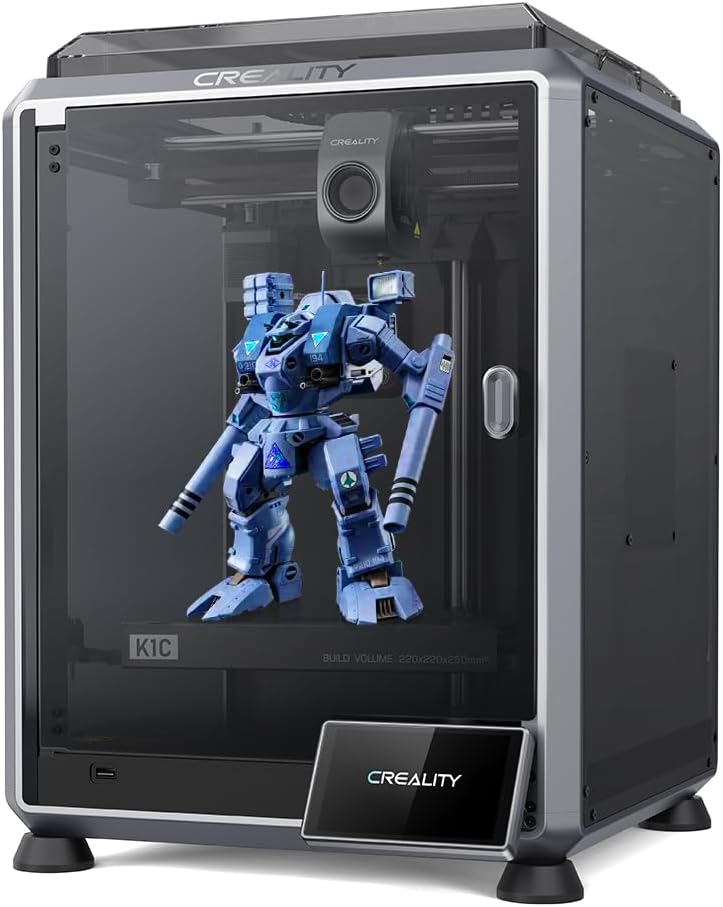
The Creality K1C is engineered for durability and speed, making it a solid 3D Printer for High Temperature Filaments like carbon fiber. Its direct extruder grips filament tightly and resists clogs, ensuring smooth flow even with abrasive materials.
We may earn a commission when you buy through this link, at no additional cost to you.
Users appreciate the fast 600mm/s speed and robust cooling structure that minimizes warping and stringing. The AI camera adds convenience by detecting failures in real time, which helps avoid wasting material during long prints.
Although the build volume is compact, the machine excels at producing detailed, reinforced parts quickly. The auto calibration and easy setup reduce friction for new users wanting to jump into engineering-grade printing.
It is a great choice for those needing carbon fiber support without paying a premium. If you prioritize speed and abrasion resistance in a smaller footprint, the K1C delivers reliable performance.
A bolster spring and ball plunger enhance grip while a titanium alloy heatbreak blocks heat creep for stable high-temperature extrusion.
Multiple fans target hotend heat creep, part hardening, and overall model cooling to reduce stringing and refine layer texture.
We may earn a commission when you buy through this link, at no additional cost to you.
The Bambu Lab P1S offers a fully enclosed design that stabilizes temperature for better results with engineering filaments like ABS and ASA. Its high-speed printing reaches 500mm/s without sacrificing accuracy, enabling rapid prototyping.
We may earn a commission when you buy through this link, at no additional cost to you.
Features like automatic bed leveling and a user-friendly setup make it accessible for beginners while still meeting advanced needs. The machine handles common polymers well and ensures consistent layer adhesion with minimal manual tuning.
While it lacks active chamber heating, the enclosure provides sufficient thermal stability for most high-temperature prints. Users value the convenience of auto calibration and the smooth experience from start to finish.
This model is ideal for those seeking a reliable, enclosed 3D Printer for High Temperature Filaments. If you want solid performance and ease of use for everyday engineering materials, the P1S is a strong option.
The fully enclosed body improves print performance for advanced filaments by reducing drafts and helping maintain stable thermal conditions throughout the print.
With speeds up to 500mm/s and 20000 mm/s² acceleration, you can produce masterpieces quickly while retaining detail and accuracy.
We may earn a commission when you buy through this link, at no additional cost to you.
The Bambu Lab A1 is designed for beginners who still want quality results with advanced filaments. It features full auto calibration and high acceleration for speed, keeping prints accurate and detailed without manual tweaking.
We may earn a commission when you buy through this link, at no additional cost to you.
Its user-friendly touchscreen and quiet operation make it ideal for home or office use. The Active Flow Rate Compensation ensures smooth extrusion and consistent layer thickness even at higher speeds.
While not fully enclosed, it can print many common engineering polymers with good results. The ability to add multi-color capability via AMS lite extends its versatility for creative projects.
Choose the A1 if you want a simple, fast 3D Printer for High Temperature Filaments for learning. It balances performance and ease of use, helping new users succeed quickly.
The printer takes care of calibration processes automatically including Z-offset and bed-leveling to ensure optimal performance for every print.
This algorithm compensates flow rate according to extruder readings to deliver consistently smooth and precise prints.
We may earn a commission when you buy through this link, at no additional cost to you.
The FLASHFORGE AD5X delivers strong value with a 300°C nozzle and 600mm/s speed, making it an accessible 3D Printer for High Temperature Filaments. Its IFS technology supports multi-color printing for vibrant models without complex setups.
We may earn a commission when you buy through this link, at no additional cost to you.
Fully automatic leveling and a generous build volume simplify the workflow for both hobbyists and professionals. The machine handles various materials like ABS and PETG, ensuring consistent quality with minimal intervention.
Although it lacks an active heated chamber, the nozzle capability and cooling structure enable many high-temperature projects. The combination of speed and ease of use makes it a practical pick for tight budgets.
If you need a reliable machine for engineering prints without a premium price, the AD5X is a smart choice. It offers solid performance and versatility for everyday high-temperature 3D printing.
The 300°C nozzle allows working with a wide range of filaments including PLA ABS and PETG to tackle diverse projects.
Independent Filament System enables multi-color printing up to four colors simultaneously for intricate and artistic models.
We may earn a commission when you buy through this link, at no additional cost to you.
The FLASHFORGE Creator 5 Pro leads the list with an active heated chamber up to 65°C, perfect for demanding materials like PC and Nylon. It combines industrial speed with safety features like HEPA13 filtration for clean environments.
We may earn a commission when you buy through this link, at no additional cost to you.
Four independent extruders allow true multi-color printing without mixing or purging. This architecture significantly improves efficiency and color separation compared to single-nozzle systems.
While it comes at a premium price, the stability and throughput justify the investment for professional workflows. The rigid frame ensures precision even at high speeds, and tool-less changes reduce maintenance time.
Select this machine if you need reliable, safe, and fast high-temperature printing for production. It offers unmatched capabilities in chamber control and multi-material handling for advanced users.
A stable temperature up to 65°C ensures consistent interlayer adhesion and minimizes warping when printing high-performance materials.
Four completely independent toolheads switch colors instantly without purging improving efficiency and ensuring pristine material purity.
We may earn a commission when you buy through this link, at no additional cost to you.
The Anycubic Kobra S1 Max offers a spacious 350mm build volume for large functional prototypes and engineering parts. Its 350°C hotend and 65°C heated chamber handle a wide range of advanced materials with confidence.
We may earn a commission when you buy through this link, at no additional cost to you.
The CoreXY motion system maintains precision at 600 mm/s while reducing ringing during high-speed prints. Real-time AI monitoring detects issues early to save material and prevent failures during long runs.
This model is ideal for projects requiring large dimensions or specialized materials like PC-CF or PA6-CF. The durable extrusion system with hardened steel nozzles resists wear from abrasive filaments.
Choose the Kobra S1 Max if size and material versatility are your priorities. It delivers robust engineering capabilities in a reliable and well-featured package for professional makers.
It supports filaments including ABS ASA PC PA and reinforced variants for robust and functional end-use parts.
A 720P camera and AI vision algorithm detect spaghetti failures and foreign objects to reduce waste during prints.
We may earn a commission when you buy through this link, at no additional cost to you.
The Flashforge AD5X combines a 300°C all-metal hotend with CoreXY architecture for high-speed, precise prints. Its dual-band Wi-Fi enables remote monitoring and time-lapse sharing from anywhere using the dedicated app.
We may earn a commission when you buy through this link, at no additional cost to you.
Auto leveling and a magnetic PEI flexible plate ensure consistent first layers and easy part removal. The machine supports multiple filaments including ABS and Nylon, offering flexibility for various applications.
While enclosed printing requires an optional kit, the base unit delivers strong performance for hobbyists and professionals alike. The 30-second nozzle swap simplifies maintenance and adapts to different material needs quickly.
This model suits users who value speed and connectivity in their workflow. If you want a capable 3D Printer for High Temperature Filaments with remote features, the AD5X is worth considering.
Dual-band Wi-Fi (2.4G/5G) and the Flashforge App allow monitoring prints from anywhere and sharing HD timelapses.
A 30-second all-metal hotend nozzle swap lets you upgrade for different materials without tools or delays.
We may earn a commission when you buy through this link, at no additional cost to you.
The Snapmaker U1 features four independent toolheads with a 5-second changer for true multi-material printing without purging. This system reduces waste and speeds up complex projects compared to traditional extruder switches.
We may earn a commission when you buy through this link, at no additional cost to you.
Engineered with CoreXY motion and vibration compensation, it maintains accuracy at 500 mm/s. Compatible with diverse materials including TPU and ASA, it opens design freedom for flexible and engineering parts.
Smart calibration ensures perfect first layers and smooth prints with minimal manual adjustment. The interface and app control make it accessible for beginners while supporting professional workflows.
Choose the U1 if you need efficient multi-material capability and rapid tool changes. It balances performance, usability, and waste reduction for advanced production tasks.
The 5s tool changer swaps toolheads quickly to minimize waste and increase productivity during multi-material prints.
Four independent toolheads enable mixing rigid flexible and water-soluble materials without manual intervention for complex prototypes.
We may earn a commission when you buy through this link, at no additional cost to you.
The FLASHFORGE Creator 5 Pro delivers industrial performance with an active 65°C heated chamber and a near-zero waste system. Its 7-second FlashSwap changer switches nozzles without flushing filament to save material and time.
We may earn a commission when you buy through this link, at no additional cost to you.
Built on a rigid CoreXY structure with linear rails, it achieves 600mm/s speeds while eliminating mechanical vibrations. This ensures precision and reduces ghosting even during long and complex prints.
Safety features include dual HEPA and activated carbon filtration for clean air in any workspace. Real-time monitoring and remote control via desktop or mobile help manage production efficiently.
This model is ideal for professional settings where efficiency and waste reduction matter. If you need a reliable 3D Printer for High Temperature Filaments with advanced tooling, the Creator 5 Pro is a top pick.
Independent toolheads switch nozzles without flushing filament to drastically slash operational overhead and material costs.
Dual HEPA 13 and activated carbon systems trap ultrafine particles and fumes to maintain a safe and odorless environment.
We may earn a commission when you buy through this link, at no additional cost to you.
Selecting the right 3D Printer for High Temperature Filaments involves evaluating thermal stability, speed, and build size to match your project requirements.
A heated chamber keeps the build area warm during printing which reduces warping and improves layer adhesion for materials like ABS and Nylon. Look for models with active heating systems that maintain stable temperatures above 50°C.
Prioritize active chambers for large or high-tolerance engineering parts to ensure consistent quality.
High-performance filaments often require nozzle temperatures above 280°C. Ensure the printer supports at least 300°C to handle PC ASA and carbon-filled composites without limitations.
Check the maximum nozzle rating to confirm compatibility with your intended engineering materials.
Determine the size of parts you need to produce. Larger volumes allow single-piece prints for helmets or functional prototypes but may increase machine footprint and cost.
Choose a build volume that fits your largest common projects while considering available workspace.
Fast printing saves time but requires robust mechanical systems to maintain accuracy. Look for CoreXY structures or high-torque motors that sustain precision at speeds over 500mm/s.
Balance speed with reliability to avoid failed prints during complex engineering tasks.
Multi-color systems like AMS or IFS enable vibrant models without manual swaps. Independent extruders or tool changers reduce waste and simplify color transitions.
Consider whether multi-color functionality fits your workflow before investing in compatible hardware.
Enclosed printers with HEPA or carbon filters trap odors and particles emitted during high-temperature printing. This protects users and keeps indoor air clean.
Ensure the printer includes effective filtration for safe operation in offices or homes.
Features like auto leveling and AI failure detection streamline setup and reduce human error. These tools help beginners and experts alike maintain reliable results.
Look for automated systems that minimize manual intervention and save time during long runs.
Abrasive filaments like carbon fiber can wear down standard nozzles quickly. Hardened steel nozzles and direct extruders increase durability and prevent clogging.
Select models with durable extrusion systems if you plan to print reinforced materials often.
Always preheat the chamber and bed before starting a print to ensure proper thermal conditions for engineering filaments. This reduces warping and improves adhesion especially during long jobs.
Keep the nozzle clean and replace it when you notice inconsistent flow. High-temperature materials can leave residues that clog smaller or worn nozzles.
Monitor prints frequently using the provided camera or app to catch failures early. Proper airflow and enclosure settings also help maintain consistent quality across different material types.
Printers with enclosed designs and active heated chambers work best for ABS and ASA. Models like the FLASHFORGE Creator 5 Pro and Bambu Lab P2S provide stable temperatures to prevent warping and ensure strong layer adhesion.
Yes, Nylon typically needs an active heated chamber to minimize warping and maintain moisture-free conditions. An enclosed system with at least 50°C to 65°C capability ensures consistent printing results.
Polycarbonate usually requires a nozzle temperature of 280°C to 310°C. Ensure your printer supports 300°C or higher and has an enclosed chamber to handle this material safely.
Yes but you need a hardened steel nozzle and direct extruder to prevent wear and clogging. Machines like the Creality K1C and Anycubic Kobra S1 Max are optimized for carbon fiber printing.
Enclosed printers often include HEPA and carbon filters to capture fumes. However placing them in a well-ventilated area is still recommended for safety when printing materials like ABS or ASA.
Use an active heated chamber and ensure consistent bed adhesion with proper surface types like PEI. A brim or raft also helps reduce warping during long or large-scale prints.
The 3D Printer for High Temperature Filaments you choose depends on your workflow needs and budget. Top picks like the FLASHFORGE Creator 5 Pro and Bambu Lab P2S Combo deliver speed, reliability, and material versatility.
Prioritize features like active chambers, durable nozzles, and automation to maximize quality and minimize downtime. These capabilities ensure consistent results for engineering-grade prints.
Prices and promotions change so review current offers and compare specs before buying. With the right machine you can unlock advanced material possibilities and create robust professional parts efficiently.