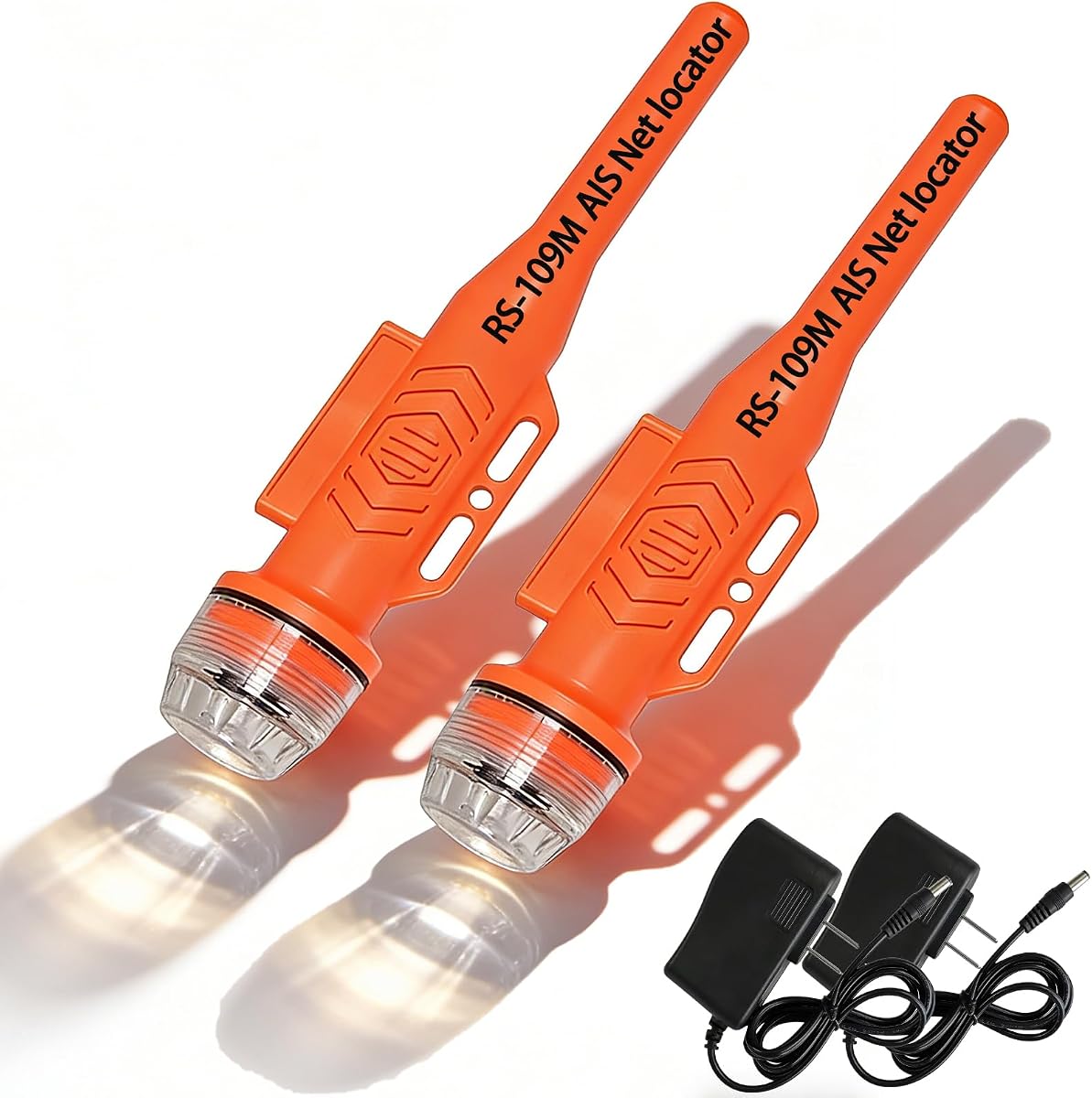
RS-109M Marine Net Locator
4.0Editor score
IPX7 Waterproof Design
Accurate GPS Positioning
Extended Battery Life
Navigating modern waterways requires reliable communication and safety equipment. An Ais Transponder ensures your vessel is visible to others and helps you track nearby traffic effectively.
We evaluated ten leading models based on display quality, connectivity options, and safety features. Our comparison covers Class A and Class B units suitable for various boat sizes and budgets.
Each pick highlights unique strengths like integrated GPS or waterproof designs. Note that product availability and pricing change frequently so verify current details before purchasing.
4.0Editor score

4.5Editor score
4.5Editor score
As an Amazon Associate we earn from qualifying purchases.
The following table offers a side-by-side look at the essential specifications and capabilities of each selected Ais Transponder model to aid your decision-making process.




The Icom MA-510TR stands out as a top contender for sailors seeking reliable AIS data. It features a vibrant display that makes viewing vessel data easy even in bright sunlight. The unit integrates GPS navigation seamlessly allowing for immediate situational awareness upon powering up.
We may earn a commission when you buy through this link, at no additional cost to you.
Its vibrant 4.3 color display ensures high visibility during day or night. The interface supports multiple languages making it accessible for international crews. Silent mode allows for secure operations without broadcasting unnecessary position data when needed.
While the device offers robust features like collision alarms and anchor watch functions the price point is higher than entry-level alternatives. However the build quality justifies the investment for serious mariners prioritizing safety and clarity on the water.
This model is ideal for boat owners who need a standalone transponder with excellent visual feedback. It balances advanced connectivity options like USB with user-friendly controls ensuring efficient operation in various marine conditions.
The vibrant 4.3 inch screen provides clear text and graphics for quick interpretation of traffic data.
USB connectivity allows for easy data transfer and integration with other onboard systems.
We may earn a commission when you buy through this link, at no additional cost to you.
This EM-TRAK unit serves as a functional Class B transceiver designed for straightforward operation. It operates on both 12 and 24 volt systems making it adaptable to various vessel electrical setups. The multicoloured standard design fits well into compact spaces on smaller boats.
We may earn a commission when you buy through this link, at no additional cost to you.
It focuses on essential transmission and reception capabilities without unnecessary complexity. The electronics support communication and energy solutions effectively for marine environments. It is a solid choice for those needing a basic beacon without advanced graphical interfaces.
However the absence of a display means you must rely on external plotters to view data. This limitation makes it less suitable for captains wanting an all-in-one navigation hub but perfect for auxiliary monitoring roles.
Ideal for budget-conscious users or secondary installations where simplicity is key. It ensures your vessel is visible on AIS networks reliably while maintaining a low profile on the deck.
Supports both 12 and 24 volt systems for wide compatibility across different boat types.
Focuses on core transmission and reception to maintain clear communication lines.
We may earn a commission when you buy through this link, at no additional cost to you.
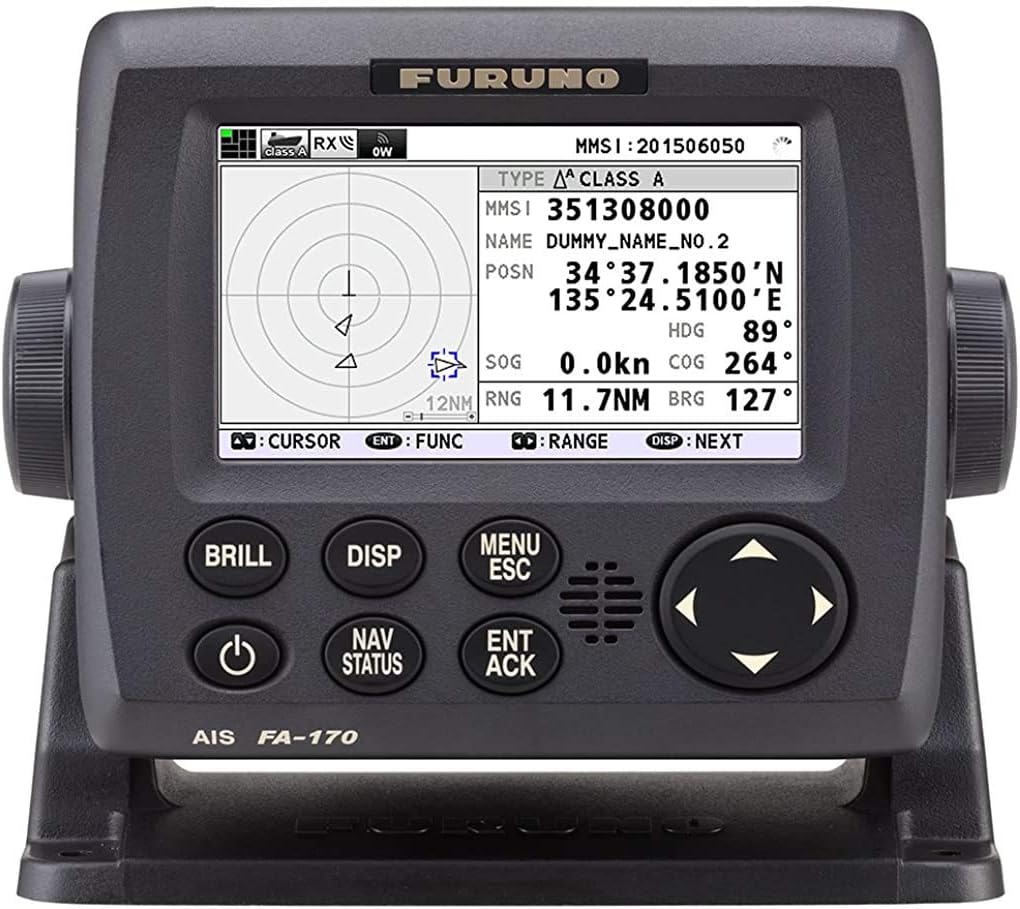
The Furuno FA170 represents a top-tier option for commercial and professional maritime applications. As a Class A transponder it offers superior performance and capacity compared to Class B units. It stores up to 2048 AIS targets ensuring comprehensive data retention for large vessels.
We may earn a commission when you buy through this link, at no additional cost to you.
Its sophisticated features include a dangerous target list that alerts crews to potential collision risks. The inclusion of a LAN port and multiple input/output ports facilitates integration into complex ship networks. This level of connectivity is essential for large-scale operations requiring detailed monitoring.
Despite its advanced capabilities the unit comes with a significant price tag and requires technical expertise to set up. The complexity might be overkill for recreational boats but it is indispensable for professional shipping where safety is paramount.
Best suited for large vessels that need robust tracking and communication capabilities. It provides an unmatched level of detail and control for navigation safety in busy waterways.
Stores up to 2048 targets ensuring no nearby vessel data is lost.
Dangerous target lists provide early warnings for potential collision risks.
We may earn a commission when you buy through this link, at no additional cost to you.
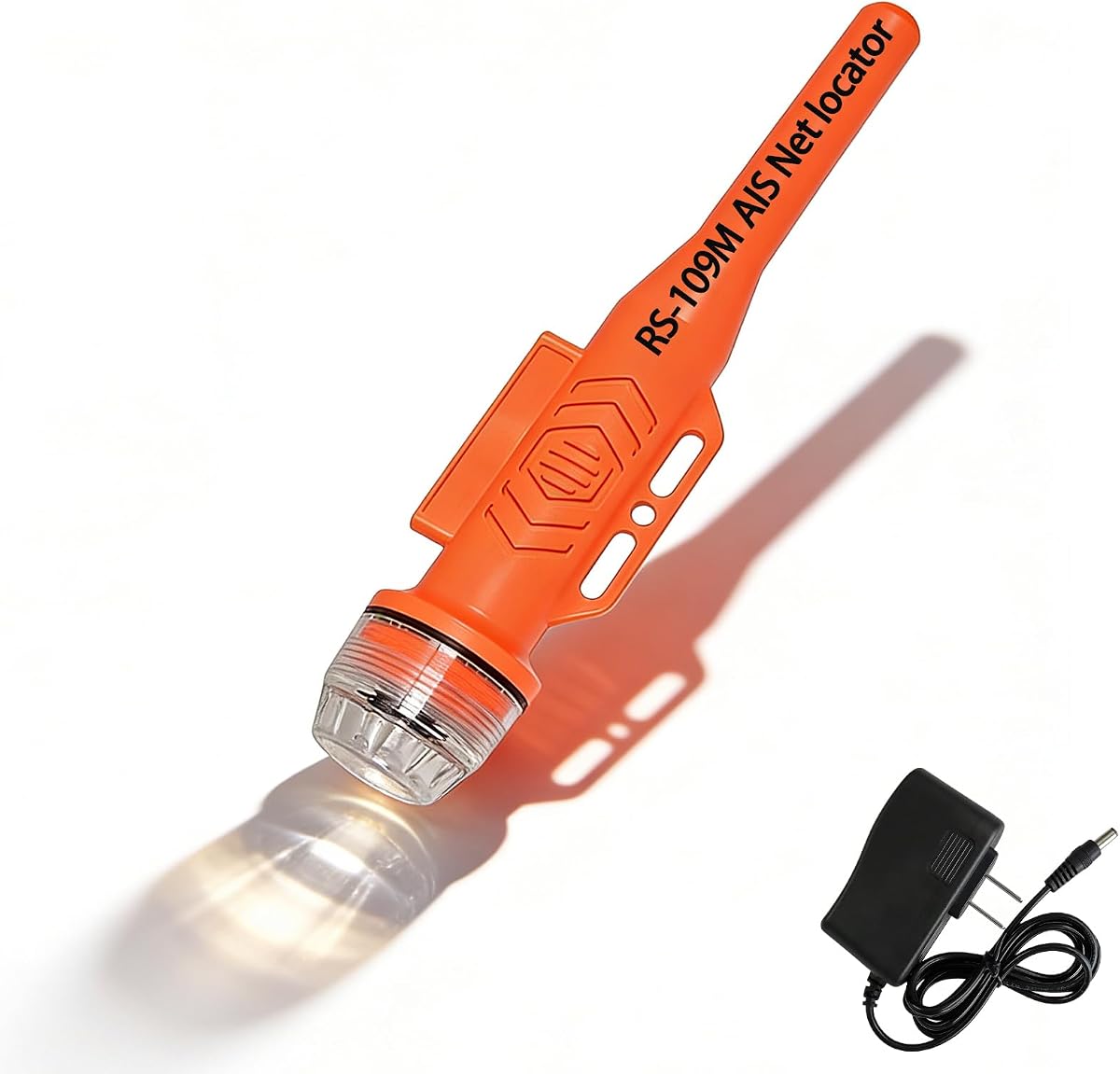
This RS-109M locator is designed specifically for fishing nets and buoys but functions effectively as a transponder tracker. Its IPX7 waterproof rating ensures it performs dependably even when fully submerged in marine conditions. The high sensitivity GPS module delivers precise location updates quickly for reliable retrieval.
We may earn a commission when you buy through this link, at no additional cost to you.
Equipped with a 3000mAh lithium battery it supports continuous signal transmission for up to two weeks. This extended battery life greatly reduces maintenance frequency allowing users to focus on fishing rather than charging. The device transmits positioning data and battery levels directly to onboard receivers.
While it excels as a net buoy tracker it lacks the full navigation features of a dedicated vessel transponder. However for asset tracking in coastal waters its range and durability make it a highly cost-effective solution for fishermen.
Perfect for users needing to monitor equipment in open waters without a large budget. It combines essential safety features with rugged construction to protect valuable gear during marine operations.
IPX7 waterproof design allows reliable performance even in submerged conditions.
High capacity battery supports up to two weeks of continuous signal transmission.
We may earn a commission when you buy through this link, at no additional cost to you.
This bundle combines a Ray90 VHF radio with an AIS700 transceiver providing a comprehensive communication and safety package. Raymarine is known for reliable marine electronics and this set maintains that reputation. It includes accessories for a fixed mount installation suitable for helm stations.
We may earn a commission when you buy through this link, at no additional cost to you.
The integration allows for seamless communication between voice and AIS data systems. Users benefit from a unified setup that reduces cable clutter and simplifies interface. The fixed mount design ensures the unit stays secure during rough seas or heavy vibration.
Buying as a bundle can be convenient but might limit individual component choices. The high cost reflects the premium branding and reliability of the manufacturer which justifies the investment for safety-conscious sailors.
Best for new boat owners looking to install essential gear in one go. It provides a solid foundation for marine communication and navigation safety with proven hardware.
Combines VHF and AIS systems to reduce clutter and simplify interfaces.
Fixed mount configuration ensures the unit stays secure during rough seas.
We may earn a commission when you buy through this link, at no additional cost to you.
This beacon is designed for personal safety offering both AIS and satellite distress signaling. It sends alerts on VHF frequencies to nearby vessels and global satellite networks for broad rescue coverage. The Return Link Service confirms to the owner that help is on the way.
We may earn a commission when you buy through this link, at no additional cost to you.
NFC technology simplifies accessing beacon data via mobile apps for battery and test checks. It features a strobe and infrared lights for visibility during rescue operations. The lightweight design allows for easy attachment to life jackets using multifunction clips.
While extremely effective for emergency scenarios it is strictly a personal device not a boat tracking unit. The lack of subscription requirements is a major advantage for long-term preparedness and cost savings.
Essential for anyone spending time offshore where man overboard protection is critical. It provides peace of mind with proven technology that connects you with rescue services reliably.
Combines AIS and satellite signals to maximize rescue coverage.
Return Link Service provides instant feedback that your distress signal is received.
We may earn a commission when you buy through this link, at no additional cost to you.
Another variant of the RS-109M series this unit provides reliable tracking for marine assets like buoys and nets. It features a fully sealed housing that meets IPX7 waterproof standards ensuring dependability in submerged conditions. The high-sensitivity GPS module delivers quick location updates.
We may earn a commission when you buy through this link, at no additional cost to you.
Data sync transmission allows real-time battery level monitoring directly on your onboard receiver. This feature prevents unexpected power loss during critical retrieval missions. The device transmits AIS signals on marine VHF frequencies for a range of up to 10 nautical miles.
It is designed for durability and low maintenance rather than complex navigation tasks. The battery life supports continuous transmission for weeks reducing the need for frequent checks or swaps.
An ideal choice for fishermen or boaters needing to monitor multiple pieces of equipment. It ensures your gear is visible and trackable throughout long seasons in open waters.
Sends battery status to receiver so you never lose power unexpectedly.
Transmits signals up to 10 nautical miles for broad area coverage.
We may earn a commission when you buy through this link, at no additional cost to you.
This handheld transceiver brings the convenience of AIS reception to a portable form factor. The built-in AIS receiver shows nearby vessel traffic directly on the screen enhancing situational awareness. It features a 2400 mAh Li-ion battery that provides up to 10 hours of typical operating time.
We may earn a commission when you buy through this link, at no additional cost to you.
Class-leading 1500 mW audio output ensures calls stay intelligible in noisy marinas or engine rooms. If dropped overboard the radio floats and flashes to aid retrieval. It also includes simplified navigation to guide you to saved waypoints quickly.
While powerful it relies on battery life which can be a limitation compared to fixed units. However the ability to take AIS data anywhere on the boat makes it a versatile tool for small crews or dinghies.
Perfect for captains who need a backup radio that also tracks traffic. It combines robust audio performance with critical safety features like MOB distress signals and GPS navigation.
Portable design allows you to track AIS data anywhere on the boat.
High wattage speaker ensures calls are heard clearly even in noisy conditions.
We may earn a commission when you buy through this link, at no additional cost to you.
Part of the new EVO series this VHF transceiver integrates seamlessly with modern NMEA 2000 networks. It supports AIS data allowing for efficient communication with other vessels on the water. The design is compact yet robust fitting well into tight helm stations.
We may earn a commission when you buy through this link, at no additional cost to you.
Its compatibility with NMEA 2000 simplifies wiring and allows for better data sharing with displays and instruments. Users benefit from a streamlined setup that reduces clutter while enhancing safety features. The manufacturer Icom is known for durable marine electronics.
The advanced features come with a higher price point and might require professional installation. For boats with existing digital networks however the integration offers significant operational advantages and ease of use.
Ideal for modern vessels needing advanced network connectivity for communication. It represents a smart upgrade for those investing in a digital marine ecosystem.
NMEA 2000 support ensures smooth integration with existing digital systems.
Reduced wiring needs simplify installation and maintain a clean helm.
We may earn a commission when you buy through this link, at no additional cost to you.
This AIS700 transceiver is designed to work seamlessly with Raymarine multifunction navigation displays. It uses SO-TDMA networking for better range and faster performance in heavy traffic areas. The built-in antenna splitter simplifies installation by sharing one antenna with a VHF radio.
We may earn a commission when you buy through this link, at no additional cost to you.
It supports both NMEA2000 and NMEA0183 standards making it versatile for various onboard systems. Full transmit and receive capabilities enhance situational awareness for safer navigation. It is a solid choice for users already invested in the Raymarine ecosystem.
The setup requires technical knowledge to integrate properly with displays and networks. While the features are robust the interface is basic and relies on the connected display for data visualization.
Best for boats with Raymarine displays looking to add reliable AIS functionality. It offers a compact and integrated solution for traffic awareness without needing extra hardware.
SO-TDMA networking ensures better performance in crowded waterways.
Built-in splitter simplifies setup by sharing a single antenna.
We may earn a commission when you buy through this link, at no additional cost to you.
Selecting the right Ais Transponder involves evaluating key factors to ensure safety and compatibility.
Class A transponders are mandated for larger vessels and offer higher transmission power and priority. Class B units are suitable for recreational boats with smaller ranges but sufficient for most leisure activities.
Choose Class A if regulations require it or Class B for smaller boats to save cost and space.
A built-in display provides immediate access to traffic data without needing a separate chartplotter. Units without displays rely on external screens which can be convenient if you already have a system.
Ensure the interface is intuitive and supports multiple languages if you sail internationally.
Modern Ais Transponders offer NMEA 2000 or NMEA 0183 outputs to connect with instruments and computers. USB or LAN ports allow for data logging and firmware updates essential for long-term maintenance.
Verify your existing network compatibility to avoid complex retrofitting or adapter costs.
Marine electronics face harsh environments so look for units with high waterproof ratings like IPX7. A robust housing protects against salt spray and accidental submersion extending the device lifespan.
Invest in a durable model if it will be mounted exposed to the elements.
Built-in GPS ensures accurate positioning without needing an external antenna. Some models offer anchor watch alarms and collision alerts adding layers of safety for single-handed sailors.
Integrated GPS reduces wiring complexity and improves positioning accuracy significantly.
Consider the power consumption and battery backup options especially for handheld or personal units. Devices with long battery life reduce the risk of failure during emergencies or long voyages.
Check if the unit supports dual voltage inputs to fit your boat electrical system.
Transmission range depends on antenna height and power output. Models with higher wattage or better antenna designs provide clearer coverage in coastal or offshore areas.
Ensure the range meets your typical sailing distance to maintain reliable communication.
Higher-end models offer more features but cost more. Balance your budget with essential safety needs to avoid overspending on unnecessary add-ons.
Check warranty terms to ensure long-term support for your investment.
Install the Ais Transponder in a location with good antenna connectivity and minimal interference. Ensure the GPS and power connections are secure to prevent data loss.
Regularly test the device using the built-in diagnostic features to confirm it is transmitting correctly. Keep the firmware updated to maintain compatibility with modern networks.
Clean the unit gently with fresh water and avoid harsh chemicals to protect the display. Store portable units in dry cases when not in use to extend their lifespan.
Class A transponders have higher power and are mandatory for large commercial vessels. Class B units are designed for recreational boats with lower power but sufficient for leisure needs.
Most modern units have built-in GPS but some may require an external one if not integrated. Check the product specifications to ensure you have all necessary connections.
It is recommended to update firmware whenever new versions are released to ensure security and compatibility. Check the manufacturer site for updates periodically.
Yes portable handheld or buoy trackers are suitable for dinghies. Ensure they have a secure mount and waterproof protection for safe operation.
NMEA 2000 is a standard for marine electronics communication. Compatibility allows the Ais Transponder to share data with other instruments on your boat.
Basic units are straightforward but complex setups may require professional help. Follow the manual closely to ensure proper antenna and power connections.
The Icom MA-510TR and Furuno FA170 stand out for their robust features and reliability. Selecting the right unit depends on your vessel size and budget constraints.
Prioritize safety features like GPS and waterproofing to ensure your boat remains visible and protected. Consider integration capabilities if you plan to expand your navigation system.
Always verify current product details and prices before purchasing to get the best value. Proper usage and maintenance will ensure your Ais Transponder serves you well for years.