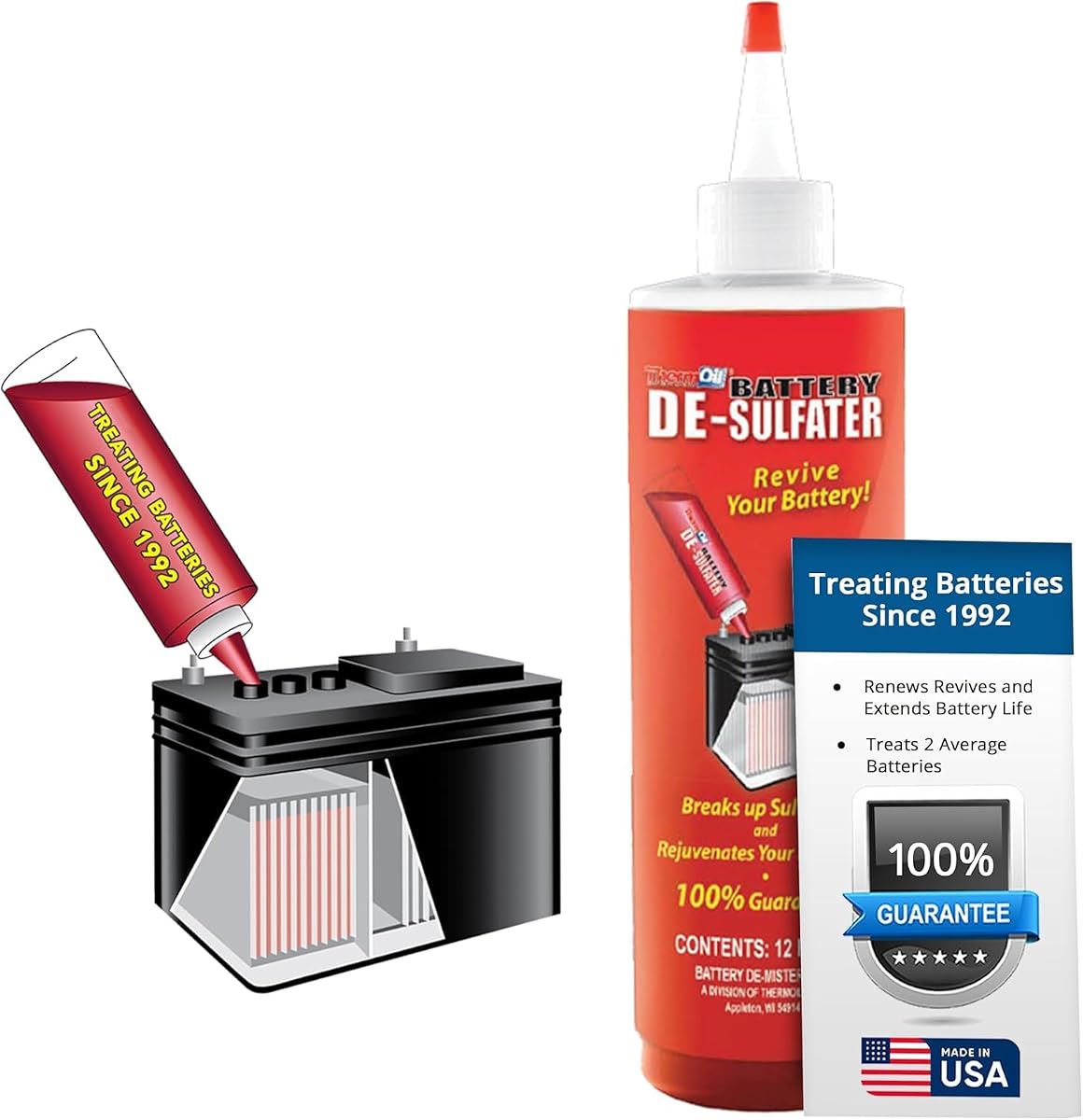
DeSulfater Battery Care Solution 12oz
3.8Editor score
Non-acid reconditioner
Reduces internal heating
Zero Epsom salts
This guide compares the top 10 battery desulfator solutions for lead acid batteries, evaluating performance, compatibility, and value to help you choose.
Battery desulfator solutions are essential for extending the life of lead acid batteries used in vehicles and equipment. These additives help dissolve sulfate crystals that form on battery plates over time, restoring capacity and performance for reliable operation.
We evaluated ten leading products based on user feedback, technical specifications, and application versatility. Our analysis covers liquid additives and electronic pulse devices, ensuring you find the right solution for your specific battery type and maintenance needs.
Each pick highlights key features, compatibility details, and real-world performance expectations. Please note that prices and availability can change frequently, so verify current details before making your final purchase decision online.
3.8Editor score

3.8Editor score

4.1Editor score
The following table provides a side-by-side comparison of all ten products reviewed in this guide to help you quickly identify the best fit for your specific battery maintenance requirements.


This product is a liquid additive designed to restore lead acid batteries by dissolving sulfation. It has a 3.8 rating from users who appreciate its effectiveness in reviving weak cells without complex tools.
We may earn a commission when you buy through this link, at no additional cost to you.
The formula is versatile, working with car, golf cart, and marine batteries. It improves charge capacity by addressing the chemical balance inside the battery, leading to extended performance over time.
Users note it is gentle on internal components while still being effective. However, it is not a magic bullet for completely dead or frozen batteries that cannot hold any charge at all.
If you need a reliable liquid solution for maintenance or mild revival, this is a strong choice. It balances ease of use with proven results for those looking to avoid immediate replacements.
The additive penetrates cells to dissolve sulfate crystals blocking electrical flow.
Using this solution can reduce the need for costly new battery purchases.
We may earn a commission when you buy through this link, at no additional cost to you.
This 1 gallon refill is ideal for fleet operators or those with multiple batteries. It targets sulfation to free battery plates, with measurable improvement often seen after a week of charging.
We may earn a commission when you buy through this link, at no additional cost to you.
The non-toxic formula is safe to handle without special gear. It treats up to six batteries per gallon, making it a cost-effective choice for larger setups like golf carts or RVs.
It works best on batteries that still accept a charge. It will not revive completely dry or frozen cells, so condition must be verified before use to manage expectations correctly.
For large-scale maintenance or multiple vehicles, this solution offers great value. The clear instructions ensure you can apply it correctly to maximize the chances of revival.
One gallon treats multiple batteries efficiently for course or marina operators.
The non-toxic formula allows safe use in garages or on courses without gear.
We may earn a commission when you buy through this link, at no additional cost to you.
This electronic device uses high-frequency pulses to dissolve sulfate buildup. It has a 4.1 rating and is unique in supporting AGM and Gel types alongside standard flooded batteries.
We may earn a commission when you buy through this link, at no additional cost to you.
It works with systems from 12V to 72V, making it versatile for cars, solar, and golf carts. The device runs up to 30 intelligent cycles to recover energy storage potential gradually.
Safety features like reverse polarity protection make it safe for long-term use. However, it is a desulfator not a charger, so it should be used during or after charging cycles.
For advanced users needing to revive AGM or Gel batteries, this is a top pick. The wide compatibility and safety features justify its position as a premium electronic solution.
High-frequency low-current pulses dissolve sulfate and restore capacity safely.
Supports AGM and Gel types often excluded from other solutions.
We may earn a commission when you buy through this link, at no additional cost to you.
Battery Renew is a 1 gallon solution aimed at fleets like golf courses. It breaks down lead sulfate on plates to restore capacity, requiring a 10 day charge cycle for full effect.
We may earn a commission when you buy through this link, at no additional cost to you.
The 4.1 rating suggests strong performance when used correctly. It is designed for batteries that still accept a charge, helping them hold power longer than they did before.
Users appreciate the USA-made quality assurance. However, it is not suitable for completely dry or frozen cells, so checking battery condition is crucial before application.
If you maintain multiple vehicles, this gallon size offers convenience and value. It provides a clear, structured approach to extending battery life through chemical restoration.
One gallon treats 3 to 6 batteries making it ideal for pros.
Produced in the USA ensures it meets high quality standards.
We may earn a commission when you buy through this link, at no additional cost to you.
This 64 oz bottle is designed to restore performance in flooded lead acid batteries. It dissolves sulfate deposits to help batteries accept a stronger charge, with a 3.9 rating from users.
We may earn a commission when you buy through this link, at no additional cost to you.
It works on 6V, 8V, and 12V systems, making it suitable for golf carts and various vehicles. The non toxic formula is safe to use for maintenance once per year.
Best results are typically seen on batteries 1 to 5 years old. It is not compatible with AGM or Gel types, so verify your battery type before purchase.
If you need a preventative maintenance solution that is easy to apply, this is a good choice. The large bottle ensures you have enough product for multiple batteries in a system.
Use once per year to prevent sulfation and maintain efficiency.
One 64 oz bottle treats an entire 6-battery golf cart pack.
We may earn a commission when you buy through this link, at no additional cost to you.
This 12 oz solution contains zero Epsom salts and targets sulfation corrosion. It enhances performance by reducing resistance by up to 50%, according to the product data.
We may earn a commission when you buy through this link, at no additional cost to you.
The non-acid formula is safe for all lead-acid batteries. It is backed by a guarantee, offering peace of mind for those looking for a risk-free maintenance investment.
Users appreciate the simplicity of use as a simple electrolyte additive. However, it is intended for mechanically sound batteries, not for those that are completely dead.
For smaller tasks or individual batteries, this size is convenient. It provides a reliable way to maintain performance without using cheap additives that contain salts.
Contains zero Epsom salts unlike many cheap desulfators on the market.
Helps reduce internal heating and increases power efficiency effectively.
We may earn a commission when you buy through this link, at no additional cost to you.
This 64 oz version of the DeSulfater solution provides more product per container. It uses a non-hazardous formula to safely treat all lead-acid batteries without special gear.
We may earn a commission when you buy through this link, at no additional cost to you.
The product is designed to prevent damage from overcharging. It extends the lifespan of mechanically sound batteries regardless of age or size.
It offers the same guarantee as the smaller size, ensuring results. The ease of use as a simple electrolyte additive makes it a convenient choice.
For those who want a larger quantity of a trusted brand, this is ideal. It ensures you have enough product for multiple treatments or multiple batteries in a system.
64 oz volume provides more product per container for frequent use.
Helps prevent damage from overcharging to extend battery life.
We may earn a commission when you buy through this link, at no additional cost to you.
This electronic device uses high-frequency pulses to remove sulfate crystals. It has a 4.0 rating and features automatic voltage recognition for 12V to 48V systems.
We may earn a commission when you buy through this link, at no additional cost to you.
It supports up to 400AH batteries and can be used with a charger. It is effective when the battery is above 11.5V and the battery needs revival.
Users report performance improvements after a few weeks of use. However, it is important to test the battery voltage first before connecting the device correctly.
For those with solar or larger battery banks, this is a practical choice. The auto-setting feature simplifies the setup process for regular maintenance.
Device recognizes battery voltage automatically without manual setting.
High-frequency pulses help prevent lead sulfate crystals from sticking.
We may earn a commission when you buy through this link, at no additional cost to you.
This solution is similar to the other SPARK product but has a lower rating. It focuses on breaking down lead sulfate to restore lost charge capacity.
We may earn a commission when you buy through this link, at no additional cost to you.
It supports 6V, 8V, and 12V batteries and is non toxic. The 64 oz bottle is large enough to treat an entire golf cart pack.
Users note it works best on batteries that are still accepting a charge. It is intended for use on flooded lead acid batteries only.
While effective for some, checking current reviews is advisable. If you prefer the brand, ensure your battery type matches the compatibility list.
Proudly produced in the USA using quality-controlled standards.
Application rates are clearly defined for various battery voltages.
We may earn a commission when you buy through this link, at no additional cost to you.
This device uses specialized electronic pulses to help revive battery performance. It operates automatically, making it easy to use for continuous maintenance.
We may earn a commission when you buy through this link, at no additional cost to you.
It supports various lead-acid types including marine and deep cycle batteries. The simple installation process requires connecting to terminals for reconditioning.
Users appreciate the automatic cycling that does not require constant monitoring. It is designed to help dissolve sulfate buildup on plates to extend life.
If you need a simple maintenance tool, this is a solid option. The pulse technology helps maintain performance over time without complex setups.
Features pulse technology that automatically reconditions through cycles.
Simple connection process with battery terminals for easy use.
We may earn a commission when you buy through this link, at no additional cost to you.
Choosing the right desulfator solution depends on your battery type and system needs. Consider these key factors to ensure the product works effectively for your setup.
Most liquid solutions only work on flooded lead acid batteries. Electronic pulse devices may support AGM, Gel, or SLA types. Always verify compatibility before purchasing.
Confirm your battery type matches the product requirements to avoid ineffective use.
Liquid bottles vary in volume, with 64oz being common. Devices must match your system voltage. Ensure the device handles your specific voltage range.
Check voltage limits to ensure the device or additive works with your setup.
Chemical additives dissolve sulfate crystals directly. Electronic devices use pulses. Chemicals are simple to apply, while electronics need a connection to the terminals.
Choose chemicals for simplicity or electronics for broader type support.
If you maintain many batteries, gallon sizes or large 64oz bottles are better. Small 12oz bottles suit single or few battery needs. Larger quantities offer better value.
Pick the size that matches your total battery count and maintenance needs.
Chemicals often take 7 to 10 days of charging cycles. Electronic devices may take 2 to 4 weeks. Patience is key to seeing real performance improvements.
Expect a few weeks of use for measurable results to appear.
Many modern solutions are non-toxic and safe for indoor use. Check for safety certifications or non-hazardous claims. Avoid solutions that require heavy protective gear.
Look for non-toxic formulas to ensure safe handling and use.
Some brands offer 100% guarantees or money-back promises. This reduces risk if the product does not work. Check return policies on the retailer site.
Prioritize products with clear guarantees for your own peace of mind.
Many top products are made in the USA. This often implies higher quality control standards. Check the country of origin if this matters to you.
Consider domestic manufacturing if you value strict quality standards.
Begin by checking the battery voltage to ensure it is not below the minimum threshold. Most devices or liquids require the battery to be above 11.5 volts before treatment.
Apply the solution into the cells or connect the device to the correct terminals. Follow the specific instructions for dosages or connections to ensure proper operation.
Allow the battery to charge normally for the recommended period, typically 7 to 14 days. Check the voltage and capacity after the cycle to confirm if improvement occurred.
Sulfation occurs when lead sulfate crystals form on battery plates during discharge. Over time these crystals harden and block electrical flow, reducing charge capacity. Desulfators dissolve these crystals to restore performance.
Most desulfators cannot revive completely dead or dry batteries. They work best on batteries that still accept a charge but are weak. If the battery is frozen or fully depleted, replacement is usually needed.
Chemical additives generally do not work on sealed AGM or Gel batteries. You need an electronic pulse device that specifically supports these types. Always verify the product list for compatibility.
For preventative maintenance, use liquid additives once a year. Electronic devices can be used continuously. Regular use helps prevent sulfation buildup before it becomes severe.
Liquid additives require no special tools, just a funnel and gloves. Electronic devices need connection to terminals. Most modern products are designed for simple user setup.
It is generally recommended to add the additive directly to the cells. Do not dilute the solution unless instructed. Check the specific label for dilution instructions.
Many brands offer a limited warranty or satisfaction guarantee. Electronic devices often have a one-year warranty. Always check the seller page for current warranty details.
Most products are non-toxic and safe for garages. However, ensure the space is well ventilated during the process. Avoid inhaling fumes when handling battery acids.
The top picks like the Battery Restorer and SPARK Golf Cart offer strong value for flooded batteries. Electronic devices like the Pulse Repair are best for AGM types.
Prioritize products that match your voltage and chemistry to ensure safety and results. Regular maintenance with the right solution can save money on replacements.
Remember to verify current pricing and availability before purchasing to ensure you get the best value. Always follow instructions for best outcomes.