
BNC Male Connector Telescopic Antenna
4.5Editor score
Extends to 685mm total length
Compact lightweight design at 28g
Universal BNC male connector fit
This guide compares the top 10 antenna for scanner models for 2026, evaluating frequency range, mounting options, and signal clarity to help you choose the
Selecting the right antenna for scanner operations is crucial for capturing clear signals across various bands. Whether you monitor public safety, aviation, or amateur radio, the antenna determines reception quality and range significantly.
We evaluated ten top-rated models based on frequency coverage, build quality, connector types, and ease of installation. Each product was analyzed for compatibility with popular scanners and real-world performance in diverse environments.
Every recommendation highlights key strengths and ideal use cases to match your specific monitoring needs. Please note that availability and stock levels may change frequently, so verify current details before purchasing.
4.5Editor score

4.5Editor score
4.7Editor score
The following comparison table outlines the key specifications and features of each selected antenna model to facilitate easy side-by-side evaluation for your monitoring setup.




This antenna provides a solid foundation for scanner enthusiasts seeking broad frequency coverage without breaking the bank. Its 20 to 1300MHz range ensures you capture VHF, UHF, and airband signals effectively. The magnetic base makes it easy to test signal strength on different vehicle spots.
We may earn a commission when you buy through this link, at no additional cost to you.
The inclusion of a 3-meter cable gives you flexibility in routing the connection to your scanner unit inside the cabin. The BNC male connector fits most modern handheld and mobile scanners seamlessly. This universality is a major advantage for users with multiple devices.
While the magnetic mount is robust, it may struggle on non-ferrous vehicle surfaces or curved roofs without additional support. The cable length is sufficient for most sedans but might need an extension for larger trucks. These are minor considerations for the value provided.
If you need a versatile and budget friendly antenna for general scanning purposes, this model delivers reliable performance. It suits hobbyists and professionals who need a quick deploy solution for monitoring various public safety bands.
The 20 to 1300MHz span ensures you can monitor everything from police dispatch to aviation communications without needing multiple antennas.
The strong magnetic base allows for quick installation and removal, making it ideal for temporary monitoring setups or testing different locations.
We may earn a commission when you buy through this link, at no additional cost to you.
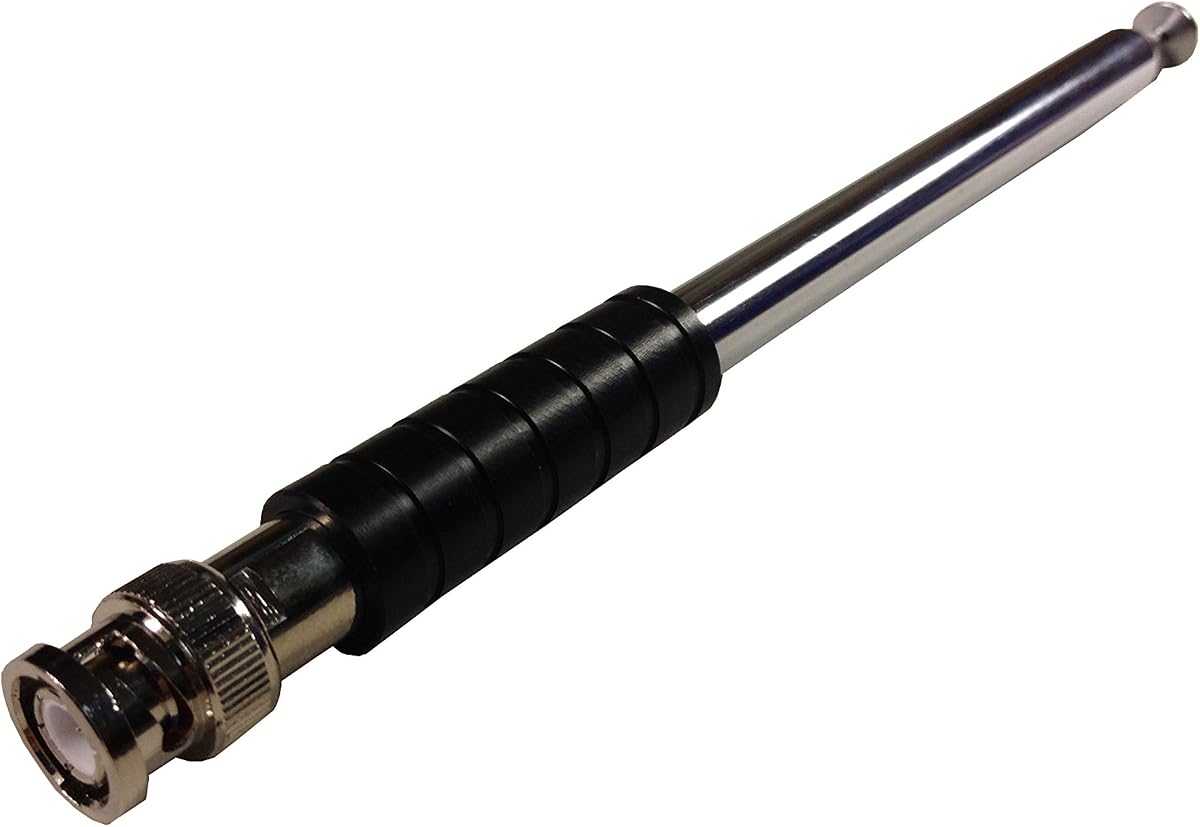
This telescopic antenna offers an entry level point for those who need immediate signal improvement without a large investment. Its ability to extend to 685mm allows for better reception of distant signals compared to stock rubber ducks. The silver tone finish gives it a sleek professional look.
We may earn a commission when you buy through this link, at no additional cost to you.
The seven section design provides flexibility to adjust the length based on your specific frequency needs. It works well for CB radio, scanner, and ham radio applications due to its broad DC to 12.4GHz range. The BNC male connector ensures it plugs directly into most standard receivers.
Durability is the main trade-off since fully extending the sections makes it susceptible to bending or breaking if handled roughly. It lacks a dedicated base, so you must use your scanner's existing mount or a separate stand. It is best suited for temporary or indoor desktop use.
For users seeking a no-frills upgrade to their receiver's stock antenna, this model delivers excellent value. It is perfect for beginners or those who need a compact backup antenna for field trips and portable monitoring.
The seven sections allow you to tune the antenna length to optimize reception for specific bands like VHF or UHF as needed.
At just 28.6 grams, this antenna adds negligible weight to your setup, making it ideal for portable and field monitoring scenarios.
We may earn a commission when you buy through this link, at no additional cost to you.
Designed for stationary use, this desktop antenna delivers exceptional stability and clarity for serious monitoring enthusiasts. The discone style provides wideband coverage that minimizes the need to switch antennas when scanning multiple frequencies. Its heavy duty base ensures it stays firmly in place during operation.
We may earn a commission when you buy through this link, at no additional cost to you.
The 4m RG58 mil spec coax cable is robust and resistant to interference, ensuring clean signal transmission to your scanner. With a frequency range of 25 to 2000MHz, it covers public safety, amateur radio, and air bands effectively. This makes it a versatile choice for home setups.
The price is higher than basic options, but the performance and build quality justify the investment for dedicated users. The antenna is somewhat bulky, so it requires a dedicated spot on your desk or shelf. It is not ideal for mobile use due to its size.
If you prioritize clear and consistent reception for your home station, this antenna is a top contender. It is best suited for operators who want a reliable, set-and-forget solution for monitoring wideband signals without constant adjustments.
The discone shape allows for a uniform radiation pattern across a wide frequency range, reducing signal dropouts in varied bands.
The 4m RG58 coax cable meets military specifications for durability, ensuring long-lasting performance and minimal signal loss.
We may earn a commission when you buy through this link, at no additional cost to you.
This handheld antenna is engineered for portability and ruggedness, making it perfect for field work or emergency response scenarios. The 6-inch flexible rubber whip can withstand bending and rough handling without breaking. It covers a broad 25 to 1300MHz range suitable for most public safety bands.
We may earn a commission when you buy through this link, at no additional cost to you.
Weighing only 0.05 pounds, it adds almost no burden to your handheld scanner. The BNC male connector ensures a secure fit with popular brands like Uniden, Whistler, and AOR. The omni-directional radiation pattern captures signals from multiple directions effectively.
While it is shorter than fully extended telescopic antennas, the flexibility often compensates by allowing it to fit in tighter spaces. The price is higher than generic options, reflecting the quality of materials and construction. It is a small trade-off for reliability and long life.
For professionals and hobbyists who need a dependable antenna that can survive outdoor conditions, this model is an excellent choice. It combines durability with performance to keep your scanner ready for critical monitoring tasks.
The flexible rubber whip resists bending and breaking, ensuring the antenna survives harsh conditions and repeated transport.
Signals arrive from all directions, reducing the need to point the antenna and improving reception clarity in moving scenarios.
We may earn a commission when you buy through this link, at no additional cost to you.
This antenna offers a practical mounting solution for vehicles where magnetic bases are not suitable. The adhesive mount allows you to attach the antenna to a window or flat surface easily. It supports a frequency range of 20 to 1300MHz, ensuring broad coverage for various bands.
We may earn a commission when you buy through this link, at no additional cost to you.
The 3m cable provides ample length to route the connection to your scanner unit. The BNC male connector fits most scanners and receivers without issues. It is an ideal choice for those who want to avoid drilling holes or dealing with heavy magnetic weights.
The adhesive can lose strength over time especially in extreme heat or cold, requiring occasional reapplication. It is generally less stable than a magnetic base for high-speed travel. For stationary or low-speed monitoring, this is a minor inconvenience that does not hinder performance.
If you need a flexible mounting option for your car or boat, this dipole antenna delivers reliable performance. It is best suited for users who prefer a clean installation without visible mounts or metal contact.
The adhesive mount allows for easy placement on windows or metal roofs, offering flexibility where magnetic mounts cannot be used.
A dipole design helps balance signal reception across frequencies, improving clarity in public safety and amateur bands.
We may earn a commission when you buy through this link, at no additional cost to you.
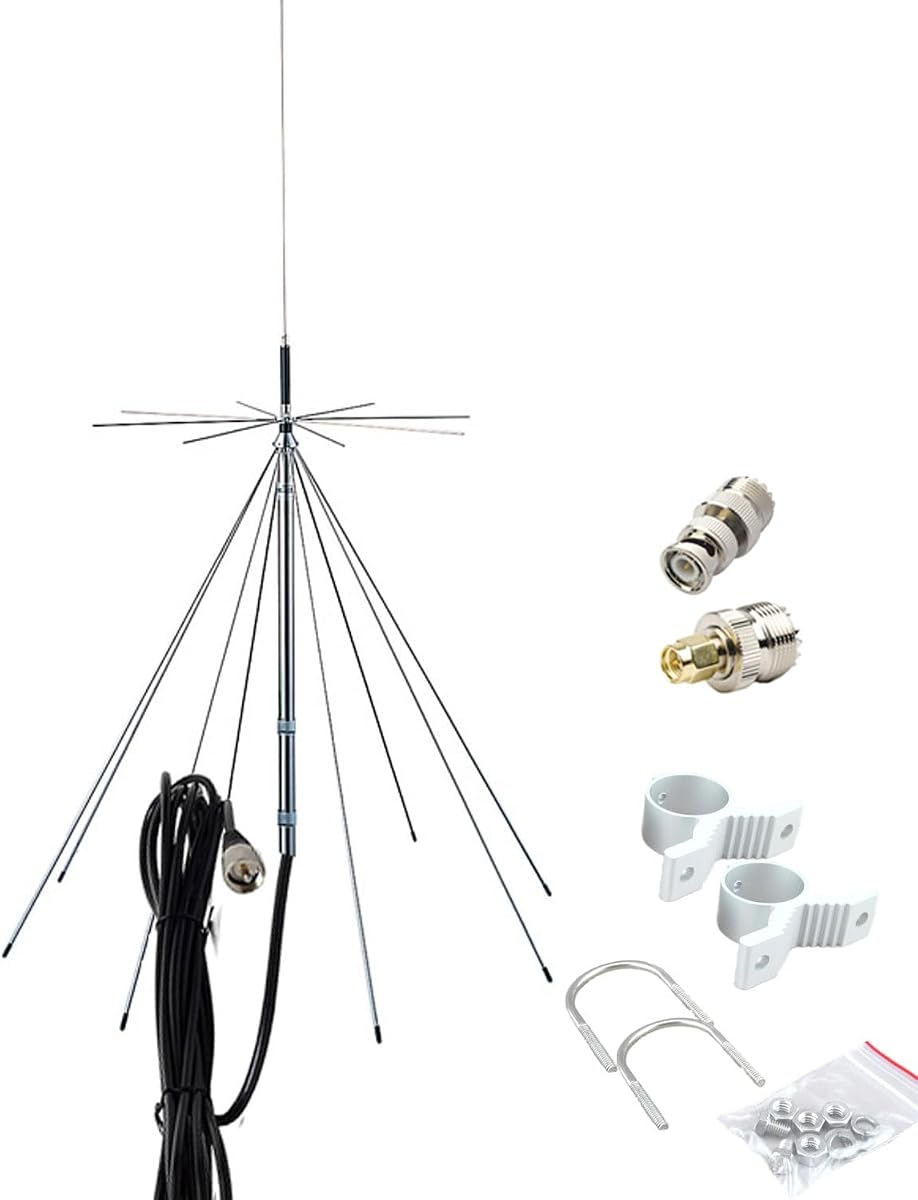
This premium antenna is built for serious monitoring needs requiring exceptional bandwidth and clarity. The 25 to 3000MHz range covers virtually every common band including aviation, amateur, and air traffic control. It is a powerhouse for SDR enthusiasts and public safety professionals.
We may earn a commission when you buy through this link, at no additional cost to you.
The package includes a 10-meter RG58 coax cable and multiple adapters for BNC, SMA, and PL-259 connectors. This versatility saves you from buying extra parts. The robust construction ensures it withstands outdoor weather conditions effectively when mounted on a roof or mast.
Installation is more involved than portable options, requiring a stable mount and longer cable run. The price reflects the premium quality and performance, making it less suitable for casual users. However, for dedicated setups, it is worth the investment.
If you seek top-tier performance and the widest possible frequency coverage, this antenna is unmatched. It is ideal for home stations or professional setups where signal quality is paramount.
The 25 to 3000MHz range lets you monitor nearly every signal type without switching antennas, streamlining your operations.
Included adapters for BNC, SMA, and PL-259 ensure compatibility with a wide variety of receivers and transceivers.
We may earn a commission when you buy through this link, at no additional cost to you.
This antenna provides a versatile solution for both indoor desktop and outdoor mobile scanning. The heavy duty magnetic base allows for quick deployment on vehicles or metal surfaces. It covers 25 to 3000MHz, enabling reception of GMRS, VHF, and UHF bands.
We may earn a commission when you buy through this link, at no additional cost to you.
The dual whip design allows you to swap whips for VHF or UHF optimization depending on your needs. The 5m coax cable offers generous length for routing. Included connectors like BNC, SMA, and SO239 make it compatible with many devices.
It is somewhat heavier than basic handheld antennas, which might affect portability for backpacking. The magnetic base is strong but may not adhere well to curved or non-metallic surfaces. These minor issues do not detract from its overall utility.
For users who need a robust antenna that can transition between indoor and outdoor use, this model performs well. It is a good choice for those who want flexibility in mounting and frequency coverage.
Two whips allow tuning for VHF or UHF bands specifically, improving signal clarity on those frequencies.
The heavy duty magnetic base enables fast setup on vehicles, ideal for temporary monitoring or field testing.
We may earn a commission when you buy through this link, at no additional cost to you.
This antenna is designed for basic receiver applications and frequency counters. Its telescopic design extends up to 127cm for improved signal capture compared to fixed whips. The BNC male connector ensures it fits most standard ports directly.
We may earn a commission when you buy through this link, at no additional cost to you.
The focus on receive only operation keeps the design simple and cost-effective. It covers 20 to 1300MHz, making it suitable for scanning public safety and amateur bands. It is a great accessory for adding gain to a desktop receiver.
It does not support transmit functions, which limits its use for handhelds that require two-way communication. The lack of mounting hardware means you must rely on the existing device connection. These factors are acceptable for its intended receiver purpose.
If you need a straightforward upgrade for a scanner or counter, this model offers good value. It is best suited for hobbyists who want a simple and reliable receive antenna.
Extending to 127cm allows for better reception of weaker signals compared to standard stock antennas.
The BNC male plug fits most modern receivers and counters without needing adapters.
We may earn a commission when you buy through this link, at no additional cost to you.
Built with a rust-free stainless steel structure, this antenna is designed to withstand harsh weather over long periods. It covers 25 to 1300MHz and supports transmit bands for CB and amateur use. The 55-inch whip provides significant height for improved range.
We may earn a commission when you buy through this link, at no additional cost to you.
The adjustable lower radials allow you to tune the antenna for specific bands or locations. The SWR of less than 1.5:1 indicates excellent matching and minimal reflection. This makes it a robust choice for outdoor installations where reliability is key.
The heavy base and complex setup make it less convenient for portable scenarios. It is primarily meant for permanent roof or mast mounting. The investment in materials pays off in longevity but requires effort to install.
If you need a durable outdoor antenna that can handle both transmit and receive duties, this is a strong candidate. It suits operators who prioritize build quality and long-term performance.
Adjustable radials help you optimize performance for specific frequencies and environmental conditions.
Rust-free materials ensure the antenna lasts longer in outdoor conditions, reducing maintenance needs.
We may earn a commission when you buy through this link, at no additional cost to you.
This antenna provides a discreet mounting option for vehicles where roof space is limited. The glass-mount hardware allows secure attachment to the rear window. It covers 25 to 1300MHz with a center-loaded design that enhances gain and bandwidth.
We may earn a commission when you buy through this link, at no additional cost to you.
The 17-foot RG58/U coaxial cable ensures you can route the signal to any part of the vehicle. It is suitable for CB and scanner applications. The stainless steel base adds durability and resistance to corrosion.
Signal strength may be slightly reduced through the glass due to metal layers in some car windows. It is generally less stable than magnetic mounts at high speeds. For standard driving speeds, these issues are manageable.
If you want a clean look for your vehicle scanner setup, this glass-mount antenna is a practical choice. It balances performance with aesthetic integration for daily use.
Attaching to a window avoids roof modifications and provides a streamlined appearance for your vehicle.
A center-loaded design improves signal reception and bandwidth, giving better results than standard whips.
We may earn a commission when you buy through this link, at no additional cost to you.
Selecting the right antenna for scanner involves evaluating several key factors to ensure optimal performance for your specific monitoring needs.
The frequency range dictates which signals your antenna can capture. Broadband antennas covering 25 to 1300MHz or higher are ideal for scanning diverse bands like public safety, amateur radio, and air traffic.
Ensure the antenna covers the specific frequencies you intend to monitor to avoid missing critical signals.
Mounting options determine where and how you can install the antenna. Magnetic bases are quick for vehicles, while glass mounts offer a discreet look, and desktop models suit stationary setups.
Choose a mounting style that fits your location and vehicle surface to ensure stability and optimal signal direction.
The connector must match your scanner's input to work properly. BNC is the most common for handheld scanners, but SMA and PL-259 are also used.
Check your device port and select an antenna with the matching connector to avoid buying adapters.
Cable length affects where you can place your antenna relative to your scanner. Longer cables provide flexibility but can introduce signal loss if not shielded well.
Select a cable length that reaches comfortably without excessive slack or tension.
Build quality impacts how well the antenna withstands environmental stress. Flexible whips resist bending, while stainless steel or heavy-duty plastic ensures outdoor longevity.
For outdoor or field use, prioritize rugged construction to prevent damage from wind or transport.
Size matters if you need to move the antenna frequently. Compact telescopic antennas are easy to carry, whereas larger discone models are fixed installations.
Decide based on whether you need a mobile solution or a permanent home setup.
VSWR and impedance ratings indicate how efficiently the antenna transfers signals. Lower VSWR means better matching and reduced reflection.
Look for models with impedance around 50 ohms and VSWR under 2:0 for reliable signal quality.
Budget ranges vary widely, so consider what you are willing to spend for the performance you need. High-end antennas offer better longevity but might be unnecessary for casual use.
Balance cost against the frequency range and durability required for your routine monitoring.
Connect the antenna to your scanner's BNC port and extend telescopic models fully to maximize reception range for different frequencies.
Position the antenna as high as possible away from sources of interference like engines or power lines to improve signal clarity.
Regularly check connections for corrosion and clean the base of dust or debris to ensure stable contact and long-term reliability.
No, scanners use various connectors such as BNC, SMA, or PL-259. Always verify your device's port type before purchasing an antenna to ensure a direct fit or buy adapters if needed.
A wider frequency range allows your antenna to capture signals from more bands without switching hardware. It is especially useful if you monitor public safety, aviation, or amateur radio simultaneously.
Magnetic bases offer stronger stability on metal roofs but cannot attach to non-ferrous surfaces. Glass mounts are better for cars with limited roof space but may reduce signal slightly through the window.
CB antennas are tuned for specific low bands and will not capture VHF or UHF signals effectively. Use a broadband scanner antenna to ensure you receive the correct frequencies for public safety monitoring.
Longer cables can introduce signal loss if they lack proper shielding. Keep cable runs as short as possible while maintaining necessary reach to preserve signal strength at your scanner.
Telescopic antennas can bend or snap when fully extended if mishandled. They are best for desktop use where you can control their movement, rather than rugged field environments.
Outdoor outdoor use, choose an antenna with weather-resistant materials like stainless steel or UV-stabilized plastic. Models with a base mount or mast connection provide better stability against wind.
Yes, higher priced models often include better shielding, stronger construction, and wider frequency ranges. For serious hobbyists, the investment ensures clearer signals and longer equipment life.
Choosing the right antenna depends on your specific monitoring goals, whether you need portability, durability, or broad frequency coverage.
Prioritize models with the correct connector type and stable mounting to ensure reliable performance in your chosen environment.
Prices and availability change frequently, so verify current stock and details on the vendor's page before finalizing your purchase.