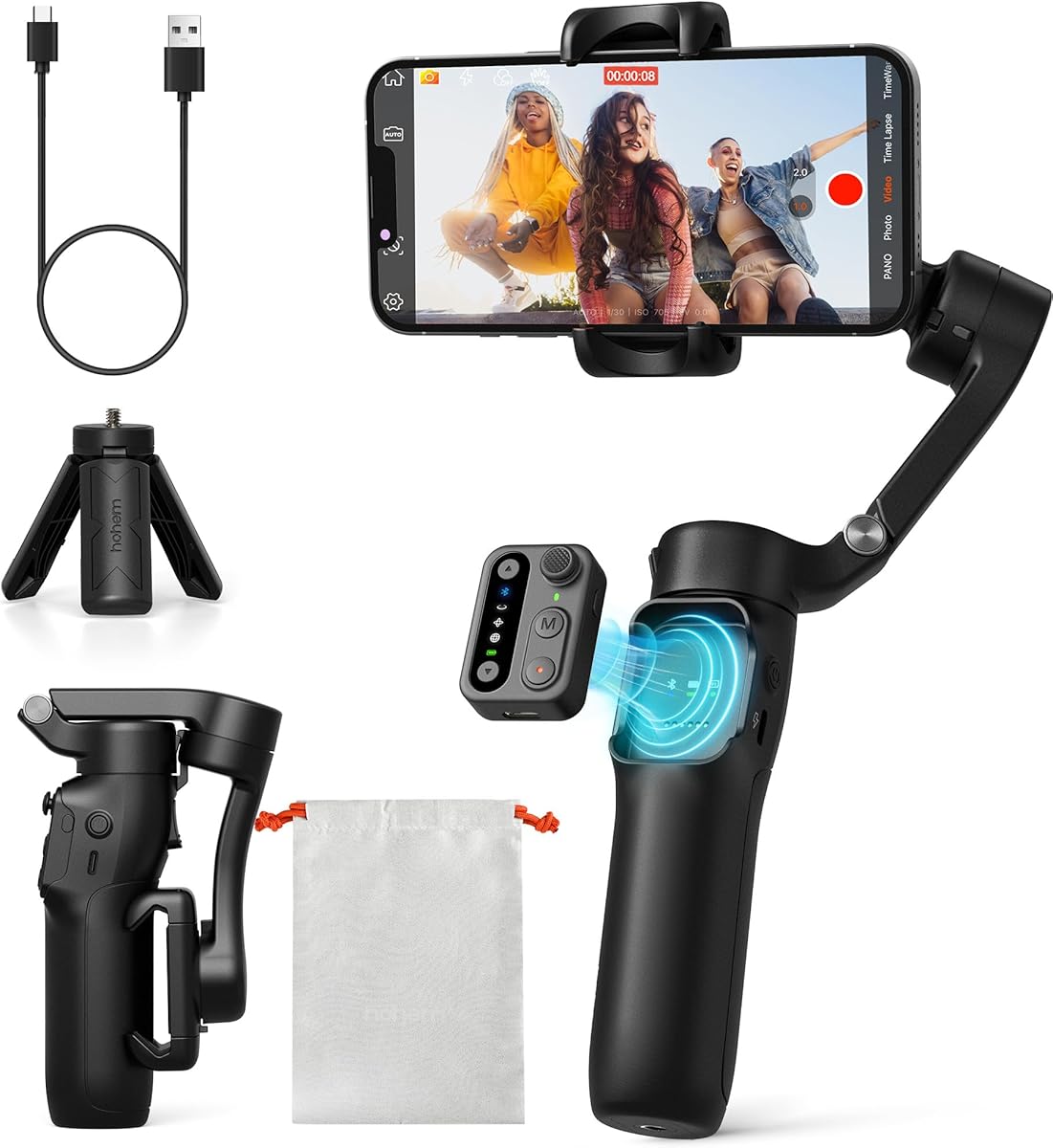
hohem iSteady X3 SE
4.2Editor score
Detachable remote controller
0.79 lbs portable weight
11-hour battery life
Capturing smooth footage on steep mountains requires specialized equipment designed for stability and durability. A good gimbal for mountaineering must handle rugged conditions while keeping your shots steady during hikes and climbs.
We compared ten top-rated stabilizers based on their build quality, battery life, and compatibility with various cameras. Each product was evaluated for performance in outdoor scenarios typical of high-altitude adventures.
Each pick shows specific strengths for different filming needs from action cams to mirrorless setups. Note that prices change frequently so check current offers before purchasing any equipment for your next trip.
4.2Editor score

4.3Editor score

4.5Editor score
As an Amazon Associate we earn from qualifying purchases.
This side-by-side comparison highlights the key specifications and capabilities of each model to help you decide which stabilizer fits your mountaineering filming needs best.


The DJI Osmo Mobile 8 delivers exceptional stabilization for mountaineering footage with its robust 3-axis system. It earned a strong 4.4 rating from users who value its seamless tracking capabilities during active shooting sessions.
We may earn a commission when you buy through this link, at no additional cost to you.
Key strengths include native tracking with audio and lighting features that enhance shot quality significantly. The seamless 360-degree pan rotation allows for immersive cinematic angles while hiking or climbing. Direct phone connection ensures quick setup in demanding outdoor conditions.
Honest trade-offs involve platform compatibility issues that require downloading the app from official websites. While highly effective for phone users this model limits compatibility to smartphones which may restrict advanced setups.
This gimbal suits content creators who prioritize ease of use and portability. For mountaineering shoots requiring smooth footage without heavy gear this remains a top choice.
Integrated audio reception and lighting ensure your shots stay well-lit and in focus during variable mountain weather.
The foldable gimbal design with built-in tripod supports creative angles for vlogging without adding bulk to your pack.
We may earn a commission when you buy through this link, at no additional cost to you.
The DJI Osmo Mobile 7 is a lightweight stabilizer ideal for mountaineering where every gram matters. With a 4.4 rating it offers lossless stability for content creators seeking cinema-quality masterpieces easily.
We may earn a commission when you buy through this link, at no additional cost to you.
Its integrated foldable design with built-in tripod makes solo creation effortless. DJI Mimo ActiveTrack 7.0 tracks subjects with diverse scenarios ensuring smooth tracking even during bold moves. The ergonomic design supports extended use without wrist fatigue.
Trade-offs include reliance on the DJI Mimo app which requires specific download steps due to compatibility issues. While efficient for phone users the lack of advanced audio features may limit professional setups.
Choose this model for its portability and simplicity on long trails. It balances performance and weight effectively for mobile filmmakers.
Dual-lens enhanced tracking keeps subjects in sharp focus even during fast close-up action shots on the mountain.
Ten hours of operating time and USB-C charging keep your device powered throughout long filming sessions.
We may earn a commission when you buy through this link, at no additional cost to you.
The Hohem iSteady Pro 4 provides reliable stabilization for action cameras in rugged outdoor environments. A 4.1 rating reflects its utility for users shooting GoPro or similar cameras on rainy days.
We may earn a commission when you buy through this link, at no additional cost to you.
Its IPX4 splashproof design allows outdoor shooting without limitation. Bluetooth control reduces energy consumption extending battery life by 50 percent compared to WiFi. It also functions as a power bank to charge cameras while filming.
Trade-offs involve compatibility limitations excluding some GoPro models and lack of phone support. While excellent for action cameras it does not suit smartphone users requiring broader connectivity.
Pick this stabilizer for its durability and extended runtime during high-intensity activities. It ensures steady footage even in wet conditions.
Splashproof protection from any direction makes this a trusted partner for outdoor shooting in variable weather.
Low-energy Bluetooth connection extends battery life significantly compared to previous WiFi versions.
We may earn a commission when you buy through this link, at no additional cost to you.
The Hohem iSteady Pro 4 offers quick release convenience for action camera users. Its 4.2 rating highlights the ease of mounting and detaching cameras swiftly during dynamic shoots.
We may earn a commission when you buy through this link, at no additional cost to you.
A spring-loaded clip allows mounting in just three seconds. The inception mode enables 600-degree rotational transitions for mind-bending edits. IPX4 splashproofing ensures resilience against water splashes on rainy days.
Trade-offs include limited compatibility with smartphones and reliance on action cameras for full functionality. While fast to use it lacks broader device support found in phone gimbals.
Opt for this model when speed and weather resistance are priorities for your footage. It streamlines the workflow for action-oriented filming.
Unlock creativity with 600-degree Inception mode for smooth rotational shots during intense motion.
Use as a power bank to charge your action camera while shooting without carrying extra gear.
We may earn a commission when you buy through this link, at no additional cost to you.
The hohem iSteady X3 SE delivers budget-friendly stabilization without compromising core performance. A 4.2 rating reflects its value for beginners seeking professional-grade content easily.
We may earn a commission when you buy through this link, at no additional cost to you.
Its portable foldable design weighs just 0.79 lbs making it perfect for travelers. The detachable magnetic remote allows control from up to 32 feet away. Advanced iSteady 8.0 technology ensures ultra-smooth footage during jogging.
Trade-offs involve basic build quality compared to premium models and limited remote range. While effective for the price it may lack advanced features like built-in tripods or lighting.
This is ideal for first-time gimbal users on a budget. It balances cost and functionality well for casual mountaineering videos.
Beginner-friendly design with easy screen switching simplifies capturing social media content.
Eleven hours of continuous operation on a two-hour charge supports day-long shooting sessions.
We may earn a commission when you buy through this link, at no additional cost to you.
The DJI Osmo Mobile 7P excels for vloggers needing integrated audio and lighting. A 4.5 rating confirms its reliability for capturing spectacular shots effortlessly during content creation.
We may earn a commission when you buy through this link, at no additional cost to you.
Its multifunctional module packs intelligent tracking and Mic reception into a compact unit. The built-in extension rod lets you capture wide selfies easily. Quick magnetic design ensures instant setup without complicated calibration.
Trade-offs include reliance on specific apps and lack of traditional tripod mounting. While excellent for solo creators it may limit versatility for complex camera setups.
Select this for seamless vlogging workflows and stable framing. It simplifies the process for solo travel content.
Integrated mic receiver and lighting features enhance production quality without extra accessories.
Dual-lens tracking keeps subjects in focus even during fast movement or close-up shots.
We may earn a commission when you buy through this link, at no additional cost to you.
The DJI RS 3 Mini stands out as a portable stabilizer for mirrorless cameras in rugged terrain. A 4.3 rating reflects its balance of weight and performance for extended shooting sessions.
We may earn a commission when you buy through this link, at no additional cost to you.
Weighing just 795 grams it supports up to 2kg load capacity. The 3rd-Gen RS stabilization algorithm ensures pro-level image stability. Native vertical shooting simplifies creating social media content from a camera.
Trade-offs involve requiring calibration and higher price point compared to phone gimbals. While ideal for serious creators it demands more technical knowledge to operate effectively.
Pick this for professional footage on lightweight travel rigs. It bridges the gap between mobility and camera capability.
Bluetooth shutter control lets you capture photos and videos directly from the gimbal handles.
The 1.4 inch full-color touchscreen provides an intuitive interface for accessing settings quickly.
We may earn a commission when you buy through this link, at no additional cost to you.
The DJI Osmo Pocket 3 is an all-in-one vlogging camera with advanced stabilization. A 4.5 rating highlights its ability to capture stunning footage effortlessly during high-adventure activities.
We may earn a commission when you buy through this link, at no additional cost to you.
It features a 1-inch CMOS sensor and records 4K at 120fps. The 3-axis mechanical stabilization delivers superb stability while hiking. ActiveTrack 6.0 keeps you centered even when spinning or jumping.
Trade-offs include a higher price point compared to gimbals alone and lack of interchangeable lenses. While powerful it suits creators wanting a complete portable solution rather than modular gear.
Choose this for high-quality vlogs without extra lenses. It offers a streamlined workflow for travel filmmakers.
Stereo recording captures high-quality sound enhancing your videos with crystal-clear audio.
ActiveTrack ensures you remain in focus even during dynamic movements like hiking or running.
We may earn a commission when you buy through this link, at no additional cost to you.
The FeiyuTech SCORP Mini-3-Pro offers top-tier AI tracking for autonomous shooting. A 4.9 rating reflects its precision in following subjects without external sensors.
We may earn a commission when you buy through this link, at no additional cost to you.
It supports up to 4.4 lbs payload making it versatile for mirrorless setups. Built-in phone cooling fan manages heat during extended livestreams. Gestures start tracking or recording hands-free.
Trade-offs involve complex setup and higher weight compared to compact options. While feature-rich it may be cumbersome for lightweight mountaineering packs.
Opt for this when tracking precision and payload capacity are critical. It supports advanced solo creators well.
AI Tracking 4.0 responds in 0.003 seconds ensuring smooth following of moving subjects.
Built-in phone cooling fan manages heat during extended recording sessions efficiently.
We may earn a commission when you buy through this link, at no additional cost to you.
The hohem iSteady MT3 Pro delivers premium stability with AI tracking for diverse setups. A 4.5 rating confirms its robust build and reliability for long shoots.
We may earn a commission when you buy through this link, at no additional cost to you.
It supports up to 5.5 lbs payload for heavy camera combos. The detachable touchscreen remote offers preview capabilities from distance. A high-capacity battery ensures up to 20 hours of operation.
Trade-offs involve higher weight and cost compared to entry-level models. While ideal for professionals it may not suit minimalist hikers seeking lightest gear.
Pick this for ultimate versatility and remote control features. It is a top choice for serious content creators.
The detachable remote fits comfortably in hand for live feed preview and framing from a distance.
Up to 20 hours continuous operation with fast charging support ensures minimal downtime during shoots.
We may earn a commission when you buy through this link, at no additional cost to you.
Selecting the right gimbal requires evaluating weight, compatibility, and battery life for outdoor conditions.
In mountaineering every gram counts so choose a gimbal that balances stability with lightweight design. Look for models under one pound if you prioritize hiking ease over heavy camera support.
Prioritize compact designs that fold easily and fit in your pack without taking up essential space.
Long battery runtime is crucial for all-day shoots. Aim for at least ten hours of continuous operation to avoid power shortages during remote trips.
Models with power bank capabilities add extra value by charging your devices while filming.
Ensure the gimbal supports your camera gear. Check payload limits to avoid motor strain which causes instability or damage.
A higher payload capacity provides future-proofing if you upgrade to heavier lenses or cameras.
Outdoor conditions can be harsh. Look for splashproof ratings like IPX4 to protect against rain and snow during filming.
Weatherproofing ensures reliability when shooting in variable mountain weather conditions.
Match the gimbal to your camera type whether it is a smartphone or mirrorless. Verify mount options to ensure secure attachment during vigorous movement.
Universal supports increase flexibility if you switch gear or use different devices.
Remote controls or AI tracking enable solo operation. These features are vital for mountaineers filming alone without assistance.
Gesture controls add convenience for quick recording without touching the gimbal directly.
Quick release mounts simplify switching setups on the go. Complex balancing steps waste energy and time in demanding environments.
Intuitive interfaces and apps reduce setup time allowing you to focus on the scenery.
Set a budget that aligns with your needs. Premium models offer extra features but may not be necessary for casual users.
Evaluate long-term utility to ensure the investment pays off in quality footage.
Begin by calibrating the gimbal on flat ground before heading up trails. Ensure motors move freely and sensors recognize all axes accurately to prevent drift during movement.
Store your gimbal in a padded case when not in use to protect it from dust and impacts. Regularly clean sensors and joints to maintain smooth operation over time.
Always monitor battery levels and charge fully before every trip. Avoid exposing electronics to extreme cold by keeping them insulated inside your jacket during pauses.
The DJI RS 3 Mini stands out for mirrorless setups due to its light weight and strong motor torque. It supports 2kg payloads while remaining easy to carry on long hikes.
Yes smartphone gimbals like the DJI Osmo Mobile 8 are suitable for lightweight recording. They offer excellent stabilization without adding much bulk to your pack.
Most modern models last between ten to twenty hours on one charge. This range ensures you can film all day without needing a spare battery.
Water resistance is highly recommended for unpredictable weather. Splashproof gimbals prevent moisture damage ensuring reliability during sudden rain or snow.
A gimbal uses motors to stabilize the camera actively while a stabilizer may rely on counterweights. Gimbals offer smoother footage with less physical effort.
Yes many gimbals like the Hohem iSteady Pro 4 support action cameras securely. These models provide specific mounting plates and controls for action devices.
Remotes are useful for solo creators needing control from distance. They allow you to start or stop recording without holding the gimbal directly.
We reviewed ten top-rated models ranging from lightweight smartphone supports to robust mirrorless stabilizers. The DJI RS 3 Mini and hohem iSteady MT3 Pro lead in performance and features for serious creators.
Prioritize battery life and weight to ensure you can carry your gear comfortably during long ascents. Match the payload to your camera setup for optimal stability on rugged terrain.
Prices fluctuate regularly so verify current offers before making a purchase. Investing in a reliable gimbal ensures your mountain adventures are captured smoothly and professionally.