This guide compares the top ten Arduino ADC board options for precision measurement, highlighting features like resolution, channels, and compatibility with
As an Amazon Associate we earn from qualifying purchases. We may earn a commission when you buy through links on this page, at no additional cost to you. Read our affiliate disclosure.As an Amazon Associate we earn from qualifying purchases.Purchases through our links may earn us a commission, at no extra cost to you. Read our affiliate disclosure.
Arduino boards lack built-in analog to digital converters for many sensors. An external ADC board bridges this gap, enabling precise voltage measurements. Choosing the right module ensures accuracy and reliability for your projects.
We evaluated ten top-rated ADC boards based on resolution, channel count, and ease of use. Each product was reviewed for compatibility with Arduino and Raspberry Pi. Our analysis focuses on performance and value for makers.
Each pick highlights key strengths and ideal use cases for different projects. Prices and availability change frequently, so check current listings before buying. This guide helps you find the perfect ADC solution today.
Top 3 Picks for Best Arduino ADC Board
Best Budget
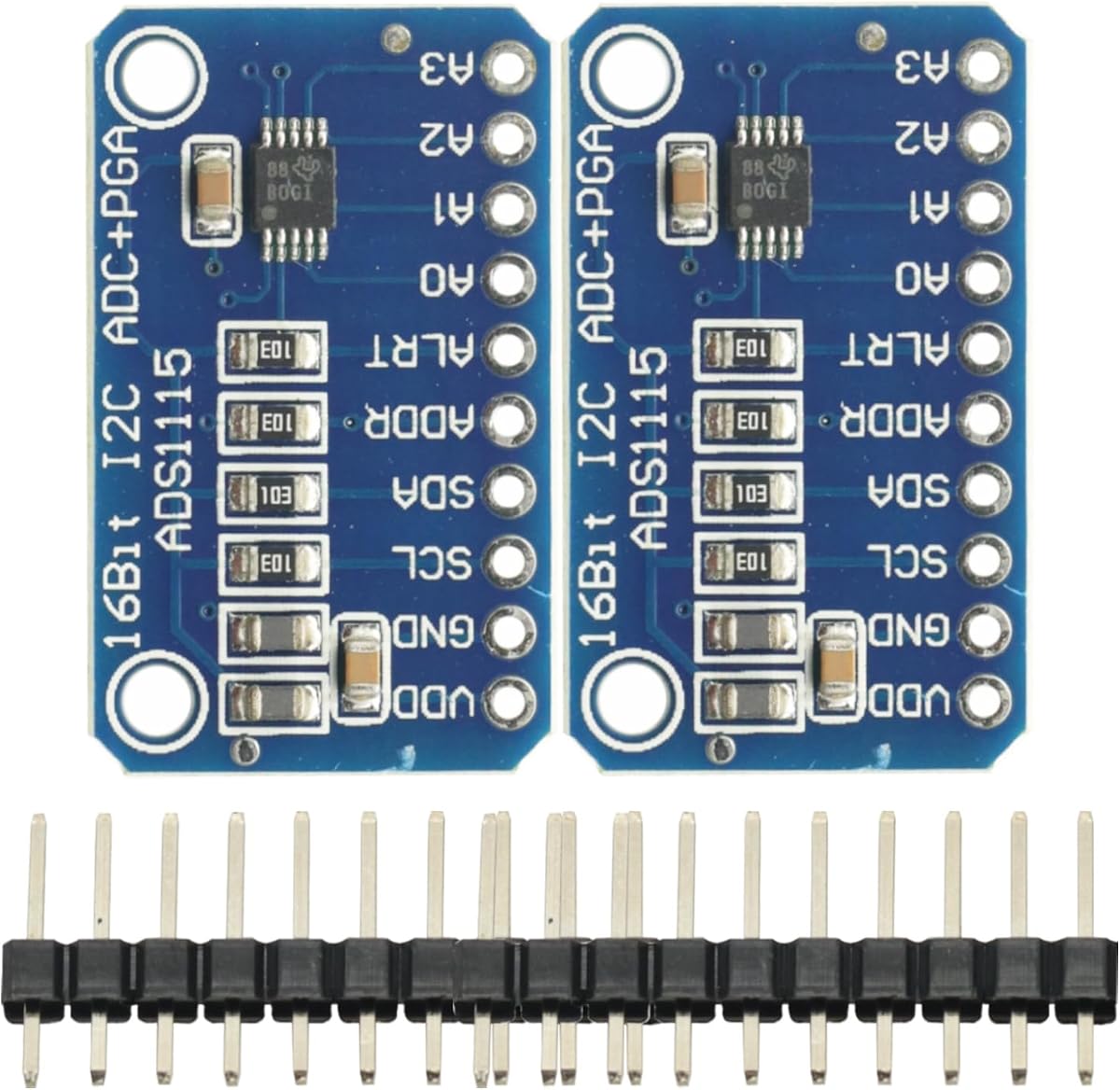
2Pcs ADS1115 16 Bit I2C Module Precision ADC 4 Channel Analog-to-Digital Converter Development Board Pro Gain Amplifier for Arduino Raspberry Pi ADC Module
The following table compares all ten selected ADC boards side by side. Review specifications like resolution, channel count, and communication protocols to find the right fit for your specific application needs and budget constraints.
ProductsSpecificationsEditor scorePrice
1
Editor's Choice
Teyleten Robot ADS1115 16 Bits 4 Channel Analog-to-Digital Converter Precised Develop Board Module Amplifier Board ADC I2C IIC for Arduino Raspberry Pi (Pack of 3pcs)
2Pcs ADS1115 16 Bit I2C Module Precision ADC 4 Channel Analog-to-Digital Converter Development Board Pro Gain Amplifier for Arduino Raspberry Pi ADC Module
HiLetgo 3pcs ADS1115 16 Bit 16 Byte 4 Channel I2C IIC Analog-to-Digital ADC PGA Converter with Programmable Gain Amplifier High Precision ADC Converter Development Board for Arduino Raspberry Pi
2PCS ADS1115 16 Bit IIC I2C Analog to Digital Converter Module Precision ADC Converter 4 Channel Development Board Programmable Gain Amplifier 2.0V to 5.5V for Arduino Raspberry Pi
HiLetgo ADS1115 16 Bit 16 Byte 4 Channel I2C IIC Analog-to-Digital ADC PGA Converter with Programmable Gain Amplifier High Precision ADC Converter Development Board for Arduino Raspberry Pi
The Teyleten Robot ADS1115 stands out as the top choice for Arduino users needing precise analog conversion. With a 4.7 rating it delivers reliable performance across multiple channels. Its 16 bit resolution ensures accurate readings for sensitive sensors.
Pros
High precision 16 bit conversion
Wide voltage supply range support
Programmable data rate flexibility
Includes programmable gain amplifier
Compact ultra small leadless form
Cons
Requires external pull up resistors
Limited to 860 samples per second
We may earn a commission when you buy through this link, at no additional cost to you.
This module features an onboard programmable gain amplifier which boosts signal strength for low voltage inputs. The wide supply range from 2.0V to 5.5V makes it compatible with most microcontrollers. The I2C interface simplifies wiring significantly.
While the maximum sampling rate of 860 SPS might be low for high speed applications it suffices for most measurement tasks. Users must manage pull up resistors for the I2C bus which adds slight complexity. The compact design saves board space.
Buy this pack if you need multiple units for a project requiring consistent precision. It is ideal for data logging and sensor monitoring. The included amplifier and flexible gain settings make it a versatile choice for engineers.
Precision Measurement Capabilities
The 16 bit resolution allows detection of minute voltage changes ensuring accurate data collection for critical sensor applications.
Flexible Communication and Power
Using I2C reduces pin usage while the wide voltage range supports diverse power sources from batteries to regulated supplies.
The HiLetgo ADS1256 offers exceptional resolution for professional grade data acquisition projects. Its 24 bit architecture captures subtle signal variations that other boards miss. This makes it perfect for scientific instrumentation and industrial monitoring tasks.
Pros
Exceptional 24 bit resolution
8 channel data acquisition support
Onboard precision voltage reference
Low nonlinearity error
Supports differential inputs
Cons
SPI interface requires more pins
Higher power consumption than ADS1115
We may earn a commission when you buy through this link, at no additional cost to you.
Equipped with onboard precision TI chips it ensures stable measurements without external references. The board supports up to 8 single ended or 4 differential inputs for complex setups. Data output rates reach 30ksps which is faster than standard I2C options.
The SPI interface requires more microcontroller pins than I2C but provides higher throughput. Power consumption is higher than simpler modules so consider your power budget carefully. The low nonlinearity error ensures results match theoretical expectations consistently.
Choose this board when precision and channel count are critical for your application. It suits applications like load cell monitoring or high fidelity audio sampling. The onboard reference voltage simplifies design by removing external components.
Superior Signal Resolution
The 24 bit depth provides over sixteen million discrete levels for voltage measurement enabling detection of microvolt level changes.
Multi Channel Flexibility
Eight input channels allow simultaneous monitoring of multiple sensors making it ideal for array or multi point sampling systems.
The 2Pcs ADS1115 kit delivers outstanding value with a perfect 5.0 rating from users. It provides two fully functional modules for a low cost which is great for classroom or batch projects. The 16 bit conversion meets most hobbyist requirements effectively.
Pros
Excellent value for 2 piece pack
Perfect 5.0 customer rating
Wide input voltage support
Seven programmable input ranges
Compatible with Pi and Arduino
Cons
No onboard voltage regulator
Soldering may be required
We may earn a commission when you buy through this link, at no additional cost to you.
Each module supports up to 4 channels with programmable data rates from 8 to 860 SPS. You can select from seven input voltage ranges to match sensor output levels accurately. The I2C interface keeps wiring minimal and simple to manage.
While the pack does not include onboard voltage regulation you must supply stable power externally. Some units may require minor soldering if headers are not pre attached. However the performance and price balance make it highly recommended.
Buy this for projects where you need multiple ADC modules without breaking the bank. It works seamlessly with Raspberry Pi and Arduino boards. The high rating suggests consistent quality and reliable performance across both units.
Affordable Multi Unit Pricing
Acquiring two units together reduces cost per module significantly ideal for teams or projects needing parallel sensor inputs.
Adaptable Voltage Ranges
Seven input range options let you optimize gain for different sensor outputs improving resolution and signal to noise ratio.
HiLetgo offers this three pack of ADS1115 modules ideal for expanding multiple sensor arrays. Each unit provides 16 bit precision and 4 channels for versatile monitoring tasks. The programmable gain amplifier ensures weak signals are captured effectively.
Pros
Three units for project expansion
Includes programmable gain amplifier
Operates on 2.0 to 5.5V
Comparator mode for accuracy
Auto shut down single shot mode
Cons
Slightly lower than average rating
Basic PCB layout may vary
We may earn a commission when you buy through this link, at no additional cost to you.
The wide voltage supply range supports both 3.3V and 5V systems without level shifters. Comparator mode helps maintain accuracy by monitoring thresholds without constant polling. Single shot mode with auto shut down conserves power when readings are needed only periodically.
User ratings are decent but slightly lower than competitors which may indicate quality variance between batches. The PCB layout is standard but ensure you verify pinouts before connecting to avoid short circuits. Overall it remains a solid budget choice.
Select this pack for projects requiring redundancy or multiple points of measurement. It fits well in Arduino and Raspberry Pi ecosystems. The included PGA makes it suitable for low voltage sensor applications like strain gauges.
Power Efficient Operation
Auto shut down features in single shot mode extend battery life for remote or portable monitoring deployments.
Threshold Monitoring Capability
Comparator mode allows real time threshold detection without continuous CPU polling saving processing resources.
This four piece pack of ADS1115 converters allows for extensive sensor networks. Each board delivers 16 bit resolution with 4 channels per unit. The internal oscillator ensures stable timing without external crystals for simplified design.
Pros
Four units for extensive scaling
Internal oscillator for stability
Supports single ended inputs
Wide voltage supply range
Auto shut down mode available
Cons
Rating indicates some variability
Requires careful handling of pins
We may earn a commission when you buy through this link, at no additional cost to you.
You can use these boards for single ended inputs as well as differential pairs giving flexibility for various sensors. The wide voltage supply range supports most microcontroller logic levels directly. Auto shut down helps in power sensitive applications.
The 4.1 rating suggests some users experienced issues with pin integrity or soldering quality. Handle these carefully to avoid bending pins during installation. Despite minor quality concerns it remains a cost effective bulk option.
Order this for large scale deployments where cost per unit matters most. It supports multiple projects or multi channel data logging. The consistent features across all units help streamline code and wiring setups.
Internal Timing Stability
An internal oscillator removes the need for external timing components reducing parts count and assembly time.
Single Ended Input Support
Capability to sample single ended signals broadens compatibility with standard voltage sensors and potentiometers.
The 2PCS ADS1115 kit earns a perfect 5.0 rating from buyers. It offers two modules for backup or dual channel setups. Each provides 16 bit precision with 4 channels for comprehensive monitoring capabilities.
Pros
Perfect 5.0 rating
Two pack for redundancy
Wide voltage range support
7 types of input ranges
4 addresses for chaining
Cons
Limited sampling speed
Depends on microcontroller pullups
We may earn a commission when you buy through this link, at no additional cost to you.
Programmable data rates from 8 to 860 SPS let you balance speed and noise. The seven input ranges support signals from 0.256V up to 6.144V making it versatile for many sensors. Four I2C addresses allow chaining up to 16 channels.
Speed is limited to 860 SPS which is fine for temperature or pressure sensors. You may need external pull up resistors on your I2C bus. The quality and support are excellent based on user feedback.
Choose this for reliable dual sensor projects or spare modules. It fits Arduino and Pi ecosystems perfectly. The flexibility in input range ensures you can match your specific sensor voltage requirements easily.
Multi Address Chaining
Support for four addresses enables chaining multiple modules for up to 16 channels on a single bus.
Signal Voltage Matching
Seven input range options allow you to maximize resolution for specific sensor output voltage levels.
Lonely Binary offers a premium three pack with ENIG gold plating for durability. This finish improves solderability and resists oxidation over time. The modules are designed for C++ and ESP32 but work with other boards too.
Pros
ENIG gold plating finish
Lead-free compliant construction
Up to 4 modules on bus
Works with ESP32 systems
Library support for C++
Cons
Higher cost per unit
Designed specifically for certain boards
We may earn a commission when you buy through this link, at no additional cost to you.
Features include 16 bit precision and support for multiple inputs. The logic levels are tolerant of both 3.3V and 5V signals without level shifters. Library support is available for C++ and Python languages which simplifies coding.
The gold plating is a unique advantage for long term reliability in harsh environments. However this premium finish raises the price compared to standard modules. The Australian design adds value with open source friendly documentation.
Buy this if reliability and premium build quality are your top priorities. It suits industrial prototypes or educational kits needing robust components. The library support ensures easy integration into existing software projects.
Enhanced Durability Finish
ENIG plating ensures better soldering results and longer life against corrosion in humid or corrosive environments.
Cross Platform Compatibility
Designed for ESP32 but works with Arduino and Raspberry Pi making it versatile for mixed microcontroller projects.
The AD7606 module targets high speed applications with 200KHz sampling rates. It captures 8 channels simultaneously ensuring perfect synchronization for multi phase signals. This is crucial for audio or vibration analysis tasks.
Pros
High 200KHz sampling rate
8 channel simultaneous sampling
Wide input voltage range
Oversampling modes available
Parallel data output support
Cons
Lowest rating in this list
Complex interface and wiring
We may earn a commission when you buy through this link, at no additional cost to you.
Input voltage range supports +/-5V or +/-10V allowing direct connection to industrial signals. The SPI protocol and parallel data output provide flexibility for processing speed. Oversampling modes help improve resolution further when needed.
The 3.0 rating reflects challenges with wiring complexity and signal integrity. Users must manage multiple signals carefully which may overwhelm beginners. Ensure you have experience with high speed digital interfaces before choosing this.
Select this only if you need high speed synchronous sampling. It is not for standard slow sensor tasks. The technical capabilities are impressive but require skilled implementation to avoid issues with noise or timing.
High Speed Performance
200KHz sampling allows capture of fast changing signals like audio or mechanical vibrations effectively.
Industrial Signal Support
Input range up to +/-10V enables direct connection to industrial sensors without attenuation circuits.
This 4-pack maintains a strong 4.6 rating due to consistent performance and quality. Each module provides 16 bit precision with 4 channels for versatile applications. The programmable gain amplifier enhances signal quality for low voltage sensors.
Pros
Strong 4.6 rating
High precision 16 bit conversion
Programmable gain amplifier
Simple I2C integration
Suitable for IoT projects
Cons
No specialized premium features
Standard module limitations
We may earn a commission when you buy through this link, at no additional cost to you.
Integration is straightforward with the standard I2C interface requiring only two wires. This makes it ideal for IoT and monitoring systems where space matters. The high precision ensures data remains stable over long periods.
While it lacks specialized features like high speed sampling it excels in standard applications. Users appreciate the reliability and ease of use for most projects. The pack supports scaling across multiple nodes easily.
Choose this for large scale deployments requiring reliable ADC capabilities. It fits robotics or engineering experiments well. The consistent quality and high rating make it a safe choice for bulk buying.
Standard Integration Ease
Standard I2C wiring simplifies setup for beginners and experts reducing installation time significantly.
IoT Optimization
Low power and stable output make it ideal for remote IoT monitoring nodes and sensor networks.
The single HiLetgo ADS1115 module is perfect for projects needing just one ADC. It offers 16 bit precision with 4 channels for reliable measurements. The programmable gain amplifier improves performance for low voltage signals effectively.
Pros
Single unit for simple needs
Programmable gain amplifier included
Works on Pi without analog pins
Wide voltage supply range
Auto shut down mode
Cons
Higher cost per unit than packs
Basic module design
We may earn a commission when you buy through this link, at no additional cost to you.
This board is especially useful for Raspberry Pi users who lack analog GPIO pins. The wide supply range ensures compatibility with 3.3V or 5V logic without extra circuits. Auto shut down mode helps manage power efficiently.
Buying a single unit costs more per module than a multi pack. However it reduces waste if you only need one ADC for a small project. The quality is standard and meets typical maker needs.
Select this for small scale or prototype work. It avoids unused stock from multi packs. The flexibility and ease of use make it a solid standalone component for hobbyists.
Single Unit Convenience
Buying one unit reduces inventory complexity for small projects needing minimal analog to digital conversion.
Raspberry Pi Integration
Ideal for Pi users needing analog inputs without relying on expensive add on shields or converters.
We may earn a commission when you buy through this link, at no additional cost to you.
Buying Guide – How to Choose the Best Arduino ADC Board
Selecting the right ADC board involves evaluating resolution, channels, and interface compatibility. This guide outlines key factors to consider for your specific project requirements.
Resolution and Precision
Resolution determines the smallest voltage change the ADC can detect. For sensitive sensors like thermocouples, 16 bit resolution provides better accuracy than lower bit alternatives. High precision ensures minimal noise impact.
Prioritize higher bit resolution for projects requiring exact measurements. Standard 12 bit boards may suffice for basic tasks but 16 bit offers superior detail for scientific applications.
Channel Count
Count the number of sensors you need to monitor simultaneously. If you have many sensors, choose boards with 4 or more channels. Some options allow chaining multiple boards for even more inputs.
Choose a channel count that matches your sensor layout. Having extra channels allows future expansion without purchasing new hardware components.
Communication Interface
Most boards use I2C or SPI protocols. I2C is simpler and uses fewer pins, making it ideal for complex wiring setups. SPI offers higher speed but requires more microcontroller pins.
Use I2C for simpler setups with fewer pins. Choose SPI if you need faster data throughput or have sufficient pin availability on your board.
Input Voltage Range
Verify the input voltage range matches your sensor outputs. Boards with programmable gain amplifiers can handle signals smaller than 5 volts. Ensure the module supports both differential and single ended inputs if needed.
Select a board with a range that fits your sensor's output. Programmable gain allows you to fine tune sensitivity for different sensor types.
Sampling Rate
Sampling rate defines how fast the ADC converts signals. For slow changing sensors like temperature, lower rates like 860 SPS are sufficient. For audio or vibration, higher rates are necessary.
Match the sampling rate to your application speed. High rates increase bandwidth but may consume more power.
Build Quality and Material
Consider PCB construction and finishes like ENIG plating. Higher quality materials improve durability and soldering reliability. RoHS compliance ensures environmental safety for your project.
Invest in premium finishes for long term reliability. Avoid low quality boards that may oxidize or fail over time.
Software Compatibility
Check if libraries exist for your programming language and platform. Most boards support Arduino IDE, C++, and Python. Ensure the library is well maintained and documented for easier integration.
Prioritize boards with robust library support. This reduces development time and minimizes coding errors during setup.
Package Size
Decide if you need a single module or a multi pack. Multi packs reduce cost per unit and are great for teams. Single units avoid waste for solo hobbyist projects.
Choose based on your immediate needs and budget. Multi packs often provide better value for classroom or industrial use cases.
How to Use and Care for Your Arduino ADC Board
Connect the SDA and SCL pins to your microcontroller's I2C pins. Ensure the power voltage matches your system logic level to avoid damage. Use external pull up resistors if your controller does not include them internally.
Install the appropriate library for your board to simplify data reading. Configure the data rate and input range using the library settings to match your sensor. Test with simple voltage dividers before connecting sensitive sensors.
Handle boards by the edges to avoid static discharge damage. Store unused modules in anti static bags to prevent oxidation. Regularly check connections for secure fits to prevent intermittent signal loss.
Frequently Asked Questions
Can I use an ADC board with 3.3V Arduino boards?
Yes many boards support 2.0V to 5.5V ranges making them compatible with 3.3V logic. Check the specific model's voltage tolerance before connecting power or signal lines. Most include internal level shifters for safe operation.
How do I connect multiple ADC modules to one bus?
Use the programmable address pins to assign unique addresses to each module. Most ADS1115 boards allow four unique addresses enabling up to 16 channels. Update the library code to match the selected addresses for correct communication.
What is the maximum sampling speed for these boards?
Standard I2C boards typically max out at 860 samples per second. High speed SPI boards like the AD7606 can reach 200KHz. Choose the speed based on whether you need data logging or real time signal analysis.
Do I need external resistors for I2C communication?
Many microcontrollers have internal pull up resistors but external ones are often recommended for stability. Typical values are 4.7k ohm connected to VCC and the data lines. Without them communication may be unreliable.
Can these boards measure negative voltages?
Yes differential modes allow measuring negative voltages relative to ground. Ensure the common mode range is within your supply limits. The programmable gain amplifier helps capture small negative signal changes accurately.
Why use an external ADC instead of internal Arduino pins?
External ADCs offer higher precision and more channels than built-in 10-bit converters. They also support features like programmable gain and differential inputs. This is essential for accurate industrial or scientific measurements.
Final Thoughts on Choosing the Best Arduino ADC Board
Our top picks cover a wide range of needs from budget friendly packs to high precision modules. The Teyleten ADS1115 leads as Editor's Choice for reliability. The ADS1256 offers premium resolution for demanding tasks.
Prioritize resolution and interface compatibility before purchasing your project. Consider your long term scaling needs when deciding between single units or packs. The right board ensures your sensor data is always accurate and reliable.
Remember that prices and availability change frequently. Always verify current listings before completing your purchase. We hope this guide helps you build better sensor systems with confidence.
Compare the best Baby Monitor for 2 Kids models of October 2026 featuring dual cameras split screens and secure connections for ultimate parental peace…