
ASRock Motherboard Micro ATX DDR3 1066 NA D1800M
4.0Editor score
Intel J1800 Processor Included
Dual Channel DDR3 Memory Support
Multiple USB and Video Ports
This guide compares the top ten low power motherboard options for energy efficient builds NAS servers and compact systems to help you choose the best model.
Finding the right low power motherboard is essential for building efficient systems that consume less electricity while maintaining strong performance for specific tasks like home servers or office workstations.
We compared ten real products based on their processor efficiency, connectivity options, expansion capabilities, and overall value to create a reliable list for users seeking energy conscious hardware solutions today.
Each pick highlights key strengths and trade-offs so you can match a board to your needs. Remember that availability and pricing change frequently so check current listings before making your final decision.
4.0Editor score

4.5Editor score
The following table provides a side by side overview of all ten selected low power motherboard models highlighting their core specifications and key features for quick comparison.



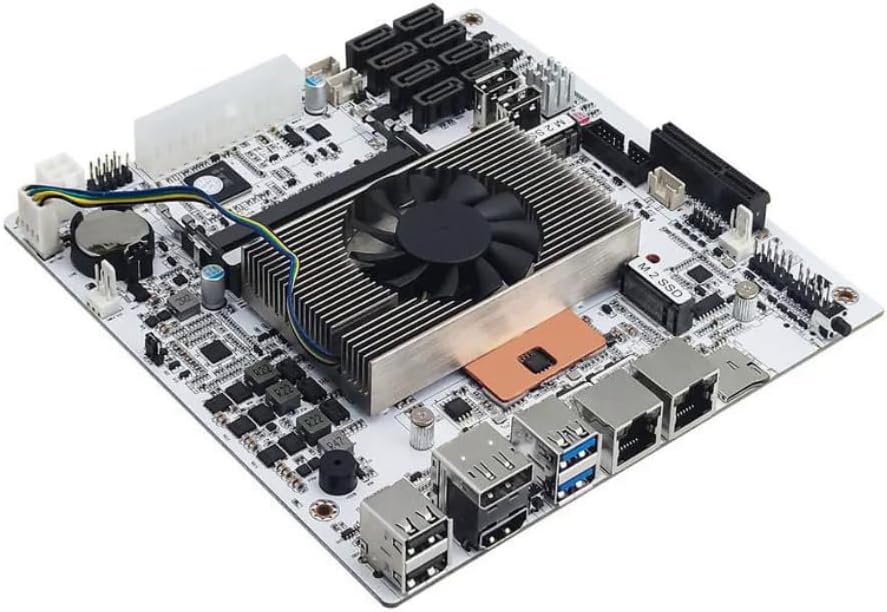
This industrial NAS motherboard stands out with its Intel Celeron N5105 processor offering four cores and threads for efficient multitasking while maintaining minimal energy use.
We may earn a commission when you buy through this link, at no additional cost to you.
It features four 2.5GbE network ports perfect for firewall appliances or high throughput storage servers. The board also provides six SATA ports and two M.2 slots for extensive storage flexibility.
While the dual power connector requirement adds slight complexity during assembly the stable power delivery ensures reliable 24/7 operation. Boot times may vary slightly when initializing memory which is normal for this class.
Anyone building a home server or network security appliance will find this board an excellent choice due to its balance of connectivity and power efficiency.
The four 2.5GbE ports enable link aggregation and robust throughput for demanding network tasks without needing extra hardware.
With six SATA ports and two M.2 slots you can connect multiple drives for a large NAS volume or cache system effortlessly.
We may earn a commission when you buy through this link, at no additional cost to you.
This Micro ATX board offers one of the lowest cost entry points for low power computing with its included Intel J1800 processor designed for minimal wattage usage.
We may earn a commission when you buy through this link, at no additional cost to you.
It supports DDR3 memory and provides essential video outputs like HDMI DVI and VGA making it suitable for budget office workstations or media clients without needing a discrete GPU.
The trade off is older memory technology and limited SATA ports which may restrict storage growth. However for basic tasks this board delivers reliable performance at a fraction of the cost.
Buyers looking for a cheap functional build for simple office or media duties will appreciate this board's straightforward design and low electricity needs.
Pricing makes this an ideal starter board for those needing a compact system without investing in newer memory or chipset standards.
Multiple video outputs ensure compatibility with older monitors and projectors which is helpful for industrial or classroom setups.
We may earn a commission when you buy through this link, at no additional cost to you.
This Micro ATX board supports a wide range of AMD Ryzen processors including the 5000 series making it versatile for users who want performance alongside moderate power efficiency.
We may earn a commission when you buy through this link, at no additional cost to you.
It features PCIe 4.0 support and two M.2 slots for fast storage along with a digital power design that ensures stable delivery even under load during typical office or home use.
While it is not as power efficient as embedded low watt options it balances modern features well. The lack of built in WiFi means a separate card or adapter is needed for wireless connectivity.
Users planning a compact Ryzen build with room for upgrade will find this board a solid foundation for efficient and capable systems.
Support for multiple Ryzen generations allows users to choose their CPU performance level while keeping the motherboard cost effective.
Two M.2 slots combined with PCIe 4.0 readiness ensure quick load times for applications and games on supported CPUs.
We may earn a commission when you buy through this link, at no additional cost to you.
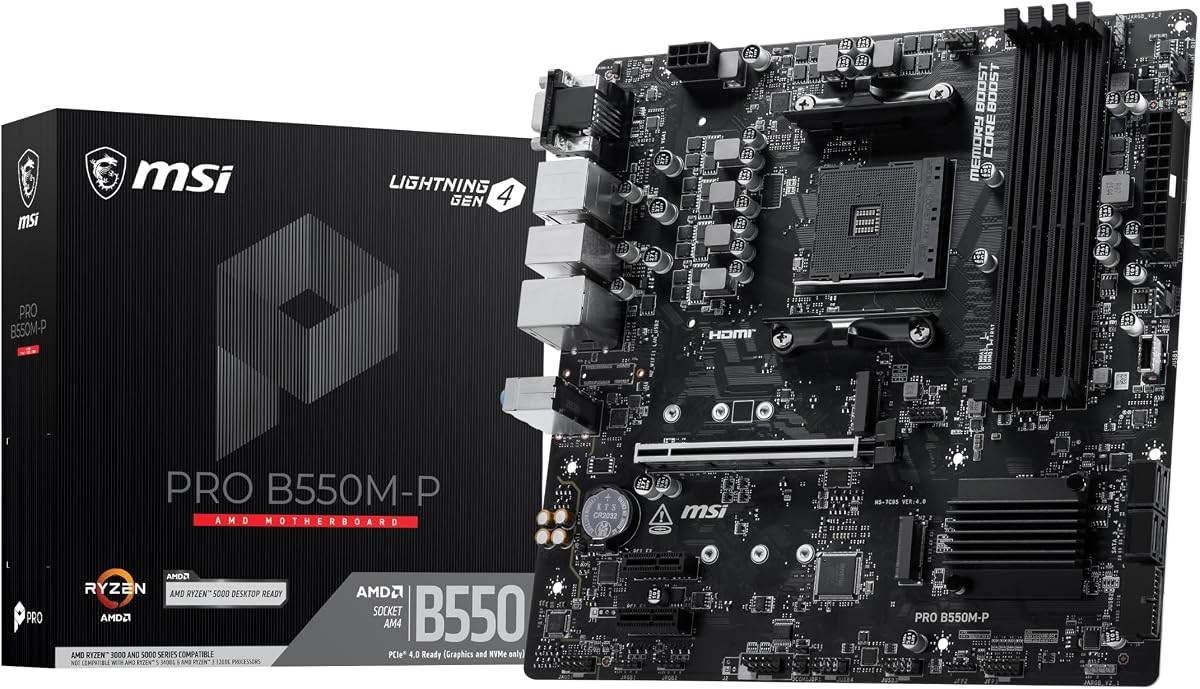
This MSI motherboard brings Core Boost technology and passive cooling to a budget friendly Micro ATX form factor making it reliable for sustained low power usage in compact enclosures.
We may earn a commission when you buy through this link, at no additional cost to you.
It supports Ryzen 5000 G series APUs which are efficient for systems without discrete graphics. DDR4 memory can be overclocked to high speeds for improved system responsiveness in daily tasks.
Storage options include one Gen4 M.2 slot and one Gen3 slot but the lack of integrated WiFi may require extra cost. This board suits those prioritizing stability over premium connectivity.
If you need a reliable base for an APU based system with decent thermal performance this board offers good value without sacrificing essential features.
Support for G series processors means you can build a complete system without a separate graphics card reducing overall power draw.
Core Boost technology and heatsinks help maintain consistent performance even during longer workloads in small PC cases.
We may earn a commission when you buy through this link, at no additional cost to you.
This board features the Intel J4125 quad core processor which is widely used in entry level NAS builds for its balanced performance and energy efficiency.
We may earn a commission when you buy through this link, at no additional cost to you.
It supports DDR4 memory and includes an M.2 Key E slot for wireless modules. While the feature set is basic it covers the essentials for small home storage or media server tasks.
Some users report mixed experiences with BIOS or compatibility which may explain the lower rating. Still for those who need a simple inexpensive platform it remains a viable option.
If you need a basic low watt build and can tolerate minor quirks this board provides a straightforward path to a compact efficient system.
The CPU selection aligns well with common open source NAS software allowing for smooth file serving and media transcoding.
The M.2 Key E slot enables adding WiFi or Bluetooth to your compact system without occupying a PCIe slot.
We may earn a commission when you buy through this link, at no additional cost to you.
This Micro ATX board stands out for its trio of video outputs allowing compatibility with older displays while also supporting modern PCIe 4.0 graphics cards for future proofing.
We may earn a commission when you buy through this link, at no additional cost to you.
It supports DDR4 memory at high overclocked speeds and includes six USB 3.2 ports which is generous for connecting peripherals and external storage devices.
The power delivery uses six phases with premium chokes ensuring stable operation for supported Ryzen CPUs. Lack of built in WiFi is a minor drawback but acceptable for wired office systems.
Users needing broad monitor compatibility and reliable daily performance in a compact form will find this board a practical and affordable choice.
HDMI DVI and D Sub outputs mean you can connect virtually any monitor without needing a graphics card.
Six rear USB 3.2 ports make it easy to attach multiple peripherals like cameras drives and keyboards simultaneously.
We may earn a commission when you buy through this link, at no additional cost to you.
This Mini ITX board packs Intel WiFi and Bluetooth into a compact design making it ideal for small form factor builds where space and cable management are concerns.
We may earn a commission when you buy through this link, at no additional cost to you.
It uses a direct six phase digital PWM with 55A DrMOS for reliable power delivery to Ryzen CPUs. Three video outputs give you flexibility for multi monitor setups in tight spaces.
While it lacks PCIe 4.0 the PCIe 3.0 NVMe support remains fast for most users. The premium features justify the higher cost when building a wireless capable SFF system.
Anyone aiming for a tiny home theater or office PC with integrated wireless will find this board a well rounded efficient option.
Built in WiFi and Bluetooth save you from needing extra cards or adapters in small cases with limited slots.
The Mini ITX size ensures fit in small enclosures while maintaining robust power delivery for efficient Ryzen CPUs.
We may earn a commission when you buy through this link, at no additional cost to you.
This Micro ATX board stands out with Wi Fi 6E and Bluetooth offering low latency wireless connectivity ideal for modern homes and offices without compromising on power efficiency.
We may earn a commission when you buy through this link, at no additional cost to you.
It supports Ryzen 3000 to 5000 series CPUs with an eight phase power design ensuring stable performance. Four DDR4 slots allow up to 128GB memory for heavy workloads.
Eight rear USB 3.2 Gen1 ports provide excellent peripheral connectivity while Realtek ALC1220 audio delivers high fidelity sound. The perfect rating reflects its balance of features and quality.
If you need top tier wireless and memory options in a compact board this model delivers exceptional value for demanding efficient systems.
Wi Fi 6E utilizes the 6GHz band for faster speeds and less interference in congested wireless environments.
Four DIMM slots allow expansion to high memory capacities without switching to a larger board form factor.
We may earn a commission when you buy through this link, at no additional cost to you.
This Mini ITX board features an 8th gen U series quad core eight thread CPU delivering strong virtualization performance while keeping power draw low for always on servers.
We may earn a commission when you buy through this link, at no additional cost to you.
Eight SATA ports plus two M.2 NVMe slots allow extensive storage expansion ideal for NAS or media servers. Dual 2.5GbE LAN ports enable link aggregation for robust networking.
Users should note a known sleep mode bug and longer initial boot times which are typical for industrial boards. Cooling is included with a dual ball bearing fan for stability.
Those building a compact virtualized home server will appreciate the storage and network density this board offers in a small footprint.
Dual 2.5GbE ports allow for VLAN separation or link aggregation to improve network performance for multiple users.
Eight SATA ports mean you can connect many drives without needing complex expansion cards or controllers.
We may earn a commission when you buy through this link, at no additional cost to you.
This NAS motherboard brings a Core i5 8265U processor to a Mini ITX layout making it powerful enough for demanding virtualization and media tasks with minimal power consumption.
We may earn a commission when you buy through this link, at no additional cost to you.
It supports eight SATA drives plus two M.2 NVMe slots offering excellent storage density. Dual 2.5GbE LAN with i226V controllers ensures fast reliable network connectivity for large file transfers.
Virtualization passthrough is supported for NIC and storage devices which is great for advanced VM setups. The lack of sleep mode is acceptable for 24/7 servers but limits desktop use.
If you need a premium compact NAS base with strong CPU and storage options this board delivers professional grade capabilities in a small package.
The Core i5 8265U offers four cores and eight threads for smooth multitasking during heavy server loads.
Dual 2.5GbE ports with advanced controller support allow for link aggregation and better bandwidth management.
We may earn a commission when you buy through this link, at no additional cost to you.
Selecting the right low power motherboard requires understanding your specific workload needs power draw targets and connectivity requirements to ensure efficiency without sacrificing usability.
The processor integrated on the motherboard often determines the overall power draw. Look for chips with a Thermal Design Power (TDP) under 25 watts for truly low power builds. Embedded options like Celeron or J series CPUs save energy but limit performance compared to desktop Ryzen or Core i5 options.
Choose a processor that matches your workload to avoid overpaying for power you do not need. Always check the supported CPU list if using a socket based board.
Low power builds often fit in compact cases so verify the motherboard size such as Mini ITX or Micro ATX. Smaller boards save space but may have fewer expansion slots or ports.
Ensure your chosen case supports the board size and has proper airflow to prevent overheating in tight enclosures.
Check whether the board uses DDR3 or DDR4 memory as this affects future upgrade paths. Modern boards usually support DDR4 which offers better efficiency and higher speeds for less power consumption.
Consider the maximum memory capacity and number of slots if you plan to expand RAM later for server tasks.
For home servers and firewalls network ports are crucial. Look for boards with multiple Gigabit or 2.5GbE ports to allow link aggregation or VLAN separation without needing extra network cards.
Integrated high speed LAN saves power and space compared to add on PCIe network adapters.
Evaluate the number of SATA ports and M.2 slots available. More drive connections mean better scalability for storage servers. M.2 NVMe slots provide faster speeds with lower latency for OS drives.
Make sure the board supports your desired number of drives natively to reduce the need for external controllers.
Some low power boards need two power connectors like 24PIN plus 4PIN which adds complexity. Confirm your power supply unit provides these connectors to avoid boot failures.
Check the idle and load power draw data to estimate monthly electricity savings accurately.
Integrated Wi-Fi and Bluetooth can save power compared to discrete cards while keeping your build compact. Wi-Fi 6E offers better efficiency for wireless networks.
If you do not need wireless prioritize wired LAN ports which are often faster and more reliable for servers.
Consider which video outputs you need like HDMI DisplayPort or VGA. Some boards offer multiple outputs for multi-monitor setups without needing a GPU.
Having onboard graphics saves power and ensures you can troubleshoot easily even without a dedicated graphics card.
Ensure your power supply matches the required connectors especially for boards needing both 24PIN and 4PIN connections. Connect all necessary power cables securely to avoid unstable boot behavior or shutdowns.
Update the BIOS to the latest version using the manufacturer tool for improved stability and CPU support. This step ensures you get the best performance and power management features available.
Monitor system temperatures using software tools to confirm that passive heatsinks or fans operate correctly. Proper cooling extends the lifespan of the board and prevents throttling during long workloads.
A low power motherboard typically uses processors with low Thermal Design Power like under 25 watts and efficient power delivery circuits. These boards draw less electricity at idle and load reducing energy costs over time.
Yes many low power boards are ideal for home servers because they run efficiently 24/7. Look for multiple SATA ports and LAN connections to support storage and networking needs.
Most use standard ATX power supplies but some industrial models require dual connectors like 24PIN plus 4PIN. Always check the power requirements before choosing a PSU.
DDR4 is more efficient and faster than DDR3 so it is generally better for modern low power builds. However DDR3 boards can be cheaper if budget is a major concern.
2.5GbE LAN ports provide faster data transfer speeds than standard Gigabit ports without needing a separate network card. This helps reduce overall system power and simplifies networking.
Yes many low power CPUs support virtualization features like VT x and VT d. This allows you to run multiple operating systems efficiently on a single compact machine.
We highlighted ten efficient options ranging from budget NAS boards to premium virtualization platforms so you can match performance to your specific power and storage needs.
Prioritize connectivity and CPU type first then consider memory and size to ensure your build supports long term usage without frequent upgrades or power waste.
Always check current availability and prices before purchasing as models and costs change often. This guide gives you a solid starting point for an efficient reliable system.