
Uniden Bearcat SR30C
4.0Editor score
500-channel capacity
Close Call RF capture
Preloaded service banks
Handheld scanners for monitoring frequencies allow users to tune into various radio transmissions across different bands. Whether you are interested in public safety communications, aviation traffic, or amateur radio, having a reliable device ensures you stay informed. These devices vary widely in capability, from basic analog receivers to advanced digital trunking systems.
We evaluated ten distinct models based on their frequency coverage, digital decoding abilities, ease of use, and overall build quality. Our analysis focuses on how well each scanner handles real-world scanning tasks. We considered factors like battery life, display readability, and the availability of preloaded databases to provide a comprehensive overview for potential buyers.
Each pick in this list highlights specific strengths such as budget-friendly entry points or professional-grade digital performance. We detail the unique features that set each unit apart to help you make an informed decision. Please note that product availability and specifications can change over time, so verifying current details before purchase is recommended.
4.0Editor score

4.2Editor score

4.4Editor score
As an Amazon Associate we earn from qualifying purchases.
This comparison table provides a side-by-side look at the key specifications and capabilities of each scanner. It helps users quickly identify which models support digital systems and which are best suited for analog monitoring needs.


The Uniden BCD436HP stands out as a top choice for those needing reliable digital scanning without complex setup. It holds a solid rating for its ease of use and powerful feature set that covers most public safety needs across the United States.
We may earn a commission when you buy through this link, at no additional cost to you.
Its TrunkTracker V system allows users to simply enter a zip code to start monitoring nearby systems immediately. The scanner automatically selects the correct radio systems based on location, which simplifies the process significantly compared to manual programming.
While the device is powerful, it comes at a higher cost than basic analog models. Additionally, to get the most out of the location-based scanning features, an external GPS unit is required which adds to the overall investment.
This scanner is ideal for enthusiasts who want a plug-and-play digital experience. If you need to monitor modern trunked systems with minimal fuss, this unit is highly recommended for its balance of power and usability.
The HomePatrol interface removes the need for complex frequency lists by using a zip code to find local systems.
Users can listen to up to four minutes of recent transmissions again ensuring no critical communication is missed.
We may earn a commission when you buy through this link, at no additional cost to you.
The Uniden Bearcat SR30C offers an excellent entry point for those new to radio scanning without breaking the bank. It provides a solid set of features in a compact package that is easy to carry around.
We may earn a commission when you buy through this link, at no additional cost to you.
It includes 500 channels divided into service banks for various interests like aviation and marine. The Close Call feature helps users discover local signals quickly without needing to know specific frequencies beforehand.
The limitation here is that it only receives analog signals. As many public safety agencies switch to digital trunking systems this scanner may not capture those specific transmissions in larger urban areas.
For casual listeners or those in areas with mostly analog operations this is a great choice. It delivers good value for the price and gets you started listening right away with minimal setup.
You can power this unit with AA batteries or via USB connection allowing for flexible usage in various scenarios.
Ten separate search bands cover popular services so you can start scanning immediately after turning on the device.
We may earn a commission when you buy through this link, at no additional cost to you.
The Uniden SDS100 is a powerhouse designed for serious enthusiasts who need to monitor difficult digital environments. It uses a True I/Q receiver to maintain clarity even in challenging RF conditions where other scanners might fail.
We may earn a commission when you buy through this link, at no additional cost to you.
Its database includes known radio systems across the US and Canada which can be updated weekly for the latest changes. The rugged construction ensures the device can withstand harsh weather conditions during outdoor use.
The price is a barrier for many casual users given the advanced technology inside. Additionally the full feature set may require a learning curve for those not familiar with trunked radio systems.
This scanner is best for professionals or dedicated hobbyists who demand high fidelity audio. If you need to track simulcast systems reliably this model provides the performance needed to get the job done.
This technology captures complete signal waveforms to improve error correction and signal recovery in weak signal areas.
Set your location by zip code or GPS to automatically select the right systems to scan without manual intervention.
We may earn a commission when you buy through this link, at no additional cost to you.
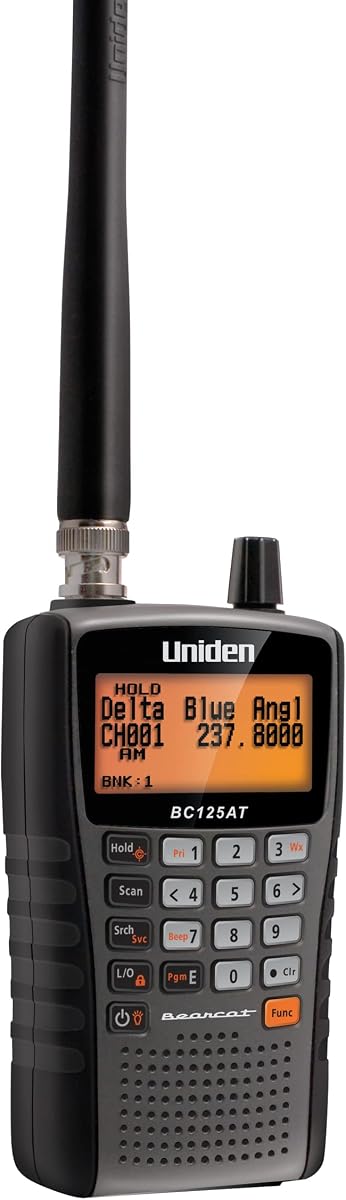
The Uniden Bearcat BC125AT is a classic analog scanner known for its user-friendly design and reliability. It features 500 alpha-tagged channels allowing users to assign names to frequencies for easier identification.
We may earn a commission when you buy through this link, at no additional cost to you.
The Close Call RF capture technology is a standout feature that automatically tunes to signals from nearby transmitters. This makes it easier to find local activity without needing a database or complex programming skills.
However like many analog scanners it cannot decode digital trunking systems used by modern emergency services. This limits its usefulness in larger cities where digital radio adoption is high for public safety communications.
This unit is perfect for hobbyists focusing on aviation or marine bands where analog is still common. It offers a straightforward experience with enough features to keep users engaged without overwhelming complexity.
Assign custom names to your channels to know exactly who or what you are listening to at a glance.
The device instantly detects nearby signals helping you discover new frequencies automatically during scanning.
We may earn a commission when you buy through this link, at no additional cost to you.
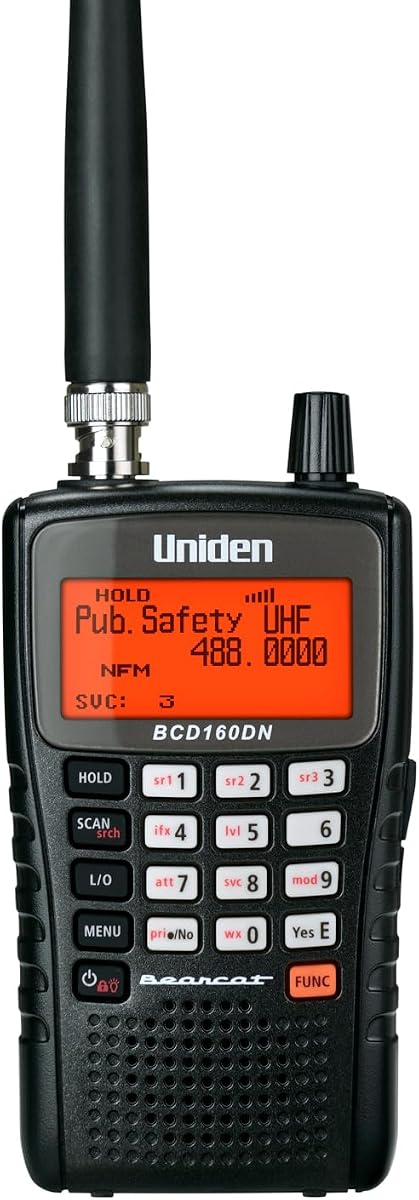
The Uniden Bearcat BCD160DN brings digital capabilities to handheld scanning with preloaded support for DMR and NXDN systems. It offers a Band Scope feature which helps visualize signals for faster detection and tuning.
We may earn a commission when you buy through this link, at no additional cost to you.
Users can manage the scanner via PC software to organize profiles and favorites lists efficiently. The narrow-band reception helps in filtering out noise for clearer listening on specific frequencies.
Despite the digital features trunking systems are not supported which limits its range in certain regions. Some users have noted lower satisfaction scores potentially due to performance inconsistencies or feature limitations.
This model is a middle-ground option for those needing digital voice reception without a full trunking system. It is best suited for areas where DMR and NXDN are used locally without complex trunking.
Visualize signals on the screen to identify and select channels more quickly than traditional scanning methods.
Instantly detects and displays sub-audible tones to help determine system settings and filter channels.
We may earn a commission when you buy through this link, at no additional cost to you.
The Whistler WS1040 supports P25 Phase I and trunking systems making it a robust option for monitoring public safety. It features a free form memory organization that allows dynamic allocation of space as needed.
We may earn a commission when you buy through this link, at no additional cost to you.
The Skywarn storm spotter function provides instant access to frequencies used by weather networks which is useful for storm chasing. Users can receive both LED and audio alerts to ensure they do not miss critical transmissions.
Programming can be complex without the PC interface which may deter less technical users. The memory organization is different from standard banks which requires a learning curve to utilize fully.
This scanner is ideal for users who need trunking support and storm weather tracking. It offers a strong feature set for monitoring dynamic systems effectively with the right setup.
Memory is allocated efficiently without rigid banks allowing more flexible organization of systems and channels.
Instantly access storm spotter frequencies to stay informed during severe weather events and emergency situations.
We may earn a commission when you buy through this link, at no additional cost to you.
The SeeSii TinySA Ultra+ acts as a spectrum analyzer rather than a traditional scanner offering deep insight into RF signals. It covers a wide range from 100kHz to 5.4GHz and includes a signal generator for testing.
We may earn a commission when you buy through this link, at no additional cost to you.
Data can be stored directly on the built-in micro SD card for easy sharing and later review. The device also includes an ESD protection function to improve stability and longevity during field use.
This is a professional tool that requires a technical understanding to interpret the visual data correctly. It is not designed for simple listening but rather for analyzing signal quality and interference.
Engineers and technicians will appreciate the detailed visualization and testing capabilities. If you need to analyze RF environments rather than just listen to transmissions this is a powerful and portable solution.
Switch between spectrum analysis and signal generation modes to test and verify RF systems effectively.
Connect via USB to control the device and transfer data directly to a computer for detailed analysis.
We may earn a commission when you buy through this link, at no additional cost to you.
The AURSINC Tinysa Ultra+ ZS407 extends the frequency range up to 7.3GHz for advanced RF testing and analysis. It includes a built-in LNA to improve weak signal reception during detailed spectrum measurements.
We may earn a commission when you buy through this link, at no additional cost to you.
The 4-inch IPS display presents signal details clearly for efficient observation and analysis. This unit also offers a signal generator function allowing users to verify transmission paths and test system responses.
It is not a conventional scanner for audio monitoring so users must be prepared for a technical workflow. The device is best used for lab or field testing where signal purity and frequency stability matter.
Professionals working with high-frequency systems will find this tool highly capable. The combination of analysis and generation in a portable format makes it a valuable asset for RF work.
The integrated low-noise amplifier provides extra gain to improve weak signal reception during testing.
Connect via USB to automate tests and review data on a computer for deeper insights.
We may earn a commission when you buy through this link, at no additional cost to you.
The Portable Tinysa Spectrum Analyzer offers a compact solution for basic RF analysis up to 960MHz. It features a touchscreen interface and includes a calibration signal generator for accurate measurements.
We may earn a commission when you buy through this link, at no additional cost to you.
ESD protection is integrated to improve stability and sensitivity which is important for delicate electronic work. Firmware updates are available to keep the device current with new features and improvements.
The high frequency range is limited compared to more expensive models so it is best for VHF and UHF work. It serves well as a portable tool for field technicians or hobbyists on a budget.
This device is excellent for verifying signals and testing components without investing in expensive lab gear. Its small size makes it easy to carry in a tool bag for quick checks on site.
Built-in generator allows for automatic self-test and low input calibration to maintain accuracy.
The device supports firmware upgrades to ensure it remains compatible with new standards and features.
We may earn a commission when you buy through this link, at no additional cost to you.
The AURSINC TinySA Ultra+ ZS406 provides high-precision RF measurements up to 5.4GHz with excellent phase noise performance. It includes adjustable resolution bandwidth to separate adjacent signals clearly.
We may earn a commission when you buy through this link, at no additional cost to you.
Data storage is facilitated by a pre-installed micro SD card allowing for convenient on-site sharing. The device also functions as a signal generator which is useful for testing and verifying radio systems.
This is a specialized tool for professionals who need detailed spectral analysis rather than audio monitoring. It requires a good understanding of RF concepts to interpret the data effectively.
It serves as a reliable companion for engineers working on wireless systems. The combination of analysis and generation in a handheld format is a significant advantage for field work.
Switchable filters from 200Hz to 850kHz enable fast and accurate measurements across different signal types.
Outstanding phase noise ensures accurate analysis of signal frequency stability and spectral purity.
We may earn a commission when you buy through this link, at no additional cost to you.
Choosing the right handheld scanner depends on several key factors that determine its performance and suitability for your needs. Understanding these elements will help you narrow down the options to find the best fit.
The most critical decision is whether you need digital or analog capabilities. Many public safety agencies have switched to digital trunking systems such as Project 25 which require a digital scanner to decode. If you live in a rural area where analog is still common an analog-only unit might suffice and save money.
Check if the scanner supports the specific digital standards used in your region before purchasing to avoid compatibility issues.
Different scanners cover different frequency ranges. Most handheld units cover VHF and UHF bands which are common for police and fire services. However if you want to monitor aviation or maritime bands ensure the model includes those specific frequencies in its range.
Review the frequency specifications to ensure the device can tune into the services you are most interested in.
Programming a scanner can range from simple zip code entry to complex manual frequency entry. Devices with HomePatrol or similar database features automate much of this work by selecting local systems automatically. This is ideal for users who want a plug-and-play experience.
Look for models that offer PC programming software if you prefer to customize your channel lists and favorites.
A clear display is essential for reading frequencies and channel information easily. Color displays with adjustable backlighting make it easier to use in low-light conditions. Larger screens also provide more space for showing detailed information like signal strength.
Prioritize units with high-contrast displays if you plan to use the scanner frequently at night or in varying light.
Battery life determines how long you can use the scanner on a single charge or battery set. Some models support rechargeable batteries while others rely on standard AA cells. USB charging options add convenience for keeping the device powered during travel.
Consider the power options and expected runtime if you intend to use the scanner for long periods outdoors.
Close Call RF capture technology helps users discover nearby signals automatically without needing specific frequencies. This feature is particularly useful for new users who are not sure what to scan for in their area. It can turn on and off to prevent interference.
Look for models with Close Call if you want an easier way to find local transmissions quickly.
Physical durability matters if you plan to use the scanner in harsh environments. Rugged designs with weather-resistant construction can withstand drops and exposure to elements better than plastic cases. Look for ratings like JIS 4 if you need weather resistance.
Choose a sturdy build if you expect to carry the device in outdoor or industrial settings regularly.
Extra features like weather alerts, recorders, and alarm tones can add significant value to a scanner. Some models support external GPS for location-based scanning or offer instant replay to review missed transmissions. Identify which extras are useful for your specific needs.
Evaluate the included accessories and software to ensure they provide the functionality you expect.
Start by inserting batteries or charging the device fully before first use. Turn it on and navigate the menu to set your region or zip code if the scanner supports location-based scanning. This ensures the system selects the correct channels automatically.
Use the Close Call feature to discover local signals or enter known frequencies manually if you have a list. Adjust the squelch level to filter out background noise while keeping important transmissions audible. Save interesting channels to your favorites list for quick access.
Regularly update the scanner's firmware and database via PC software to ensure it recognizes new systems. Store the device in a protective case when not in use to prevent damage to the antenna and buttons. Keep the contacts clean and avoid exposure to excessive moisture.
Analog scanners receive traditional radio transmissions that are still common in some rural areas. Digital scanners are required to decode modern systems like Project 25 that use encrypted or digital signals for better quality and security.
Not all handheld devices can listen to police scanners. You must check if the model supports the frequency bands and digital protocols used by local emergency services to ensure compatibility and successful reception.
Most standard scanners do not require a subscription to listen to public frequencies. However some advanced models might need software updates or online features that could involve fees. Basic monitoring remains free for most users.
Programming can be done manually by entering frequencies into channels or via PC software for more control. Some devices offer automated programming by zip code which simplifies the process significantly for the user.
Yes handheld scanners are legal to own and use in the US for monitoring public transmissions. However it is illegal to use them to intercept encrypted communications or to engage in illegal activities based on the information received.
Trunking allows multiple users to share a set of frequencies dynamically. If your local police or fire departments use trunking systems you will need a scanner capable of tracking trunked frequencies to monitor their transmissions accurately.
This could be due to incorrect frequency settings or lack of digital support. Also check if Close Call is enabled and if the antenna is connected properly to ensure optimal signal reception in your area.
It is recommended to update the database regularly to stay current with system changes. Most manufacturers offer weekly updates via their website to ensure you can access the latest frequencies and system configurations.
We reviewed ten top models ranging from affordable analog options to professional digital spectrum analyzers. The Uniden BCD436HP and SDS100 stand out for digital performance while the SR30C offers great value for analog needs.
Prioritize digital support and ease of use if you plan to monitor modern public safety systems. Consider your location and the types of signals you want to track before investing in a more complex unit.
Remember to check current prices and availability before making your purchase decision as details may change over time. Choose the device that best fits your technical comfort level and monitoring requirements.